Brush Clearance in Outpost Estates: What Property Owners Need to Know Before May 1st
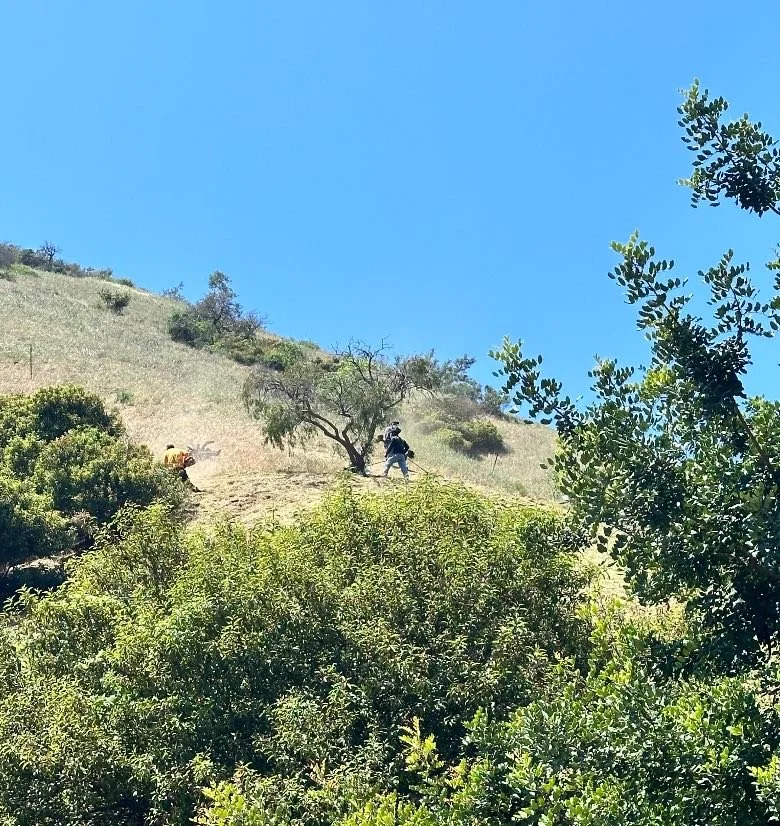
Picture of a crew clearing brush on a hillside in Outpost Estates.
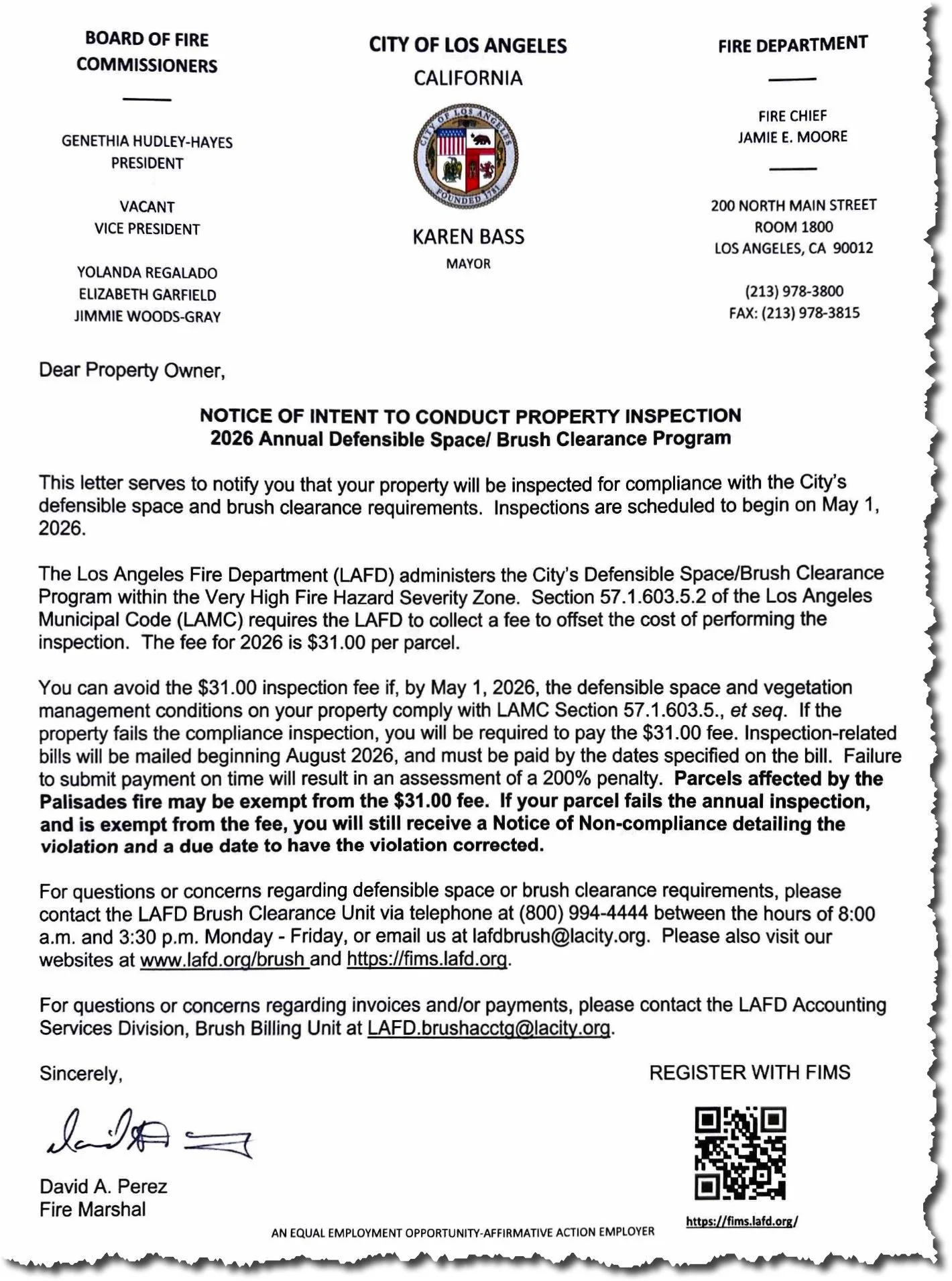
Click the image or this link to pull up the 2026 letter mailed to each Outpost Estates property owner providing notice of the May 1, 2026 brush clearance requirements.
If you are a property owner in Outpost Estates, you should have received a letter in the mail from the Los Angeles Fire Department (LAFD) notifying you that your property will be inspected for compliance with the City's defensible space and brush clearance requirements. Inspections are scheduled to begin on May 1, 2026.
This is an annual requirement — not optional. Outpost Estates lies within the City of Los Angeles Very High Fire Hazard Severity Zone (VHFHSZ), which means every property owner is legally required to maintain defensible space around their home year-round. With increasing wildfire activity across Southern California — including the devastating January 2025 Palisades fire — brush clearance has never been more important for protecting lives, homes, and our neighborhood.
Whether you are a long-time resident or new to Outpost Estates, here is everything you need to know about the defensible space/brush clearance program, how to comply, what happens if you don't, and how the new state-level "Zone 0" regulation fits into the picture.
Bottom line: Comply with the LAFD brush clearance requirements by May 1 and you avoid all inspection fees. Outpost Estates sits in one of the highest wildfire risk zones in Los Angeles, and maintaining defensible space is one of the most important things you can do to protect your home, your neighbors' homes, and our community. Zone 0 is coming at the state level but is not yet in effect — focus on the existing requirements now and start preparing for the additional standards ahead. If you have questions about brush clearance or wildfire preparedness in Outpost Estates, reach out to ONA at info@outpostestates.com.
🔥 What Is Brush Clearance?
Brush clearance is the process of removing dead grass, weeds, brush, shrubs, and other hazardous vegetation near structures so they do not provide readily ignitable fuel for wildfire. The goal is to create defensible space around your home — a buffer that slows the spread of fire and gives firefighters a better chance of defending the property during extreme conditions. Brush clearance can be done by either a brush clearance crew of people or even goats!
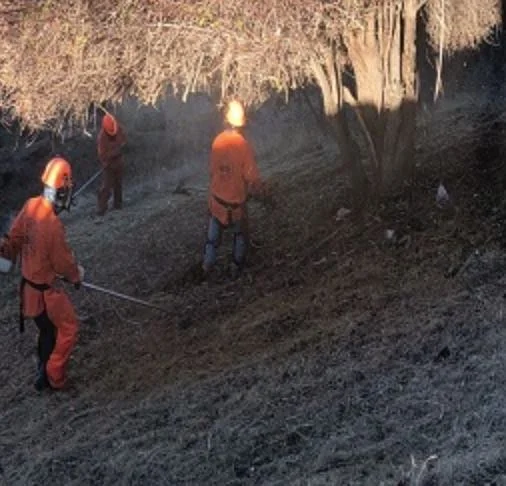
Picture of a crew clearing brush from a hillside. Source: https://lafd.org/fire-prevention/brush

Picture of goats clearing brush on a Los Angeles hillside. Source: https://partygoats.com/brushclearance.html
Under the City of Los Angeles Fire Code (L.A.M.C. Section 57.1.603.5), property owners in the VHFHSZ must maintain clearance within 200 feet of any structure or building (whether on their own property or adjoining properties) and within 10 feet of any combustible fence or roadway. This 200-foot requirement is more aggressive than the state's baseline 100-foot standard and reflects the elevated fire risk in hillside communities like Outpost Estates.
✅ Key Clearance Requirements
Here are the main things every property owner should do to comply by May 1 each year:
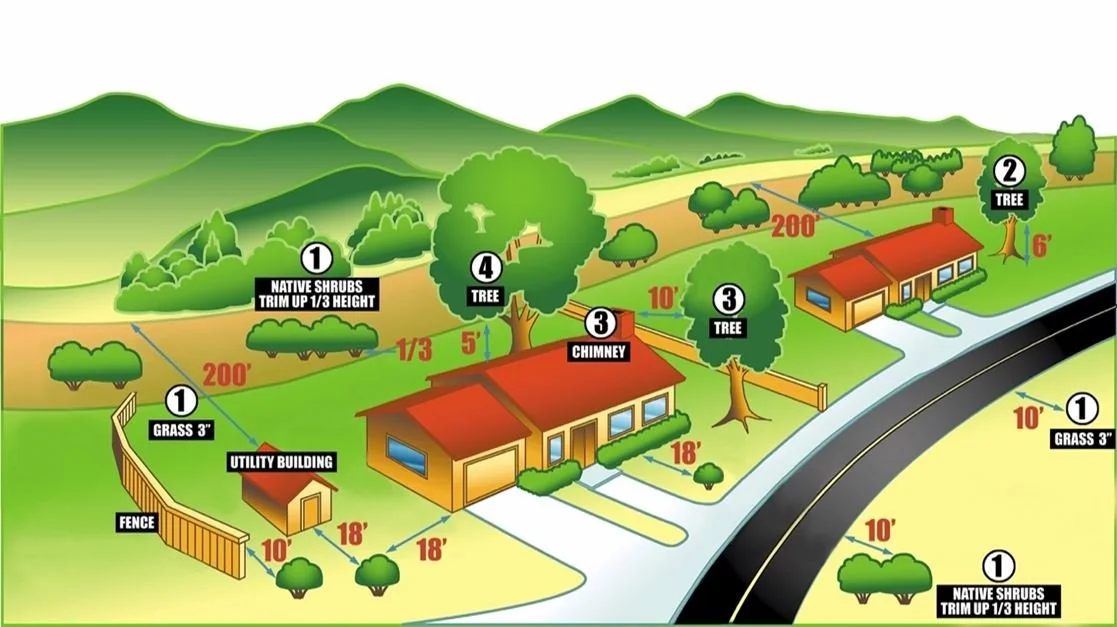
Image from the Los Angeles Fire Department to help explain what areas need to be cleared each year before the annual May 1st deadline. Source: https://lafd.org/fire-prevention/brush/brush-clearance-requirements
Clear grass and weeds. Maintain grass, weeds, and brush to a maximum height of 3 inches within the required clearance zone.
Trim shrubs and brush. Native brush and shrubs must be trimmed so leafy foliage is removed from the lower third of the plant, up to a maximum of 6 feet above ground. Individual native shrubs spaced at least 18 feet apart may remain if properly trimmed and free of dead material.
Limb up trees. Trees taller than 18 feet should have branches trimmed so no foliage is within 6 feet of the ground. For trees and shrubs under 18 feet, remove lower branches to one-third of their height. All dead trees and dead vegetation must be removed entirely.
Roof and overhang clearance. Keep roof surfaces free of leaves, twigs, needles, and other combustible material. Maintain 5 feet of vertical clearance between tree branches and roof surfaces.
Chimney clearance. Maintain 10 feet of clearance between tree foliage and the outlet of chimneys or stovepipes.
Vegetation around hydrants. Clear vegetation around fire hydrants to maintain at least 3 feet of horizontal clearance so firefighters can access them easily.
Remove all cut debris legally. Cut vegetation may be chipped and spread back onto the property at a depth not exceeding 3 inches within 30 feet of structures and 6 inches beyond 30 feet. Spread material cannot be placed within 10 feet of any usable roadside.
📋 How Inspections Work and What Non-Compliance Costs
The LAFD will automatically conduct the initial inspection of your property between May 1 and June 30. You do not need to notify the Fire Department after completing your clearance — they will come to you. Here is the inspection cycle and fee schedule:
Initial inspection — Pass: No fee assessed. This is the goal. If your property is compliant by May 1st, you avoid any charges.
Initial inspection — Fail: You will be charged a $31.00 brush inspection fee and receive a Notice of Non-Compliance with a deadline to correct the violations. A second inspection will follow.
Second inspection — Pass: You still owe the $31.00 initial inspection fee, but no additional charges.
Second inspection — Fail: The $31.00 fee plus a $758.00 non-compliance fee. If you still do not comply, the City will contract clearance work and bill you for it — including a $1,740.00 administrative cost fee plus the contractor's bid price, on top of the inspection and non-compliance fees.
Failure to pay on time results in a 200% penalty. The bottom line: comply by May 1st and you avoid all fees entirely.
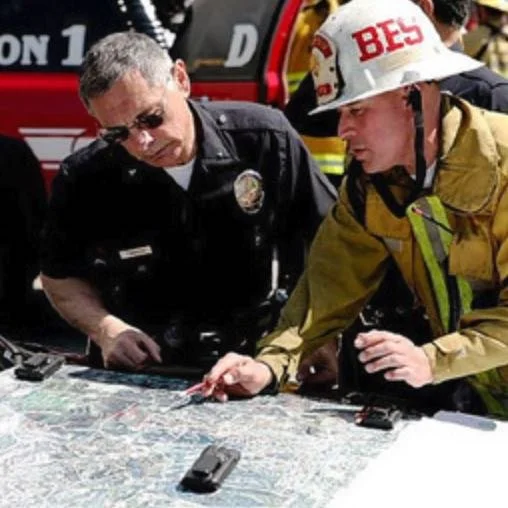
Picture showing Los Angeles Fire Department doing brush clearance inspections. Source: https://lafd.org/fire-prevention/brush
🛡️ Safety Tips for Clearing Brush
Clearing vegetation can itself pose fire risk if not done safely. The LAFD recommends:
Avoid working during the hottest part of the day
Do not clear brush on Red Flag warning days — this is a City ordinance requirement, not just a suggestion
Have a water source and fire extinguisher handy
Use proper equipment with nylon or plastic cutting blades only (metal blades are restricted due to spark risk)
Wear protective gear including gloves, safety glasses, and sturdy clothing
Keep a charged cell phone capable of dialing 911 readily accessible during clearance work
If you cannot clear your property yourself, hire a professional who understands the requirements. The LAFD website includes a Brush Clearance Vendor List to help you find qualified contractors.
📲 How to Check Your Property Status and Track Compliance
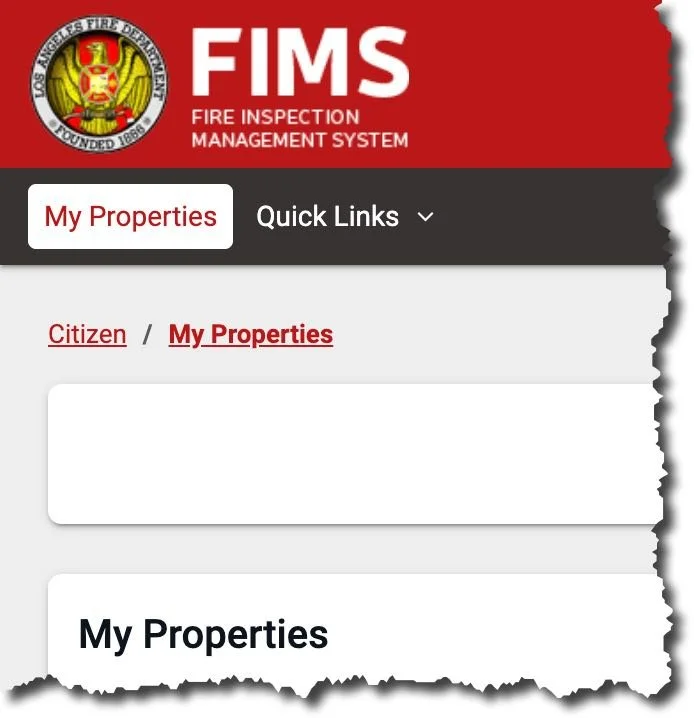
Image of the LAFD “Fire Inspection Management System”. Source: https://fims.lafd.org
The LAFD has an online system where you can register and monitor the brush clearance status of your property throughout the year. Register at https://fims.lafd.org using the APN (Assessor Parcel Number) and PIN printed on the mailer you received. With a registered account you can:
Check whether your property is currently compliant or non-compliant
View photos of brush hazards identified on your property if non-compliant
Receive non-compliance notices by email at the time of a failed inspection
Note: If you registered your property with the previous VMS3 system, you will need to re-register with FIMS at fims.lafd.org for 2026.
🚨 How to Report Non-Compliant Properties
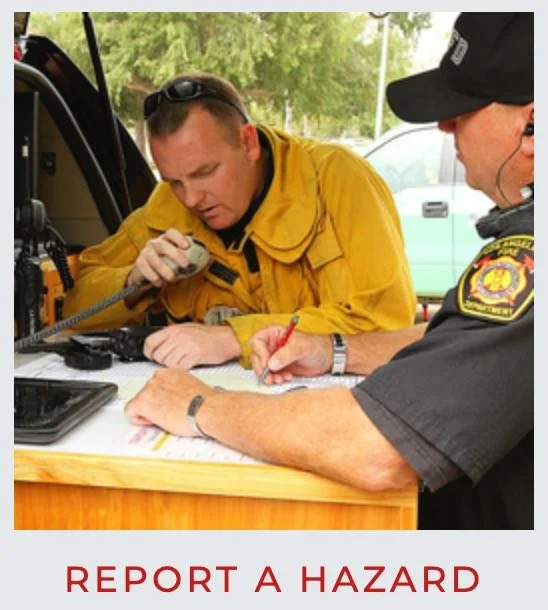
Image source: https://lafd.org/fire-prevention/brush
If you see vegetation on a neighboring property in Outpost Estates that appears to pose a fire hazard — overgrown brush, dead trees, accumulated debris near structures — you can report it:
Email: LAFDBrush@lacity.org
Phone: 800-994-4444 (Monday–Friday, 8:00am – 3:30pm)
In person: Visit your local LAFD fire station during business hours
For emergencies, always call 911.
Reporting non-compliant properties is not about being a difficult neighbor — it is about protecting everyone in our hillside community. In a wildfire, one non-compliant property can put the entire block at risk.
🏠 The New "Zone 0" Regulation: What It Is, Where It Stands, and Why It's Controversial
In addition to the existing LAFD brush clearance program described above, you may have heard about a new state regulation called "Zone 0" (also known as the ember-resistant zone). This is a separate requirement from the annual LAFD brush clearance program — and the two should not be confused, even though they are related. Here are some frequently asked questions that help Outpost Estates neighbors understand “Zone 0.”
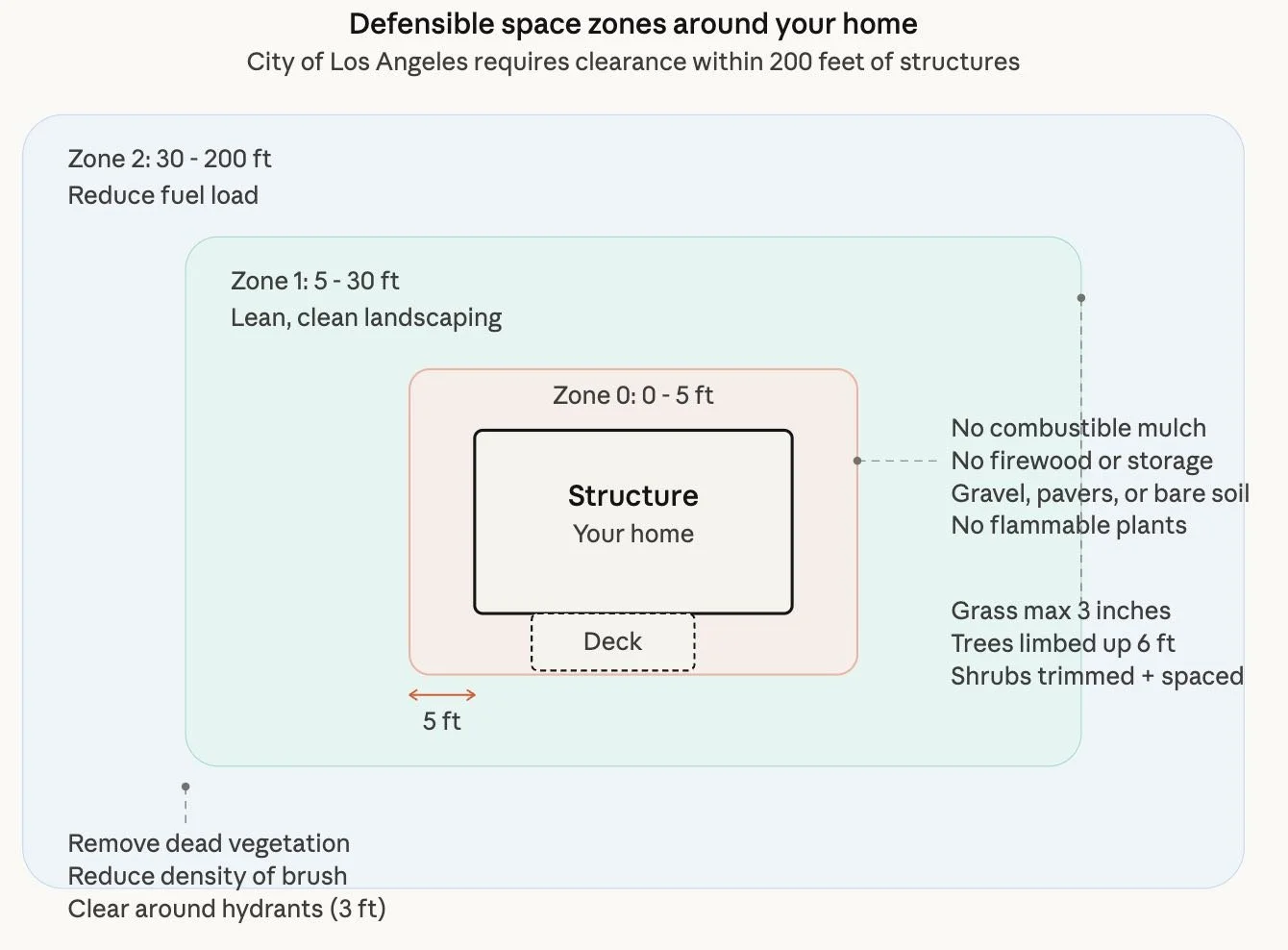
Diagram showing the three defensible space zones around a home in the Very High Fire Hazard Severity Zone. Zone 0 (0–5 feet, shown in orange) is the new ember-resistant zone established by California AB 3074 but not yet enforced. Zones 1 and 2 (5–200 feet, shown in green and blue) are the existing LAFD brush clearance requirements that will be inspected starting May 1, 2026.
-
Zone 0 refers to the first five feet immediately surrounding a structure — including attached decks, stairs, and the area underneath them. Under California Assembly Bill 3074 (AB 3074), passed in 2020 with unanimous bipartisan support, the State Board of Forestry and Fire Protection was directed to establish regulations requiring this five-foot zone to be "ember-resistant."
The science behind Zone 0 is clear: research shows that the vast majority of homes lost in wildfires are ignited by wind-driven embers, not direct flame contact. Embers can travel far ahead of the fire front and ignite combustible materials near a home — plants, mulch, woodpiles, outdoor furniture, stored materials — which then transfer flame or heat to the structure itself.
Zone 0 is designed to eliminate those ignition sources in the most vulnerable area.
-
While final regulations have not yet been adopted, the expected requirements include:
Removing combustible materials (wood mulch, bark chips, dry leaves, firewood, trash) within 5 feet of structures
Replacing combustible ground cover with non-combustible materials like gravel, decomposed granite, pavers, or bare soil
Limiting or eliminating vegetation in the zone — if any plants remain, they should be low-growing, widely spaced, and fire-resistant
Not storing firewood, outdoor furniture cushions, plastic containers, or trash bins within 5 feet of the home
Keeping roofs and gutters clear of leaves, needles, and debris (overlapping with existing LAFD requirements)
-
This is where it gets complicated. AB 3074 became law on January 1, 2021 — but enforcement cannot begin until the State Fire Marshal approves final implementation requirements. That approval has been delayed repeatedly:
The regulations were originally expected by 2023
Governor Newsom's Executive Order N-18-25 (February 2025) directed the Board of Forestry to finalize regulations by December 31, 2025
The Board's Zone 0 Advisory Committee cited concerns about affordability and feasibility and missed the December 2025 deadline
The committee paused work and is expected to resume in 2026, with no firm timeline for final adoption
As of this writing, Zone 0 regulations remain unfinished and unadopted at the state level. Some cities — such as San Diego — have begun notifying residents to take proactive steps toward Zone 0 compliance, encouraging a February 2027 target. But in the City of Los Angeles, Zone 0 is not currently being enforced as part of the LAFD's annual brush clearance inspection program.
-
Zone 0 has generated significant debate.
Supporters point to strong scientific evidence that an ember-resistant buffer is one of the most effective measures homeowners can take to protect their homes. The Insurance Institute for Business and Home Safety has demonstrated through testing that a properly maintained five-foot non-combustible zone can be the difference between a home surviving an ember storm and one that is destroyed.
Opponents have raised concerns about cost, feasibility, aesthetics (particularly for homes with established landscaping), and potential unintended consequences.
The Board of Forestry's advisory committee has received large volumes of public comment, and the debate has slowed the rulemaking process significantly.
-
For the 2026 brush clearance season, focus on complying with the existing LAFD requirements described in this post — that is what will be inspected and enforced starting May 1st.
Zone 0 is a state-level regulation that has not yet been finalized or adopted, and it is not part of the LAFD's current inspection program. That said, the direction of travel is clear. Zone 0 requirements are coming — the question is when, not if. Property owners who want to get ahead of the curve can begin making adjustments now:
Remove combustible mulch and debris from within 5 feet of your home
Replace wood chips or bark with gravel or decomposed granite near foundations
Move firewood, cushions, and stored materials away from the structure
Ensure gutters and rooflines are clear of accumulated leaves and needles
These steps will put you in a strong position for both current LAFD compliance and future Zone 0 requirements when they take effect.
