The Historic “King” Street Lights of Outpost Estates
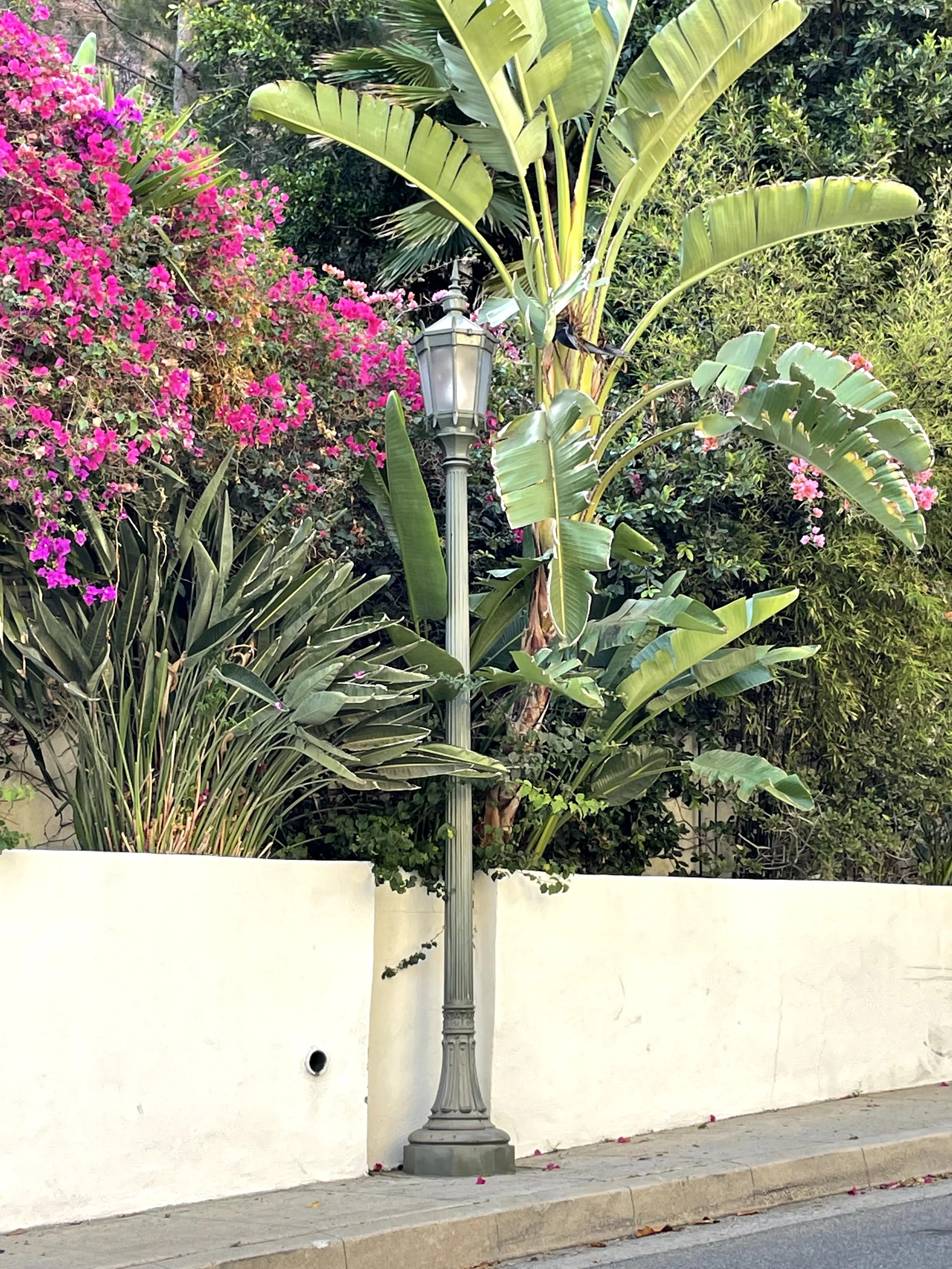
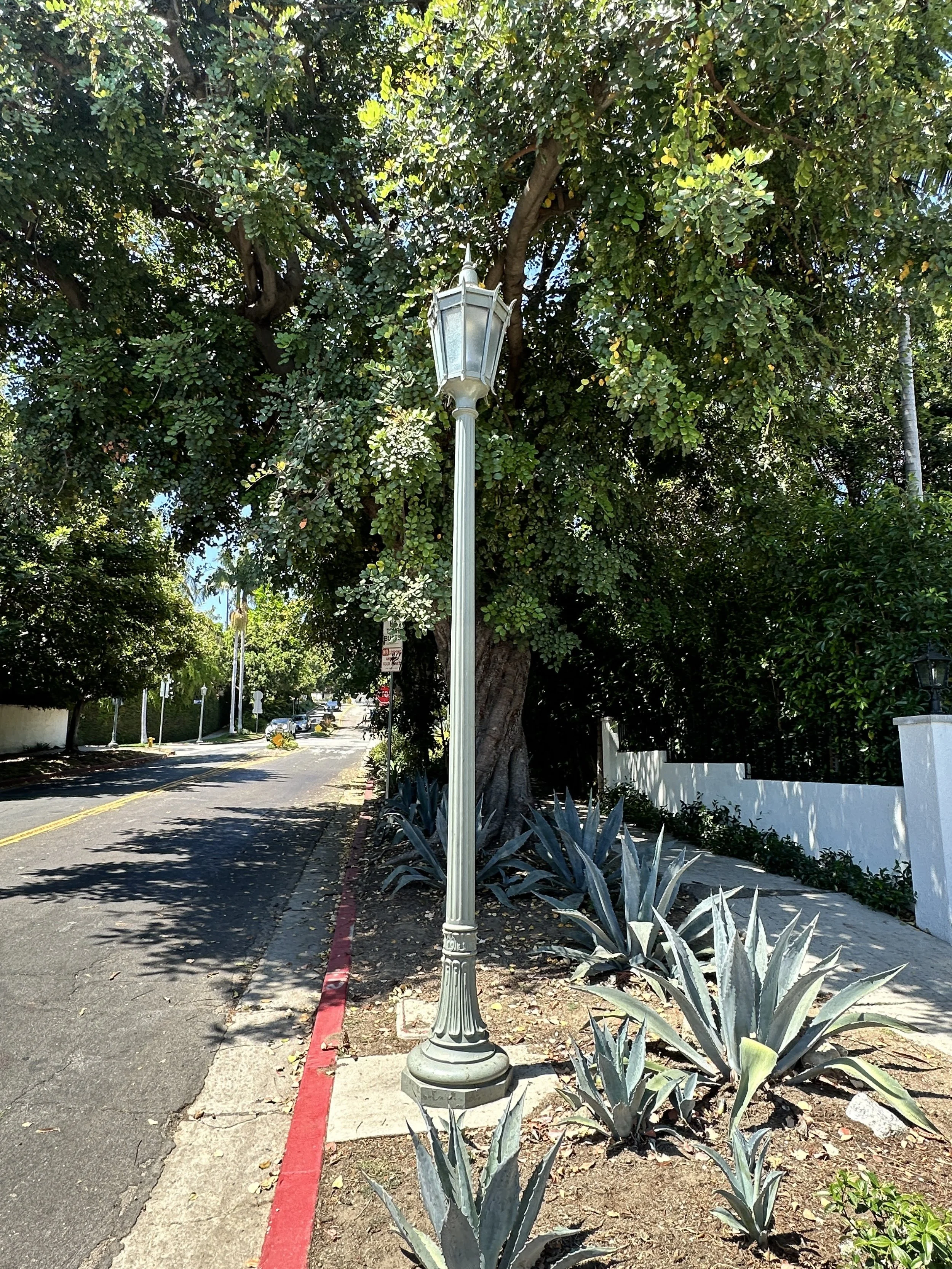
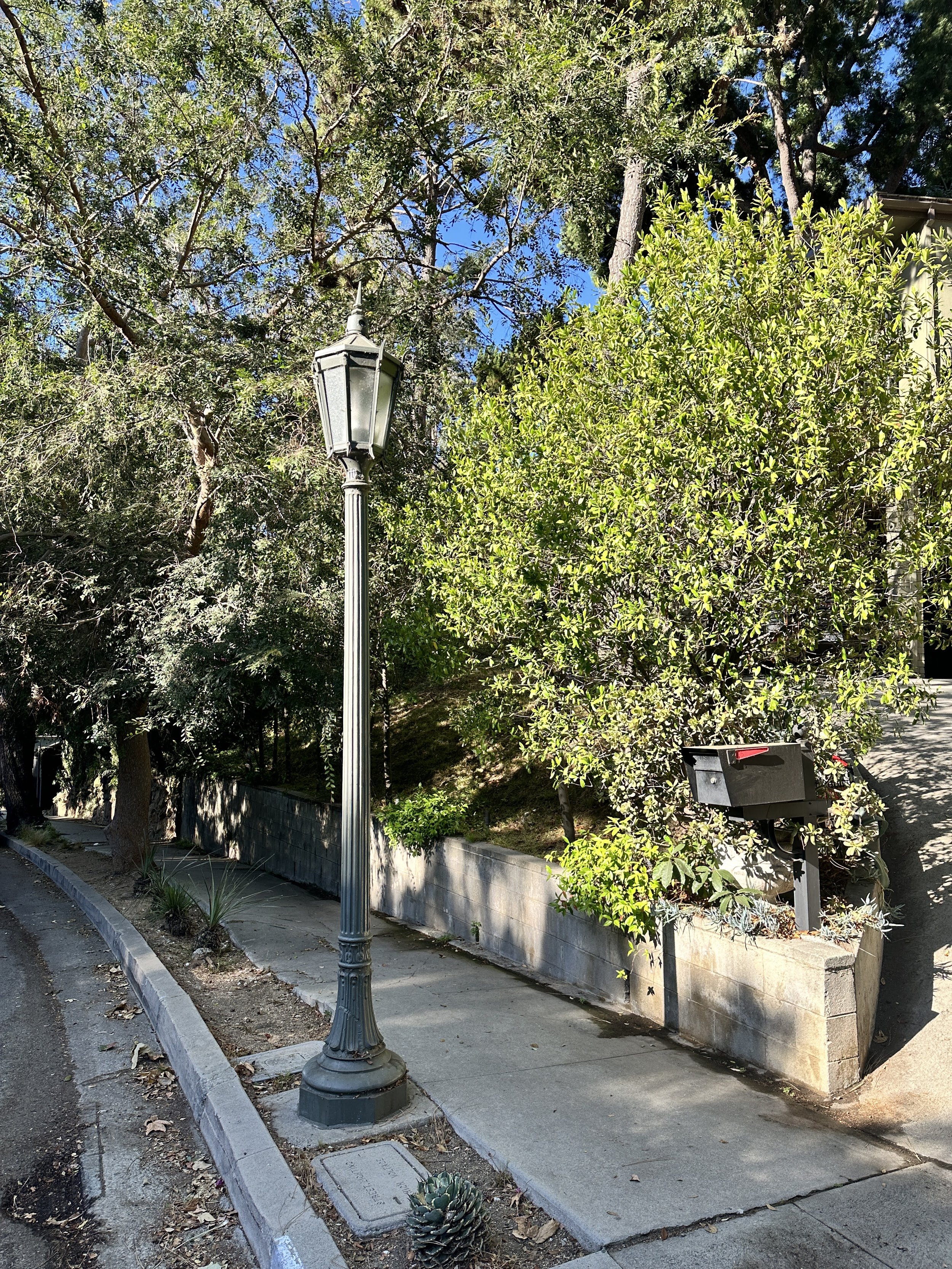
One of the charming, defining features of the original Outpost Estates neighborhood is its distinctive vintage street lighting. These lights are more than functional—they’re part of the identity and character of our community. Below is what neighbors should know about them, their challenges, and how we as a community are working to preserve them.
✨ A Legacy in Iron: The “King” Street Lights
When Outpost Estates was developed in the 1920s, the original developer (Mr. Toberman) paid to install all infrastructure: streets, sidewalks, underground utilities, and the street lights. The historic lights known locally as “King” model fixtures were part of that original investment.
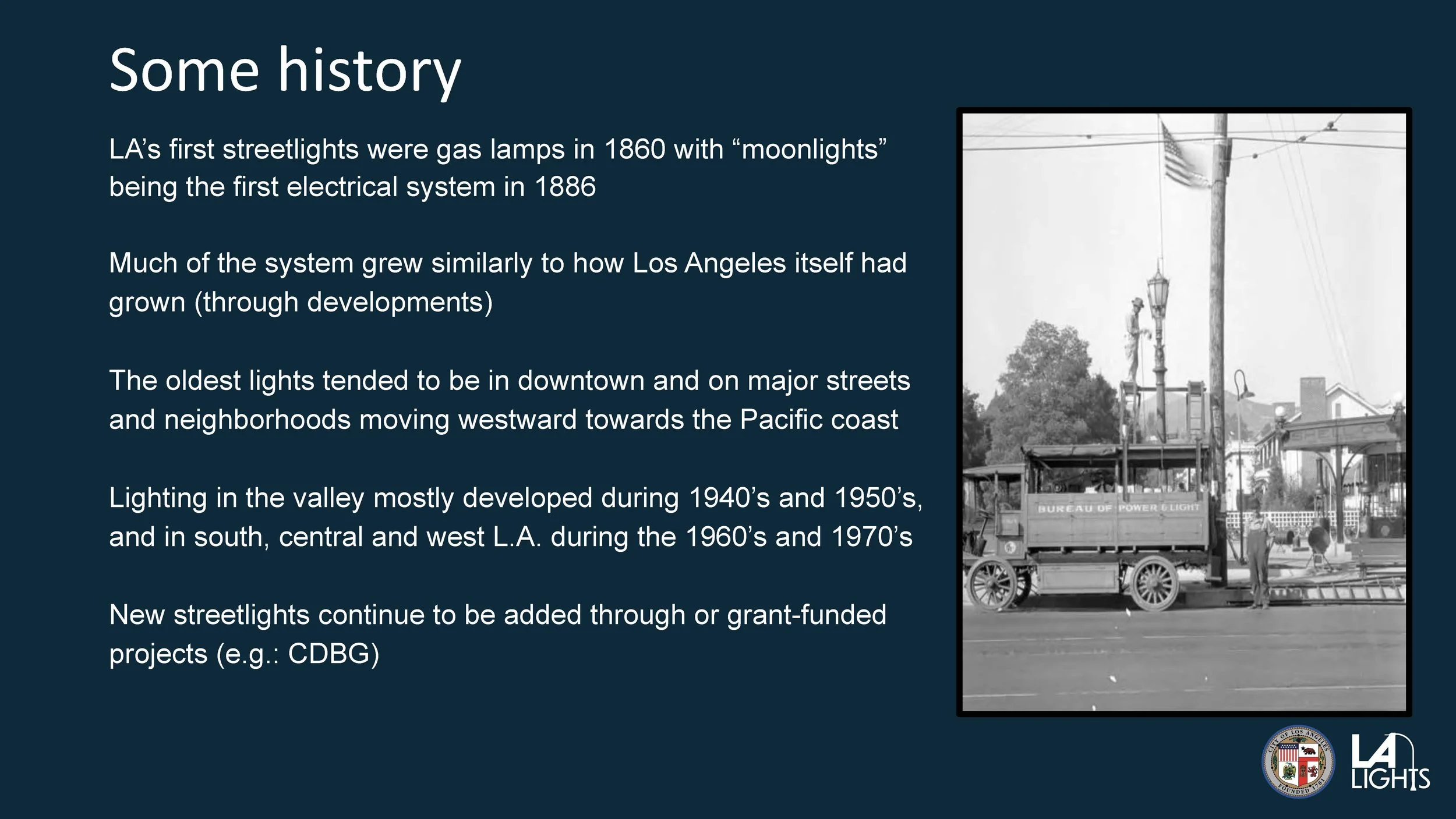
In early Los Angeles, developers often specified custom streetlights for new subdivisions rather than relying on standardized fixtures. The Los Angeles Bureau of Street Lighting (BSL) later took over maintenance but many neighborhoods still retain their original fixture styles (see the history of LA street lighting here).
Because the original boundaries of Outpost Estates aligned with where those “King” lights were installed, the placement of these lights still helps define the historic neighborhood limits. As the neighborhood has grown and developed, newer sections of Outpost Estates do not have the historic “King” lights. Replacing the modern day standard street lights with the historic “King” lights would cost at least $5,200 per light (estimated cost from a quote provided in 2023 to replace a downed existing “King” street light) and would require funding from the neighborhood or property owners rather than reliance on the City.
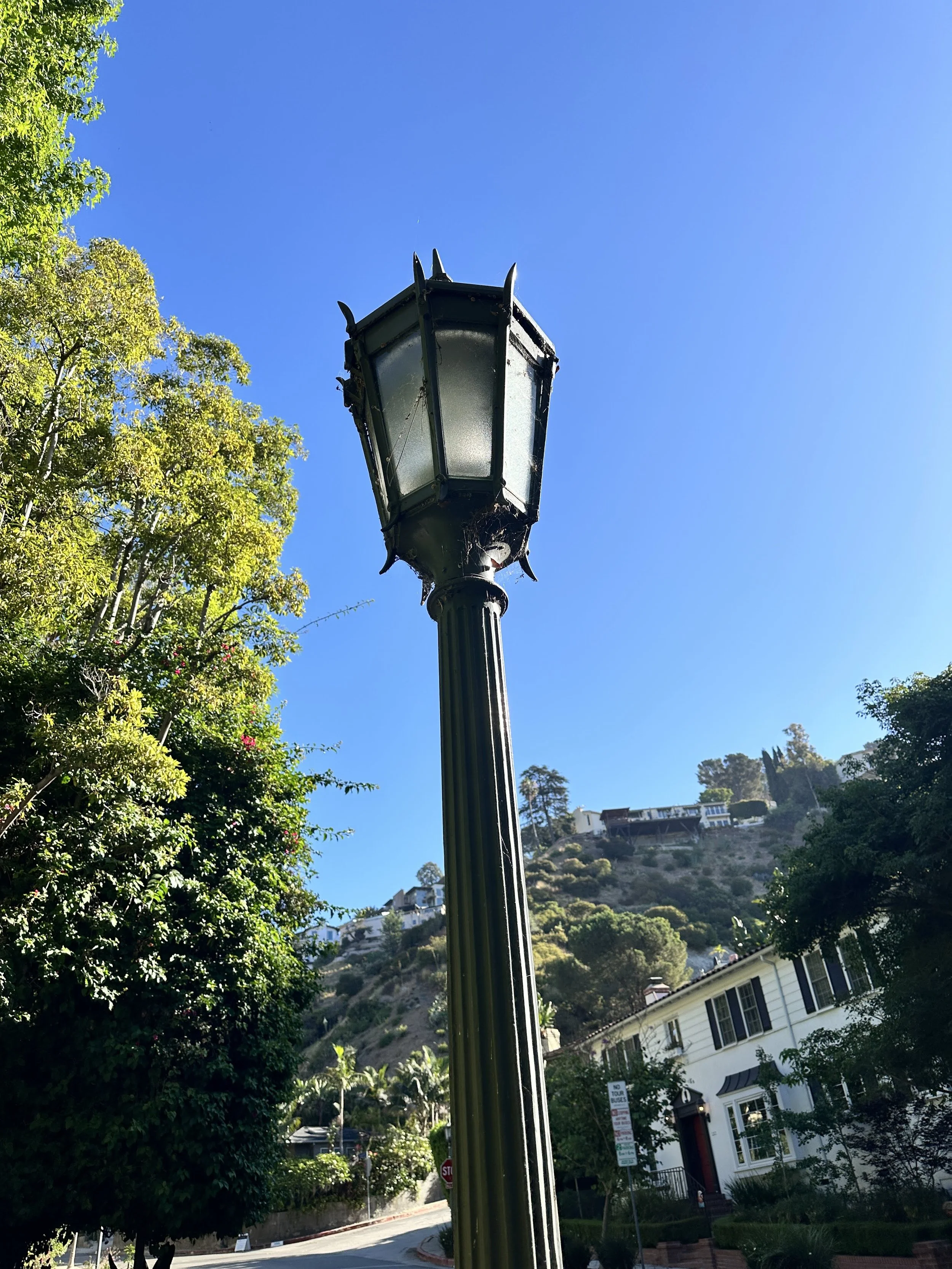
Picture of the top of one of the “King” street lights in Outpost Estates.
📍 See the Map of Street Lights
Did you know there are over 200 street lights in Outpost Estates?
The City of Los Angeles maintains a public map of street light locations. You can explore it here:
👉 Street Light Map – LA GeoHubZoom in on Outpost Estates and you’ll see the exact placement of street lights in our neighborhood. If you hover over or click on the blue dot indicating where a street light is located it pulls up the “Street Light ID” number (listed as STLID) which is helpful to reference when reporting any issues with street lights when communicating with the City.
Here are helpful maps that show which street lights are connected to which electrical circuit: Map 209 | Map 210.

A screenshot of the Los Angeles City Street Light Map.
💸 When the Lights Break: Challenges & Costs

Picture of a damaged historic King street light on Outpost Drive in 2023 after a diesel rig ran over it.
Historic “King” lights are made of wrought iron and are custom fabricated, so replacements aren’t generally stocked/held in inventory. If one is damaged—say, by a 🚗 car accident—it can take about 6 months to replace. The 6 month estimate is based on how long it took to replace downed street lights in 2022 and 2023.
Cost of replacement: approximately $5,200 per fixture (quote was for labor and materials in 2023, so anticipate annual cost escalations).
🚨 2026 Update: Widespread Street Light Outages in Outpost Estates Due to Copper Wire Theft
If you have noticed that many of the street lights in Outpost Estates are dark, you are not alone. A significant number of our historic "King" street lights — on both upper and lower Outpost Drive and surrounding side streets — are currently non-functional due to copper wire theft from underground conduit and above-ground control boxes throughout the neighborhood. ONA has been tracking, reporting, and advocating on this issue for months. Here is a summary of where things stand and what is being done.
How Bad Is It?
ONA volunteers have mapped every street light in the neighborhood and confirmed the status of each one. The results are sobering.
A full list of every service request ticket filed for non-working street lights — including the date each was first reported — is available in the ONA Street Light Tracking Spreadsheet. The earliest open ticket dates back to June 15, 2025 for a street light at 2035 Outpost Drive — meaning that light has been out for approximately 10 months with no repair.
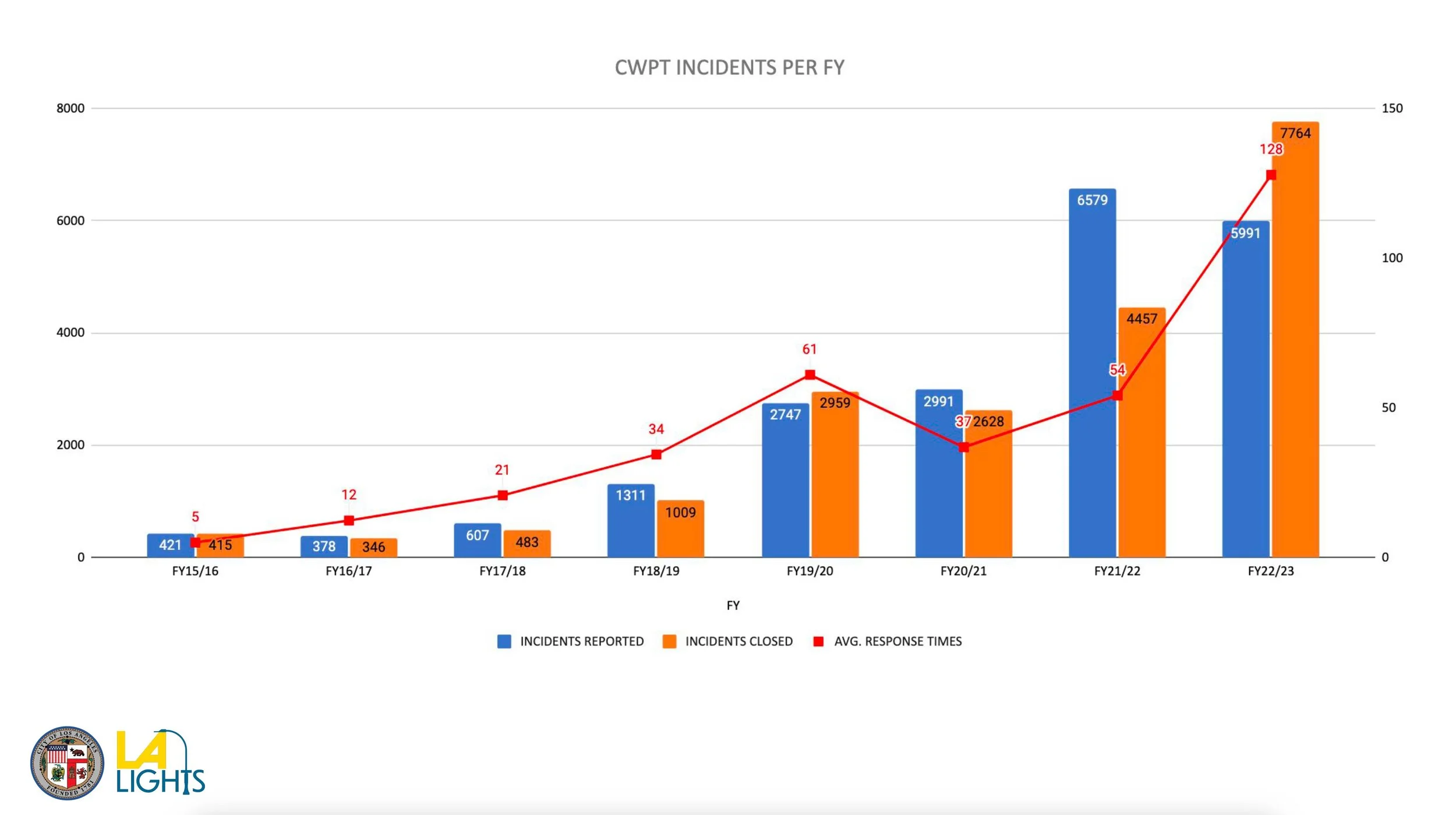
The City has confirmed that current repair wait times are averaging 9 to 12 months from the date a 311 service ticket is first submitted — and that large-scale outages caused by copper wire theft cannot be addressed during the quarterly "priority week" repair windows because those crews are not equipped for the fortification work required to prevent repeat vandalism.
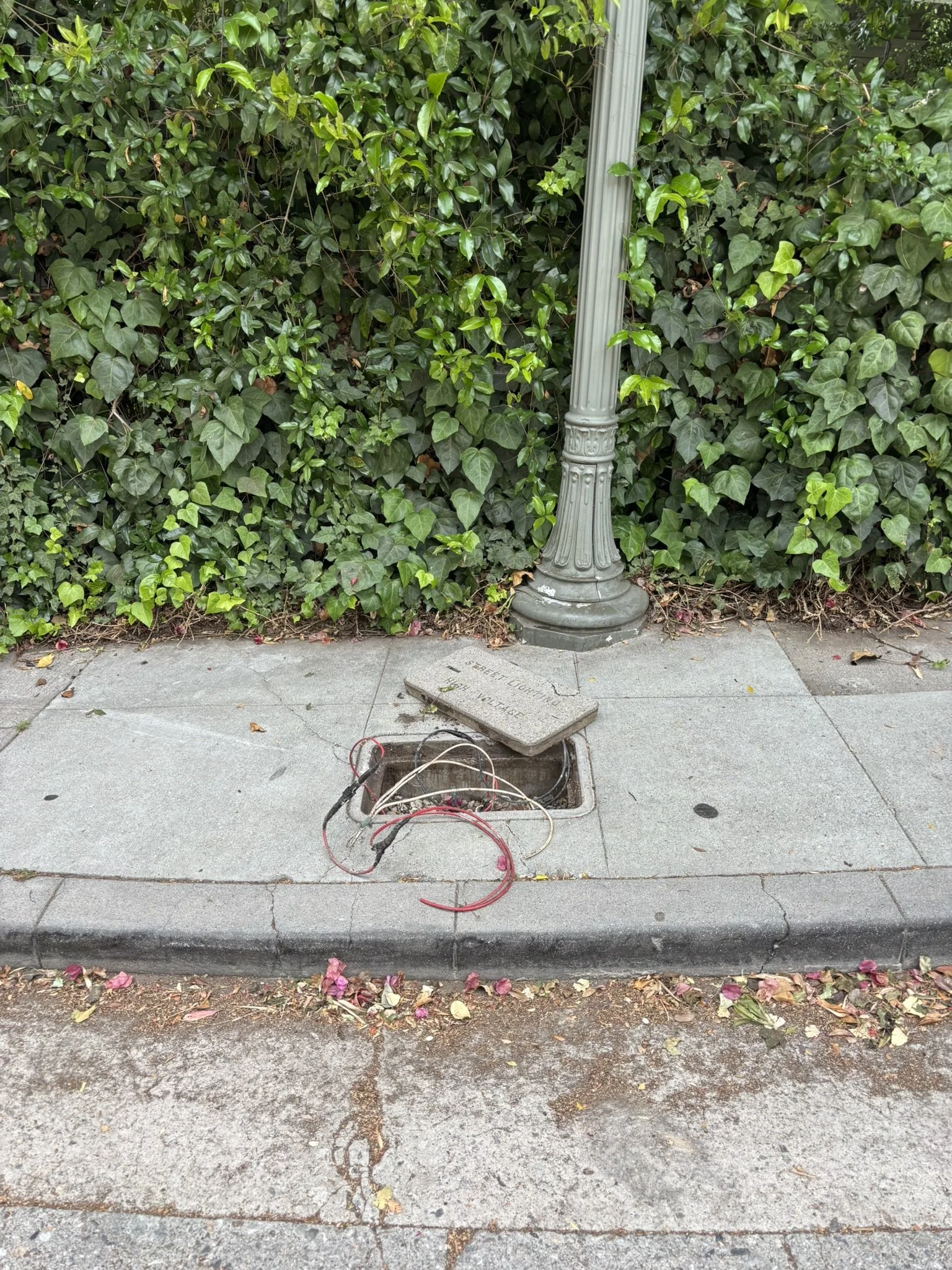
Picture of street lighting control box in Outpost Estates that was broken into in 2025. Someone stole copper wire, which has left many street lights in Outpost Estates dark.
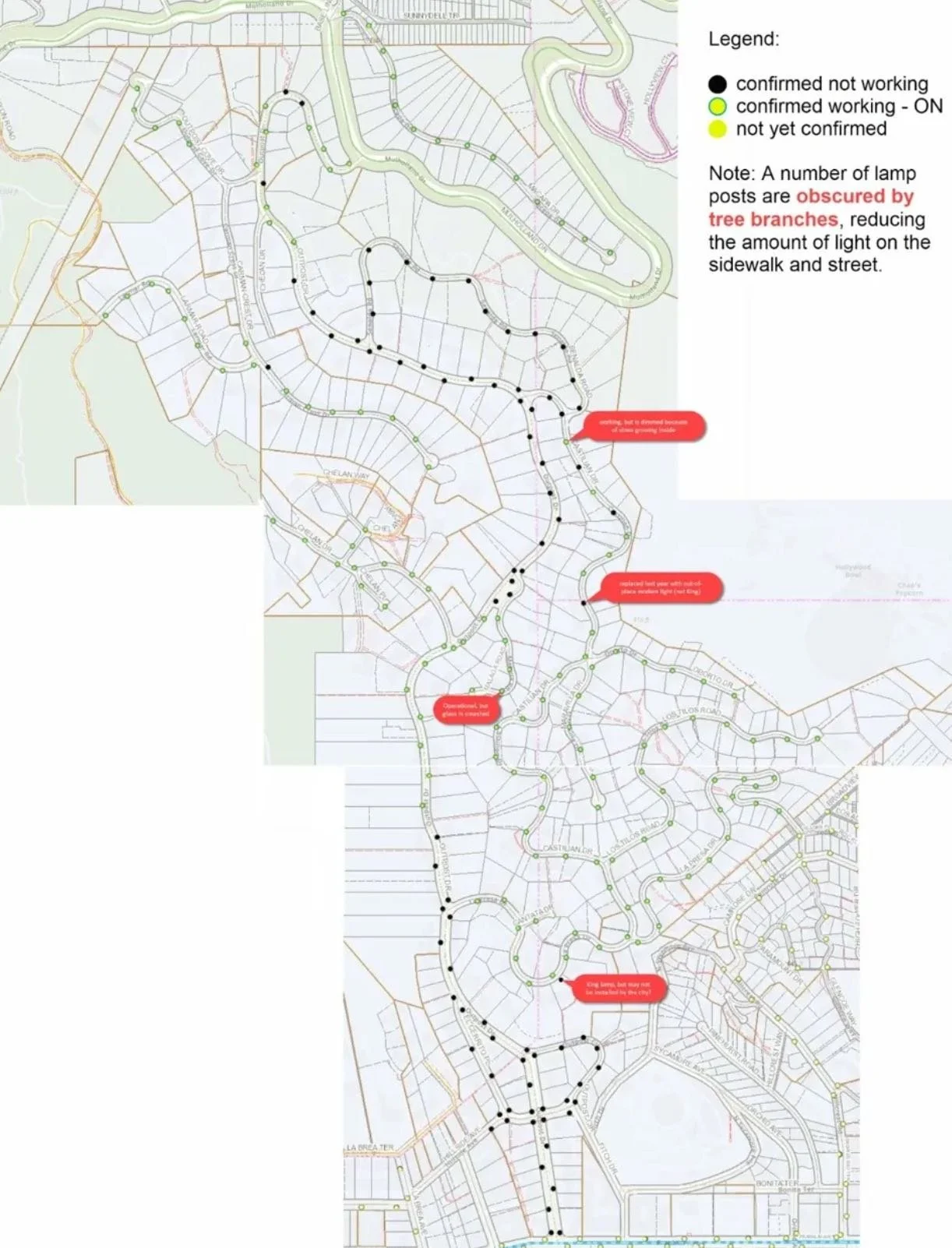
Map showing the status of street lights in Outpost Estates as of April 2026. Black dots indicate confirmed non-working lights. Green dots indicate confirmed working lights. Yellow dots have not yet been confirmed. Note: A number of lamp posts that are working are obscured by tree branches, reducing the amount of light on the sidewalk and street.
What the City Has Told Us
ONA has been in direct communication with Los Angeles City Council District 4 (Councilmember Nithya Raman) about the outages. Here is what we have been told:
The problem is citywide, not unique to Outpost Estates. Similar outages persist across Los Feliz, Silver Lake, the Hollywood Dell, the Mulholland Corridor, and many other neighborhoods. The scale of outages currently exceeds both Council District 4's available funding and the Bureau of Street Lighting's (BSL) staffing capacity.
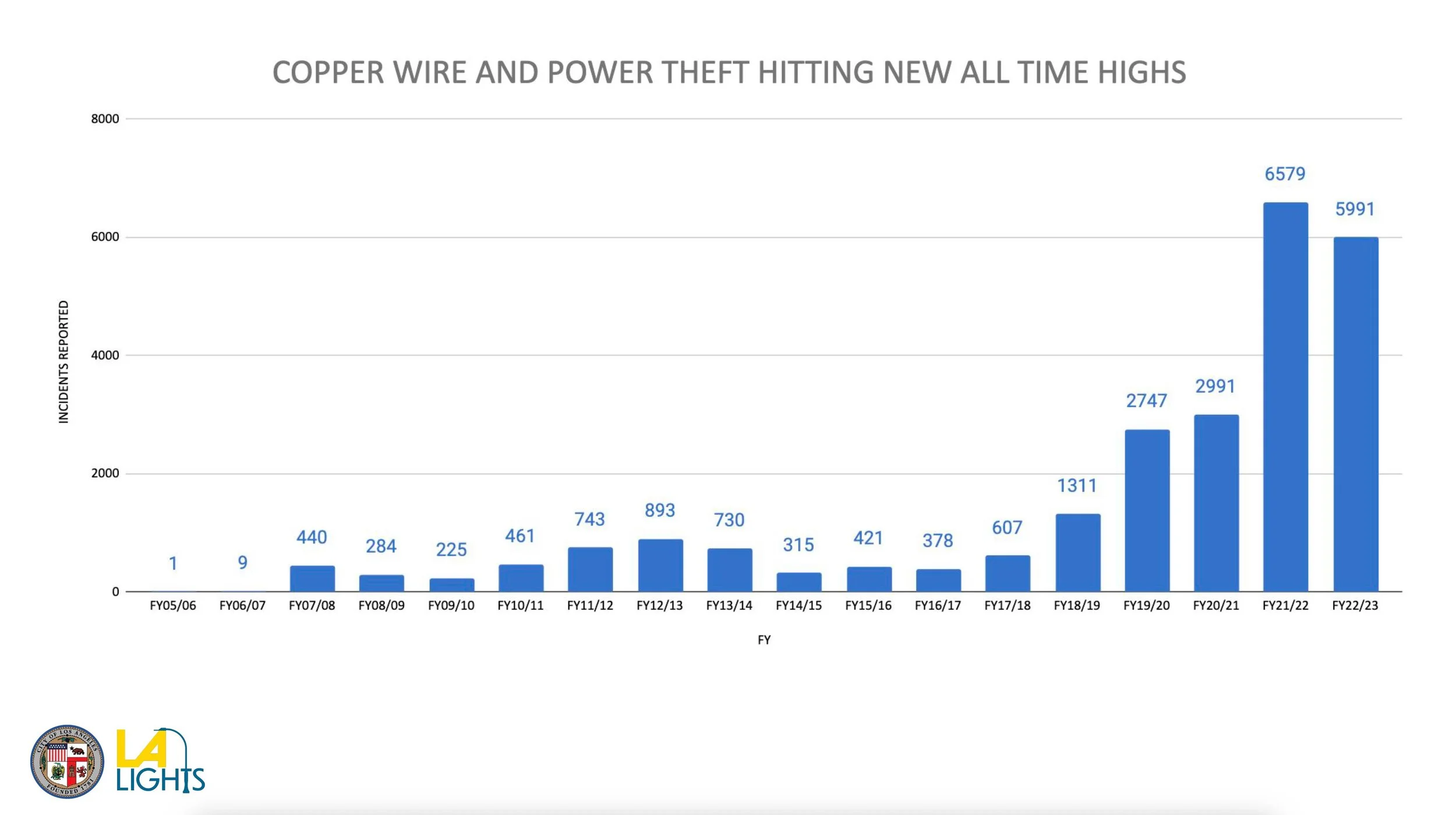
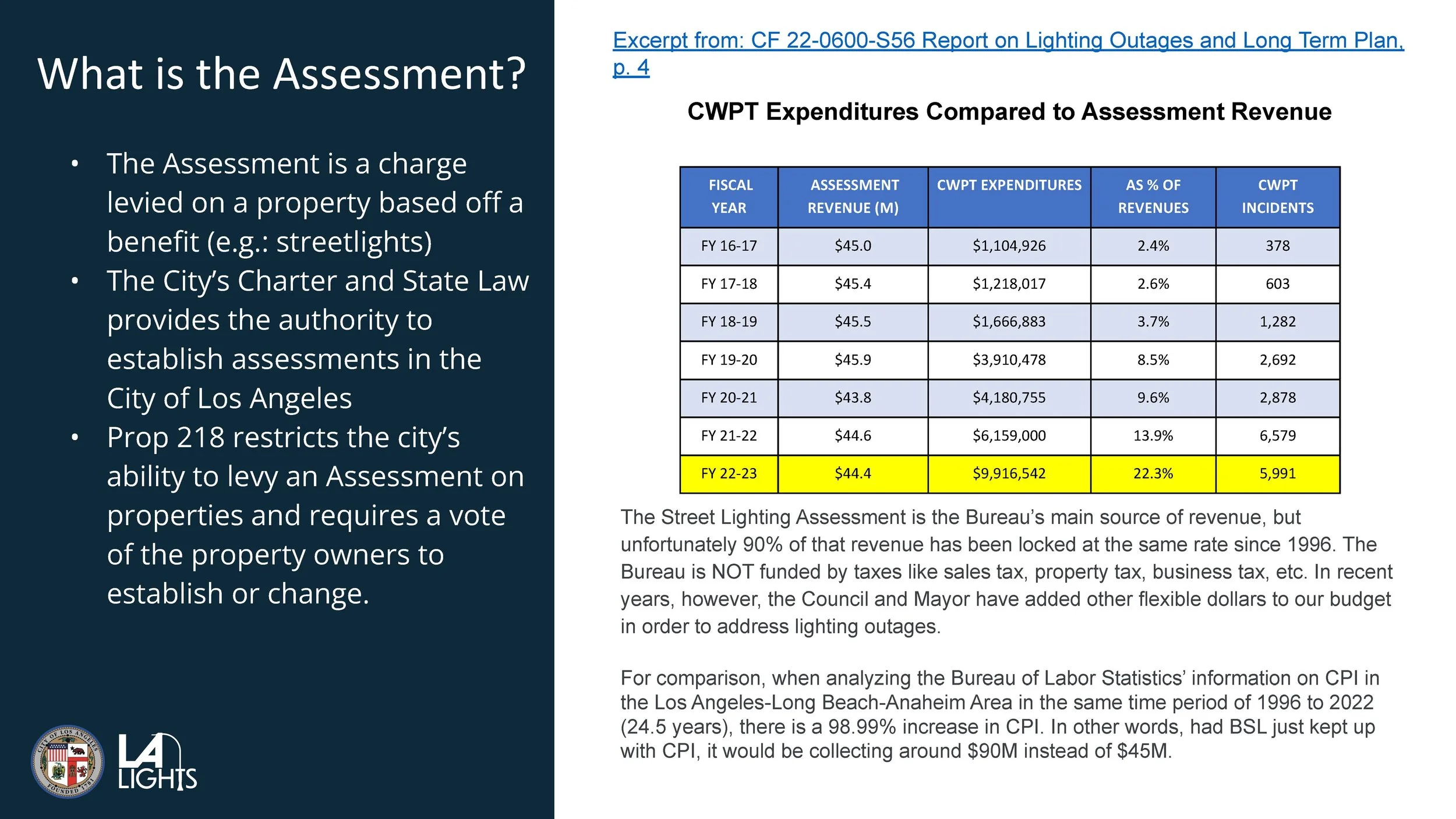
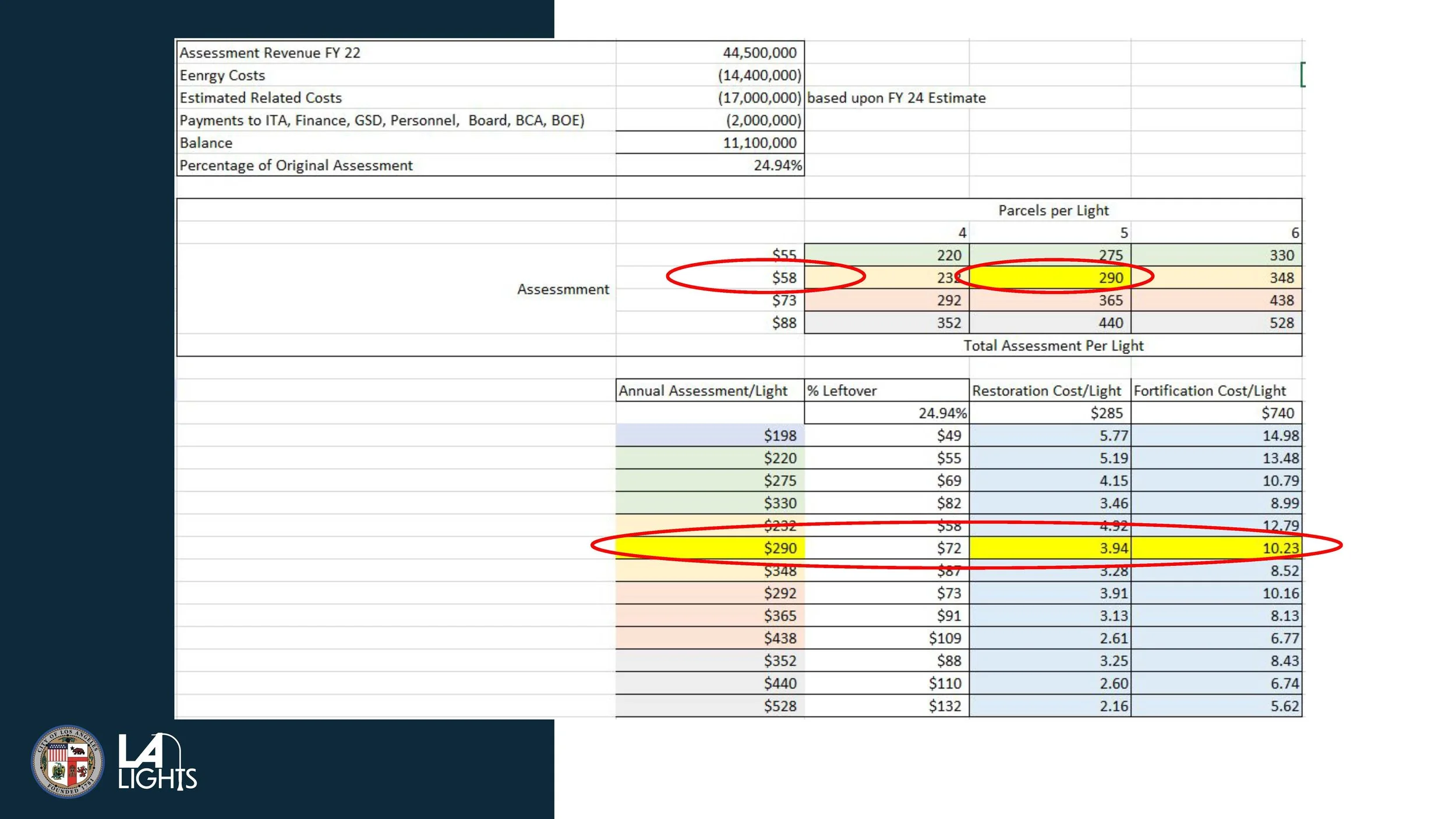
Decades of underinvestment are the root cause. Councilmember Raman has stated publicly that decades of underinvestment in street lighting have contributed to the current crisis. BSL's maintenance assessment funding has been largely frozen since 1996, while copper theft has surged by 1,200% over the last decade. Repairs caused by theft cost at least four times more than standard maintenance.
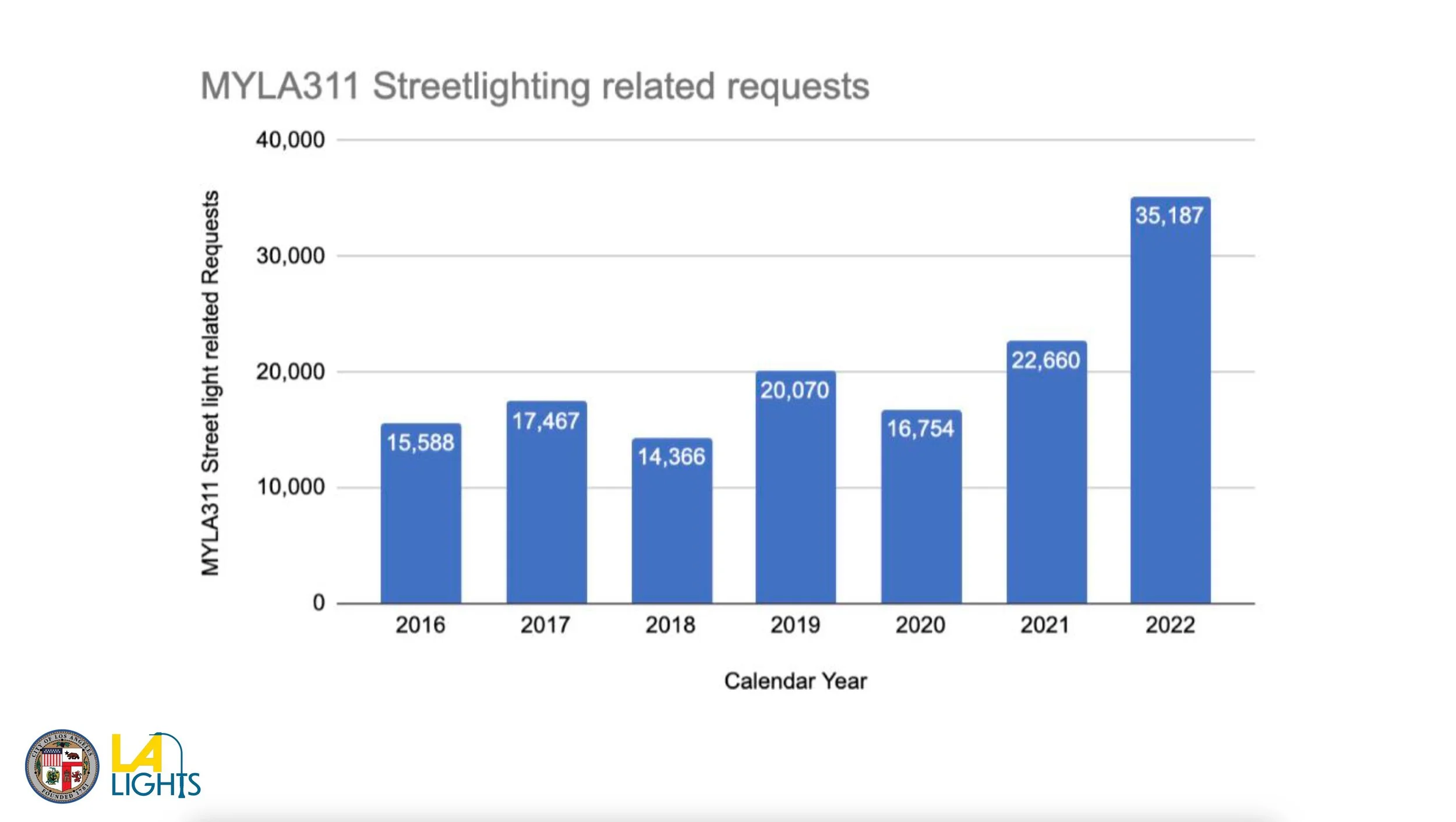
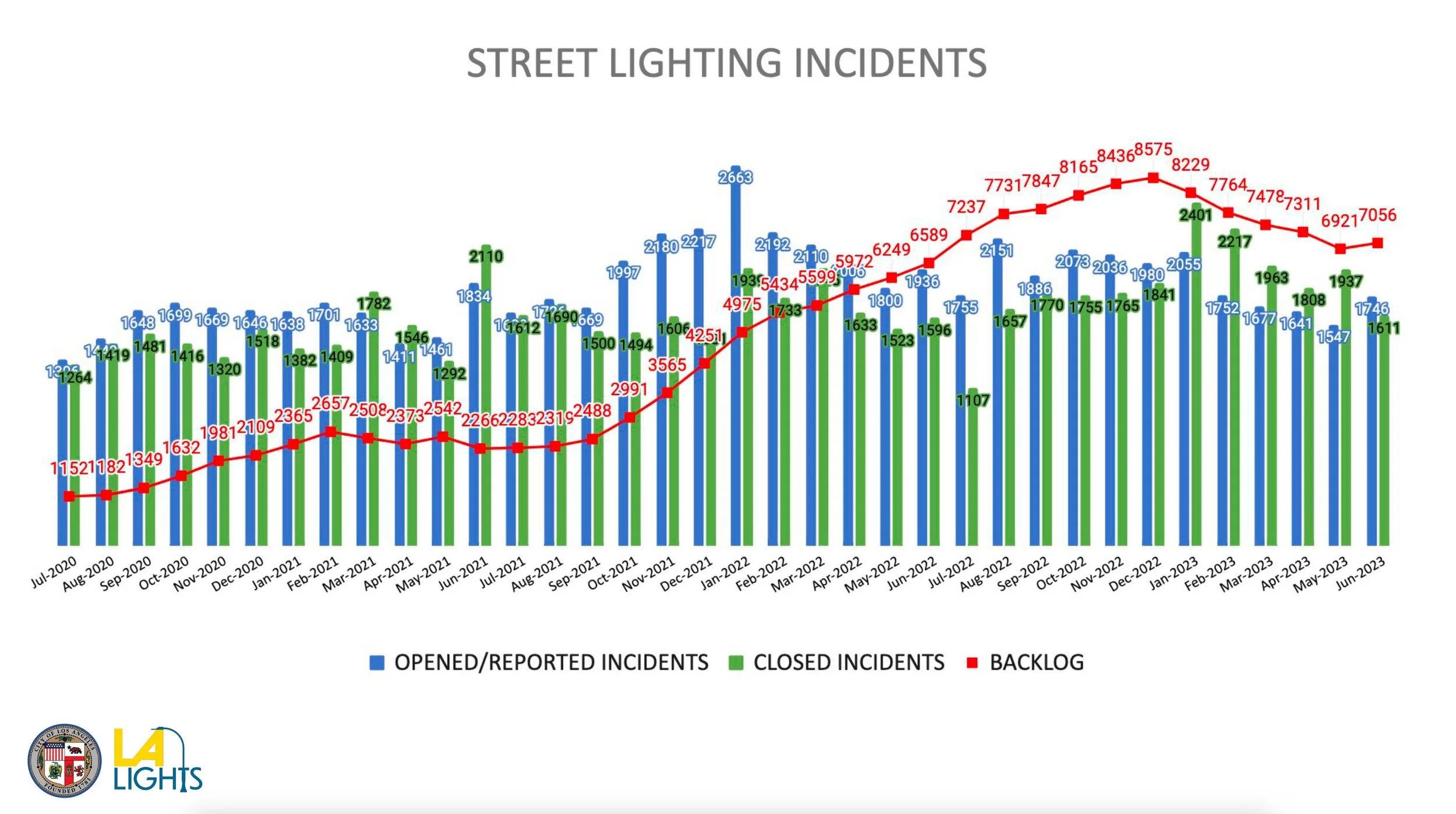
The numbers are staggering. There are currently more than 32,000 open street light service requests across the City of Los Angeles. Reports of broken lights surged to nearly 46,000 in one recent year — a 43% increase over the prior year.
Neighborhoods cannot privately contract for street light repairs. Even if Outpost Estates residents wanted to fund repairs directly, the City does not currently allow neighborhoods to hire private contractors to work on City-owned street lighting infrastructure.
Council District 4's next "priority week" is scheduled for late May. Each Council office can submit recommended repair locations once per quarter during these windows. However, the copper wire theft damage in Outpost Estates requires specialized fortification work that goes beyond what priority week crews can handle.
Where Things Stand: The City's Two Major Streetlight Efforts
Over the past year, the City of Los Angeles launched two major efforts to address the citywide streetlight backlog that has left so many Outpost Estates lights dark: a new Solar Street Lights Initiative, and a proposed property assessment to fund repairs. Here is where each stands — and what it means for our neighborhood.
🌞 The Mayor's Solar Street Lights Initiative (Executive Directive No. 18)
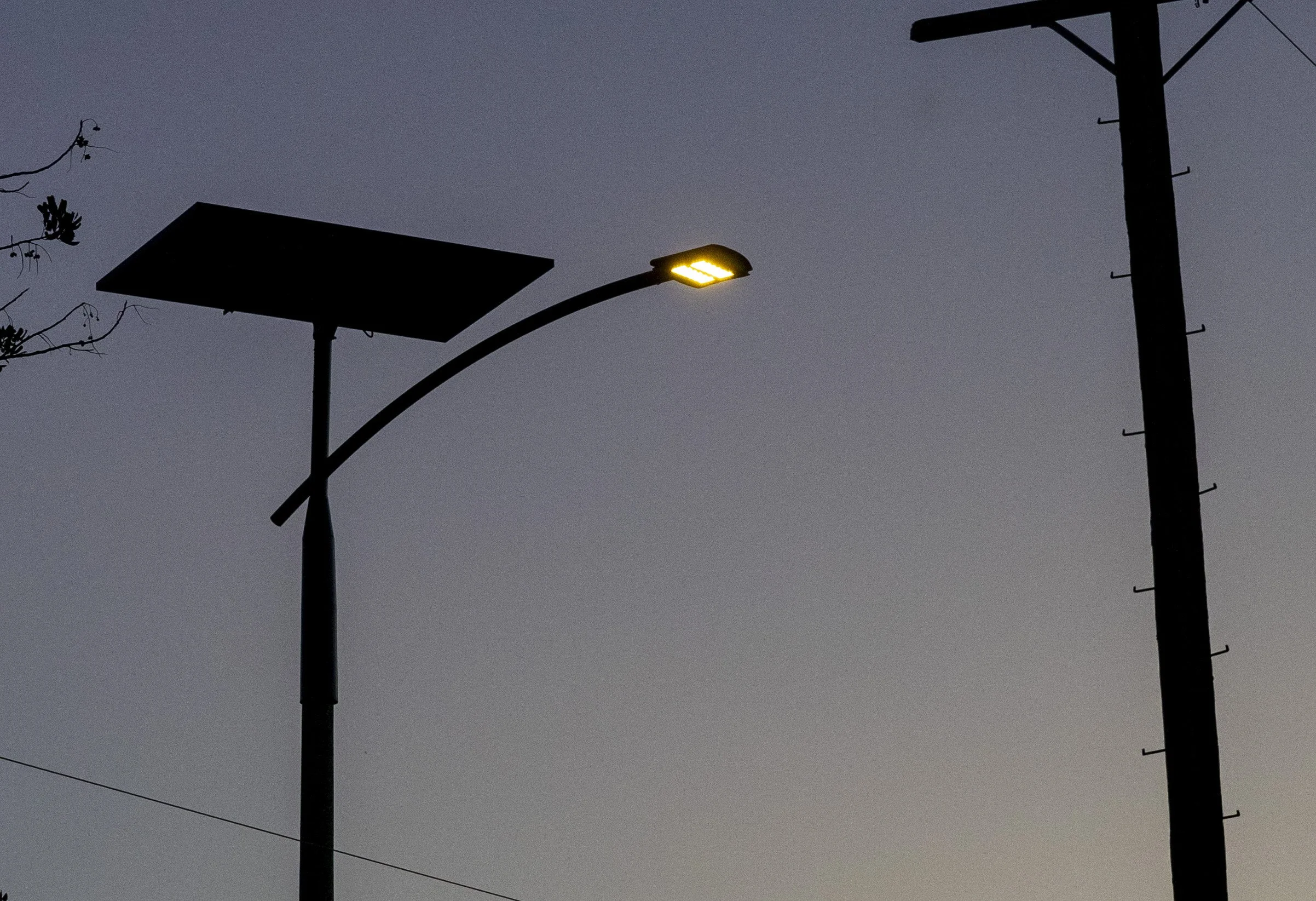
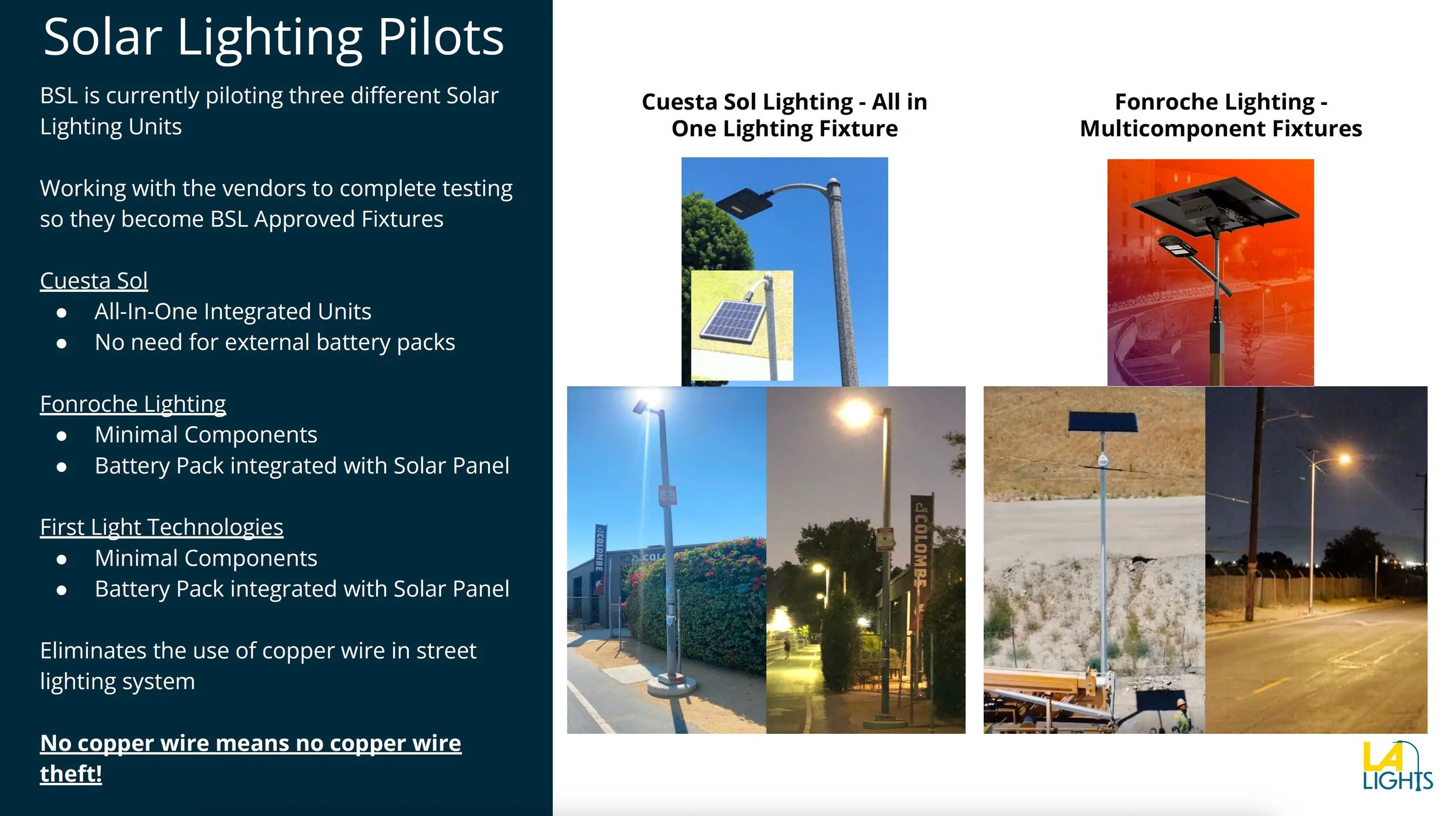
On March 25, 2026, Mayor Karen Bass signed Executive Directive No. 18, launching a program to identify and install up to 60,000 solar street lights across the city over the next two years. The City is calling it the largest investment in streetlight infrastructure in Los Angeles history. The initiative is a partnership between the Bureau of Street Lighting (BSL) and the Los Angeles Department of Water and Power (LADWP), and is designed to tackle the decade-long repair backlog, combat copper wire theft (since solar lights do not rely on underground copper wiring), reduce the City's energy consumption, and advance Los Angeles's goal of 100% clean energy by 2035. The initiative is also intended to address the more than 32,000 street light service requests by either modernizing these lights or repairing them.
What this means for Outpost Estates — and what it doesn't:
Here is where it gets complicated for our neighborhood. Outpost Estates presents real challenges for solar conversion. The Executive Directive itself states that viability depends on factors including infrastructure condition and its ability to accommodate solar [and] environmental factors such as trees and overhead power lines. Our neighborhood sits in a hillside canyon with significant tree canopy, and many of our streets are shaded for much of the day — which reduces the effectiveness of solar panels that need consistent direct sunlight to charge. In addition, our historic cast-iron "King" streetlights are custom fixtures that require specialized parts and wiring, making them poor candidates for the standard solar retrofit the program is built around.
However, the solar initiative could still help Outpost Estates indirectly. By converting tens of thousands of eligible standard lights citywide to solar, the program is expected to free up BSL crews and resources to focus on traditional repairs in neighborhoods like ours where solar is not feasible — reducing the overall backlog so the remaining grid-powered repairs can be addressed more quickly.
BSL and LADWP were directed to complete a preliminary assessment of the 60,000 eligible street light locations and report back to the Mayor and City Council on which sites will be targeted first, with the departments reporting quarterly on progress. ONA will be watching these reports closely to advocate for our neighborhood's inclusion in the traditional-repair side of the effort.
🗳️ The Proposition 218 Streetlight Assessment — Proposed, Voted, and Defeated
The second major effort was a proposed funding mechanism. In March 2026, the City Council approved BSL's request to put an updated citywide property assessment before property owners — the first proposed update to the streetlight assessment in roughly 30 years. The updated assessment was expected to generate approximately $125 million annually to fund routine maintenance, emergency repairs, and theft-hardening (harder-to-steal wiring) across the City's system of approximately 223,000 streetlights and 27,000 miles of underground copper wire. BSL leadership stated that if the assessment passed, it could reduce repair response times from approximately one year to as little as a few days.
Under Proposition 218 (Prop 218), this was a weighted mail ballot: only returned ballots were counted, weighted by each parcel's proposed assessment amount. Ballots were mailed to roughly 500,000–600,000 property owners in April 2026 and were due June 2, 2026.
The result: On June 26, 2026, the City Council publicly tabulated the ballots, and the assessment was decisively rejected. The proposed Street Lighting Maintenance Assessment District failed after 79.29% of weighted ballots opposed the measure, compared with 18.74% in favor. City officials had proposed an increase to the assessment for streetlights to collect an additional $80 million a year, on top of the current $45 million a year.
Many voters felt that basic services like streetlights should be funded by the City as a whole rather than through an additional property assessment. Those who voted no said streetlights are a basic government service that should be paid for by the city as a whole, not individual property owners.
What this means in practice: Although the new assessment failed, the city will continue collecting the original 1996 street lighting assessment, which remains in effect for basic maintenance. In other words, BSL returns to the funding status quo — the same constrained budget that has produced the 9-to-12-month repair backlog we have been tracking. The new revenue that would have funded dramatically faster repairs and replacements is now off the table.
🔦 What Happens Now — Next Steps for Outpost Estates
The assessment's failure does not mean the City has no plan. Mayor Bass's Solar Street Lights Initiative continues, and her signed Fiscal Year 2026-2027 budget states the initiative will repair and replace up to 60,000 street lights citywide over the next two years at no impact to City's General Fund. The budget also funds a dedicated task force to combat copper wire theft — the single biggest driver of our outages. The challenge for Outpost Estates is that, as explained above, solar is not a viable solution for most of our shaded hillside streets or our historic fixtures, so we must ensure the City prioritizes traditional repairs here.
Here is what ONA is doing, and how you can help:
🤝 Engaging directly with the Bureau of Street Lighting. ONA hosted BSL Executive Director and General Manager Miguel Sangalang at our recent Board meeting to discuss our outages and the assessment, and we are following up to explore every available repair pathway — including the possibility of having cast-iron replacement lights fabricated for our most severely damaged historic poles.
🏛️ Pressing Council District 4 (CD4) for a funding plan. With the assessment defeated, ONA is asking CD4 (Councilmember Nithya Raman) what discretionary or City funds can be directed to restore basic services in Outpost Estates.
🏙️ Asking the Mayor's Office for a neighborhood-specific plan. Because solar-powered streetlights are not viable on many of our heavily-canopied hillside streets, ONA is asking the Mayor's Office how the citywide Solar Street Lights Initiative will address Outpost Estates specifically.
📲 Filing 311 tickets — we need your help! Every outage needs its own 311 service request. If you see a streetlight that is down, dark, has broken glass, or needs repainting, please file a 311 request (via the MyLA311 app or by calling 311) and email the ticket number to info@outpostestates.com so we can track it and follow up with CD4 and BSL.
Bottom Line: The assessment failed, which means no new funding stream for dramatically faster repairs — but the City's Solar Street Lights Initiative continues, and ONA is pressing BSL, CD4, and the Mayor's Office to make sure Outpost Estates is prioritized for the traditional repairs our neighborhood actually needs. The most powerful thing you can do right now is file 311 tickets for every dark or damaged light and email CD4 to demand a concrete plan.
🛠️ ONA’s Role: Advocacy, Maintenance & Community Action
Outpost Neighborhood Association (ONA) actively engages with city officials, service departments, and neighbors to protect and maintain our historic street lighting infrastructure:
Collaboration with City Council & City Services:
ONA meets regularly with our Councilmember’s office and with BSL staff to advocate for prioritized repair of “King” lights in Outpost Estates, to ensure funds are allocated, and to press for replacement of wire theft and vandalism vulnerabilities.Annual Maintenance & Visibility Efforts:
Each year, ONA cleans historic street lights (removing debris, cobwebs, etc.) and trims surrounding brush/landscaping so the fixtures and poles remain visible and safe. This helps reduce risk, prolong fixture life, and ensure they remain part of the streetscape.Reporting & Tracking:
Street light repairs happen on a first-in, first-out basis, so ONA encourages neighbors to report outages right away using myLA311. Click here for how to report.

One of the easiest ways to submit a request for city services is using the MyLA311 mobile app.
🌃 Historic Streetlights as Iconic Cultural Assets

The “Urban Light” art installation at the Los Angeles County Museum of Art. Image source: https://collections.lacma.org/node/214966
Outpost Estates’ lighting is part of a broader cultural tradition in Los Angeles: streetlights are not just utilitarian but have inspired art, preservation, and even museums.
In 2008 the Los Angeles County Museum of Art (LACMA) installed an art piece featuring historic LA Street Lights titled “Urban Light” which has now become a popular tourist attraction.
There is a hidden museum of streetlights in downtown LA—a collection of vintage light poles, fixtures, and artifacts preserved out of public view. The museum celebrates the history of illumination in Los Angeles, including styles that once dotted neighborhoods like ours. (Source: LAist podcast “There’s a Hidden Museum of Streetlights”)
A recently published book about the historic street lights of Los Angeles is a good read: “Electric Moons: A Social History of Street Lighting in Los Angeles” by India Mandelkern (Author) and Tom Bertolotti (Photographer).
These cultural references underscore that street lighting can be both practical and symbolic—linking past to present, utility to memory, and neighborhood aesthetics to the city’s broader heritage.
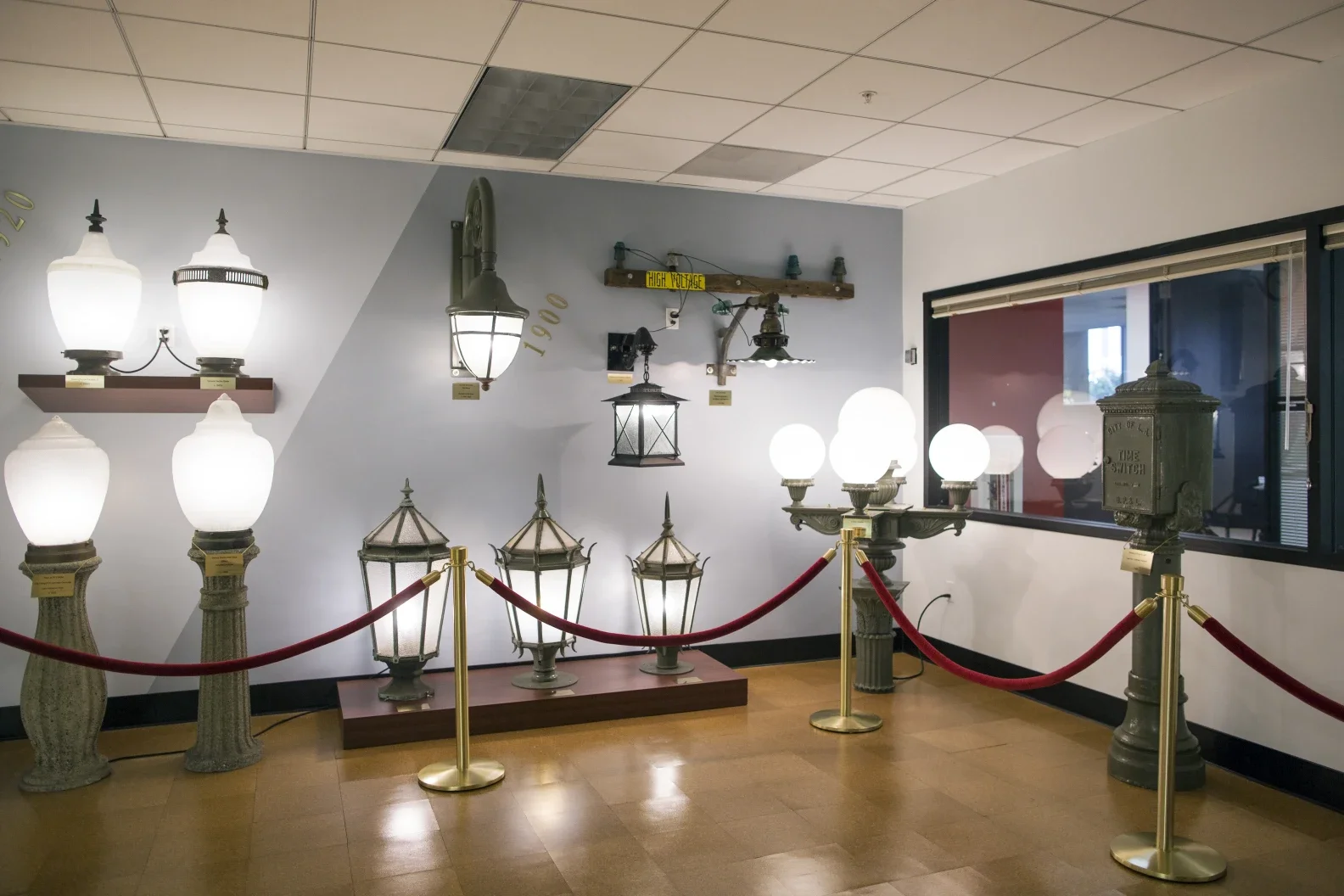
The Historic Streetlight Museum has the most comprehensive collection of Los Angeles streetlights. Image source: https://laist.com/podcasts/off-ramp/theres-a-hidden-museum-of-streetlights-in-downtown-los-angeles
🔭 Looking Forward
The “King” streetlights are a signature of Outpost Estates’ heritage. While they face risks from damage, theft, and repair delays, they remain an essential part of our streetscape and neighborhood identity. With consistent reporting and community care, we can help keep our lights shining bright for years to come. ✨
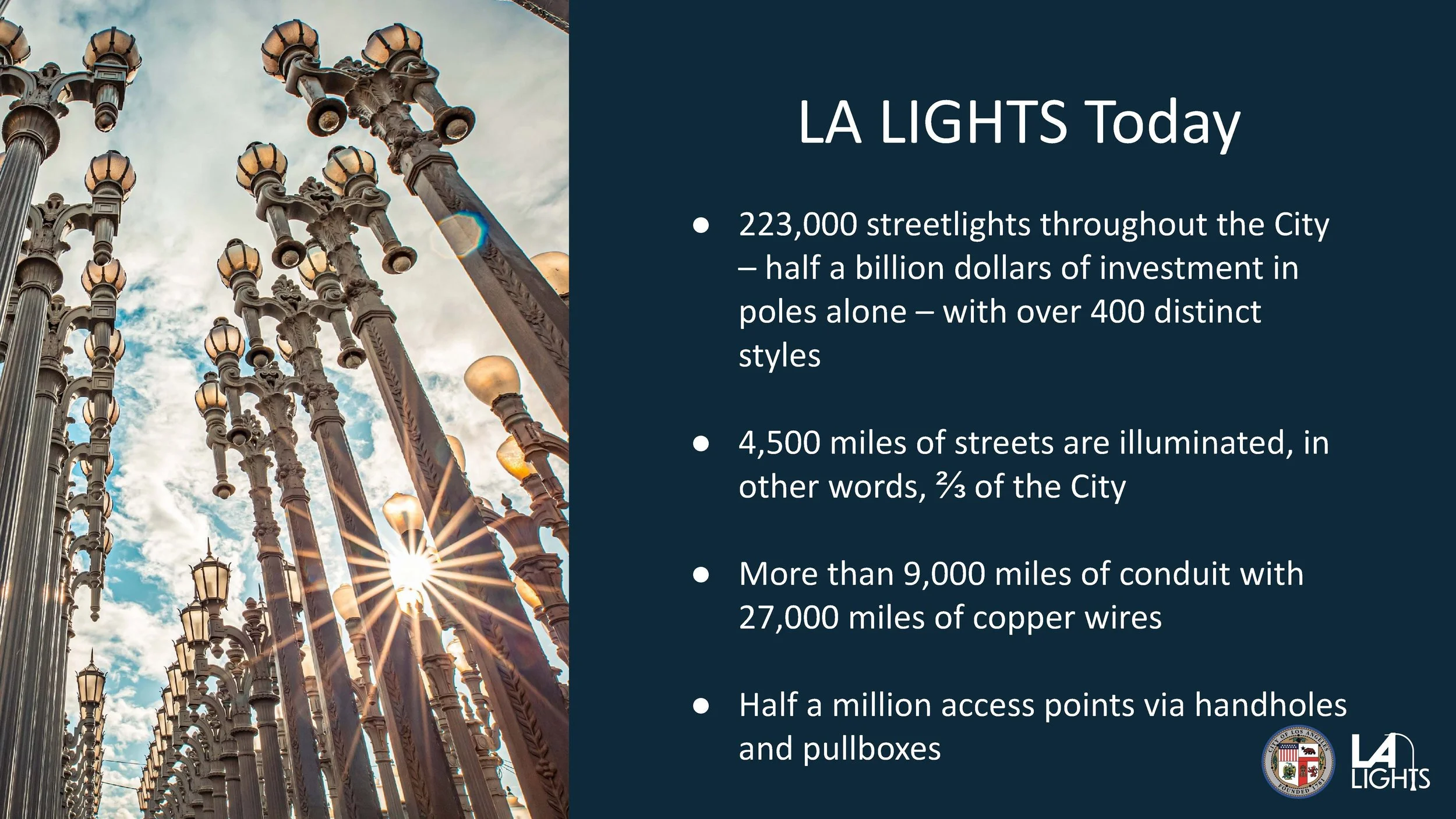
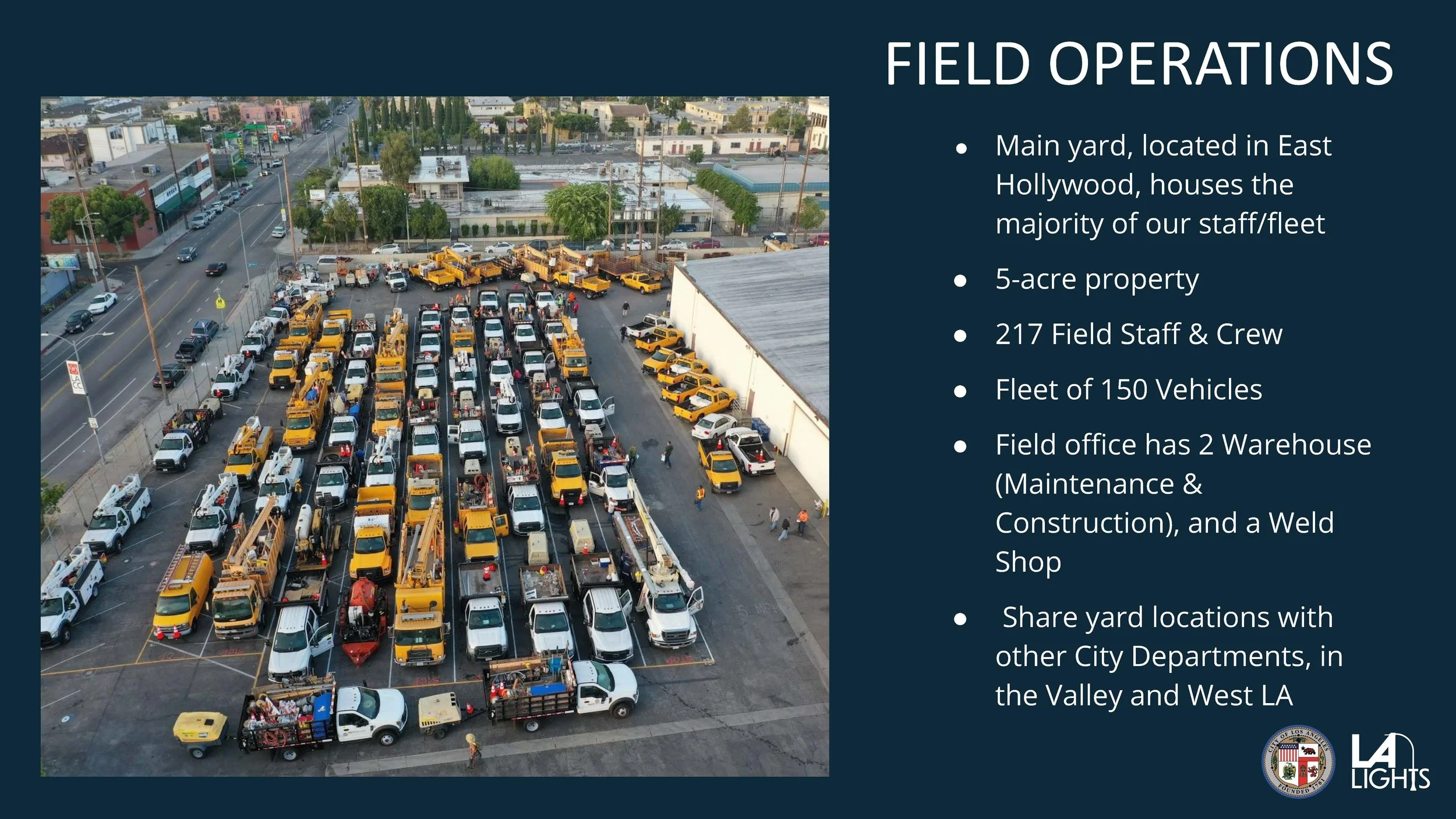
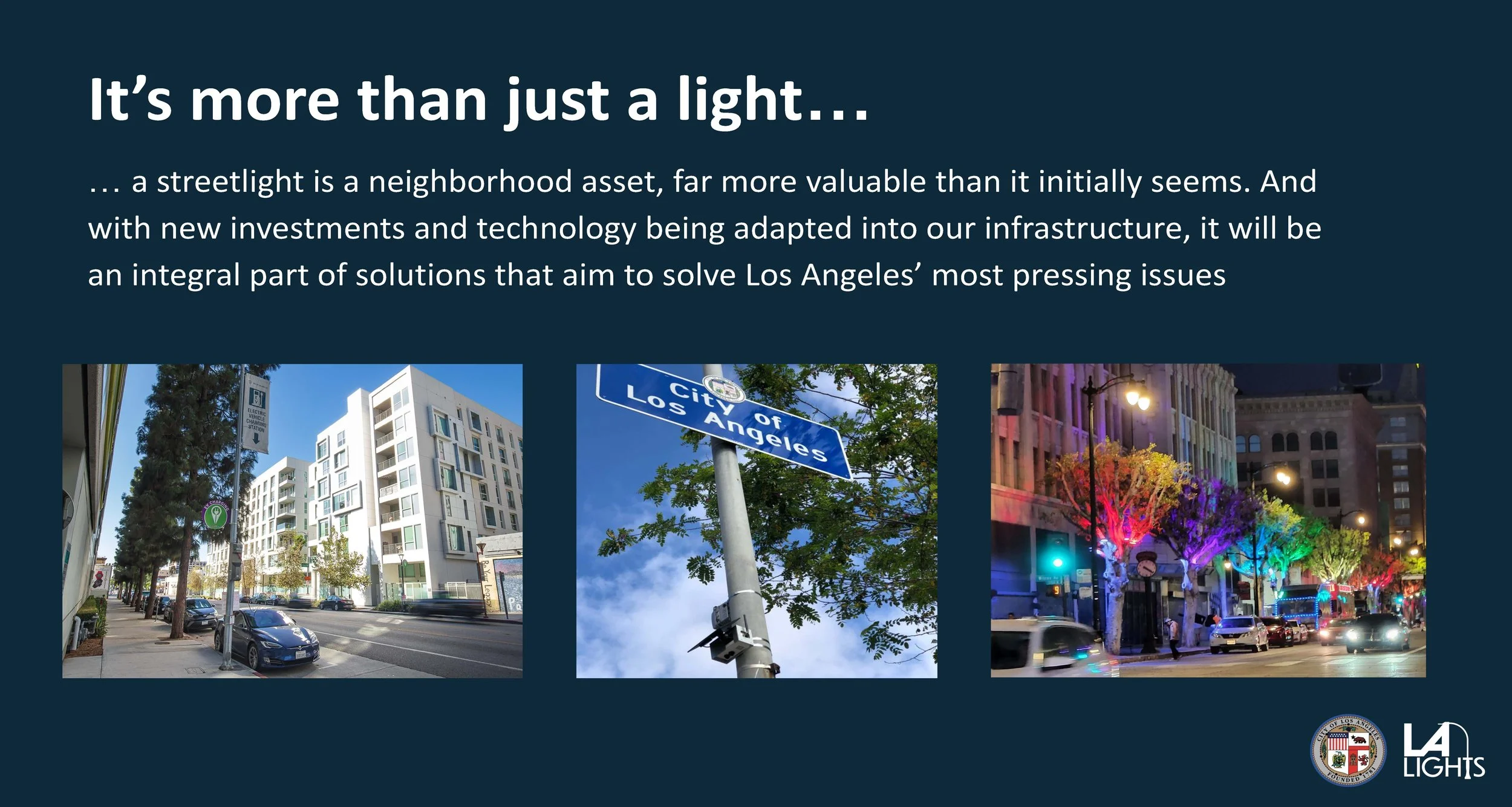
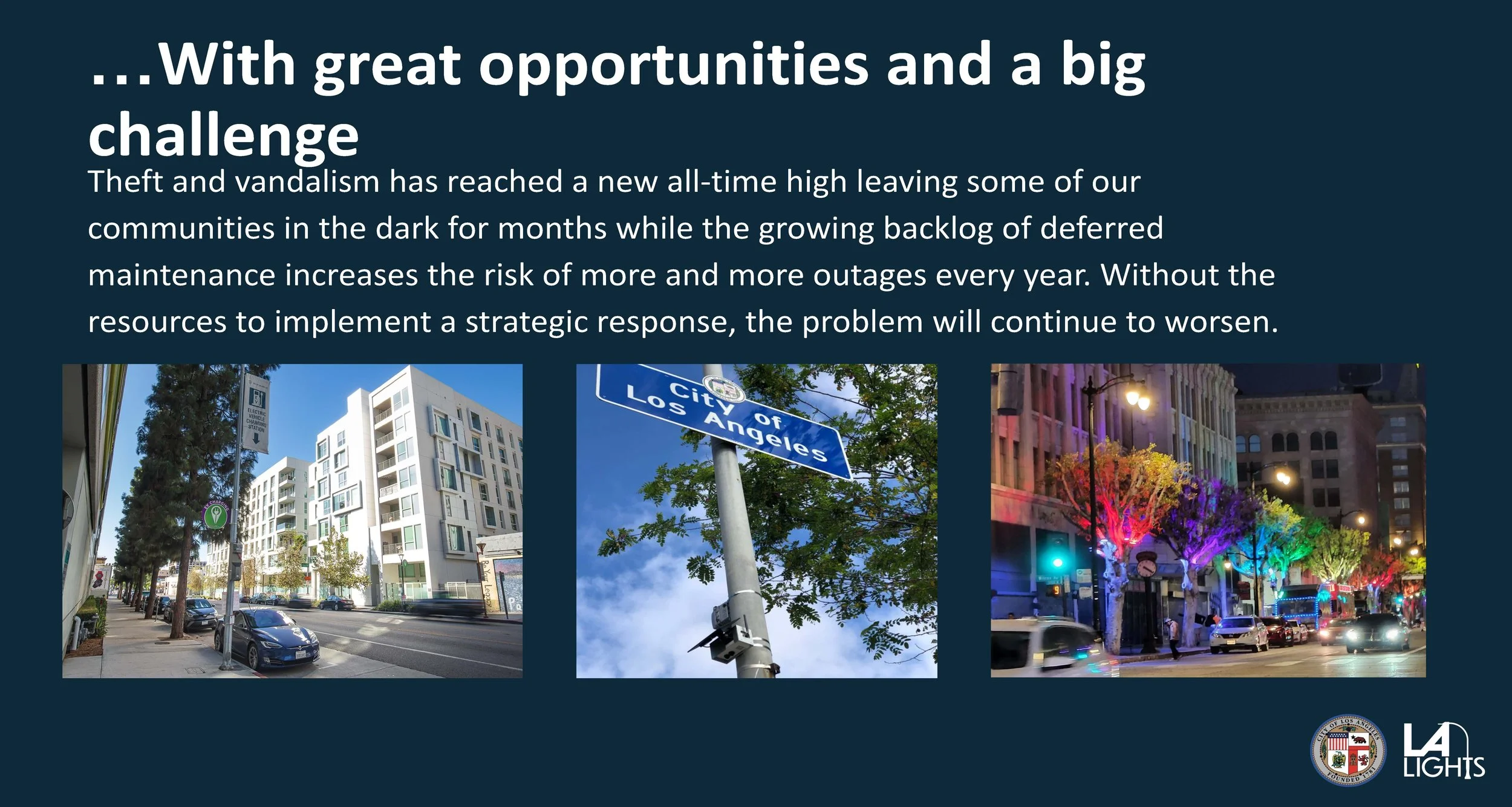
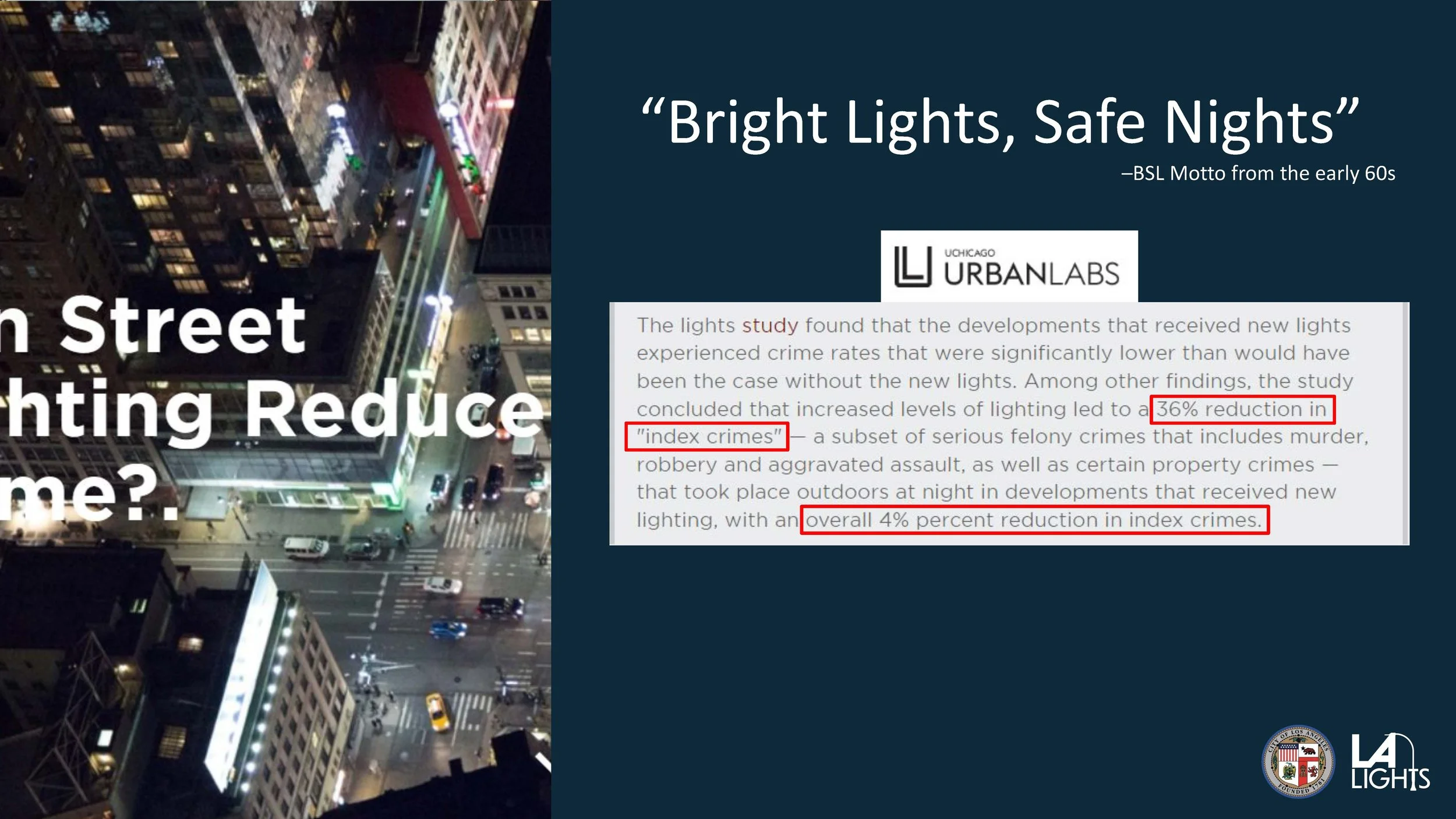
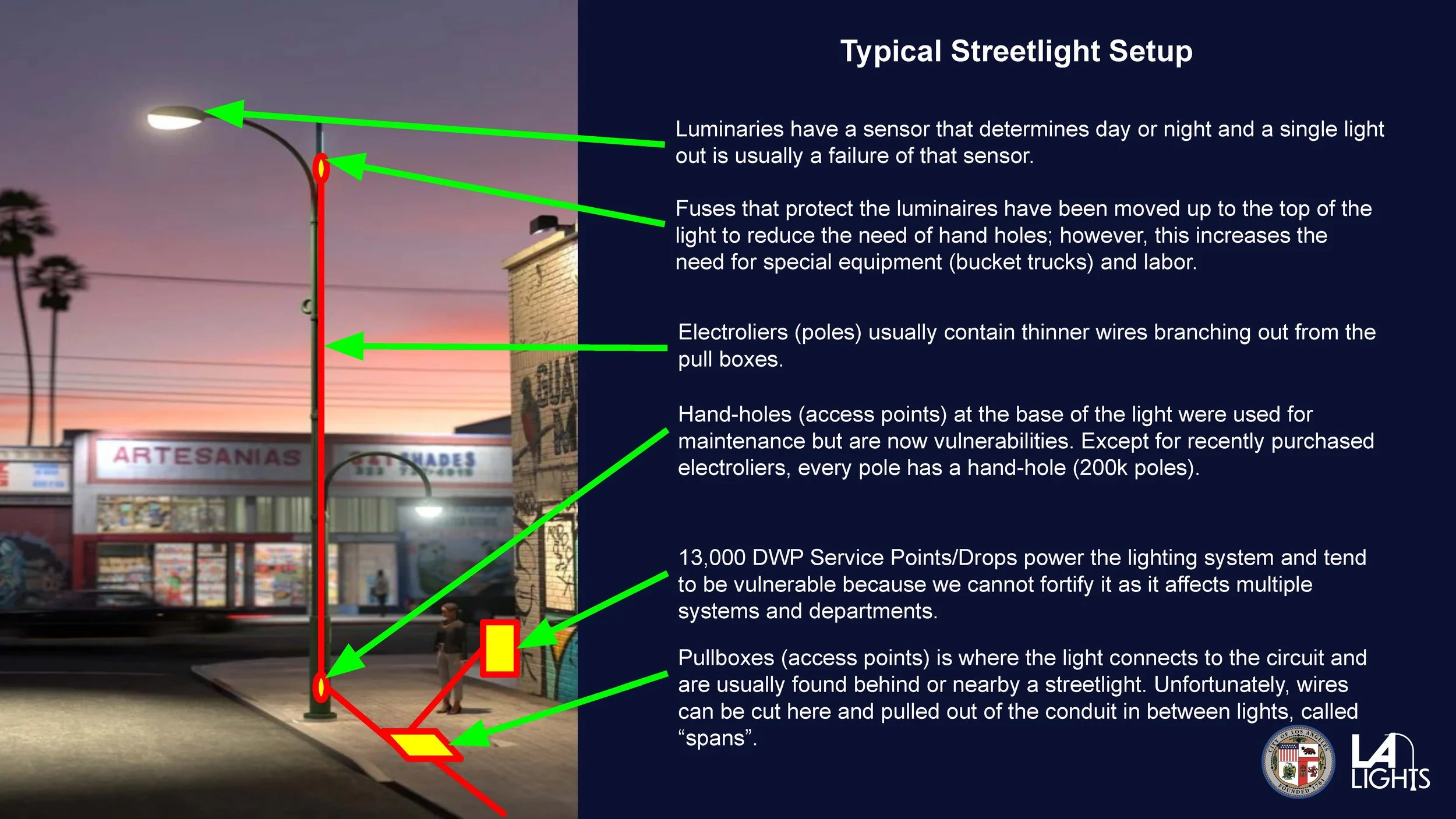
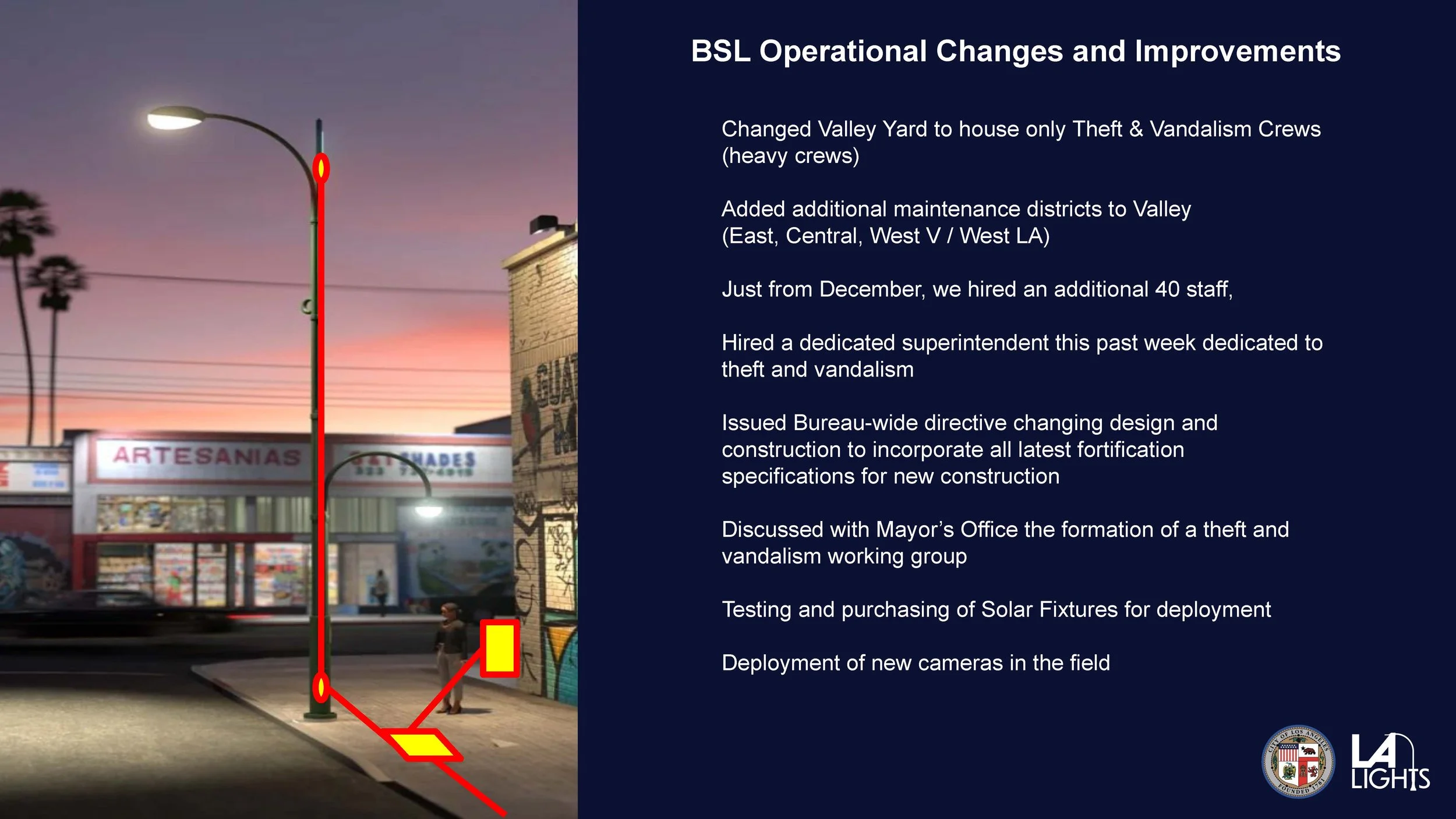
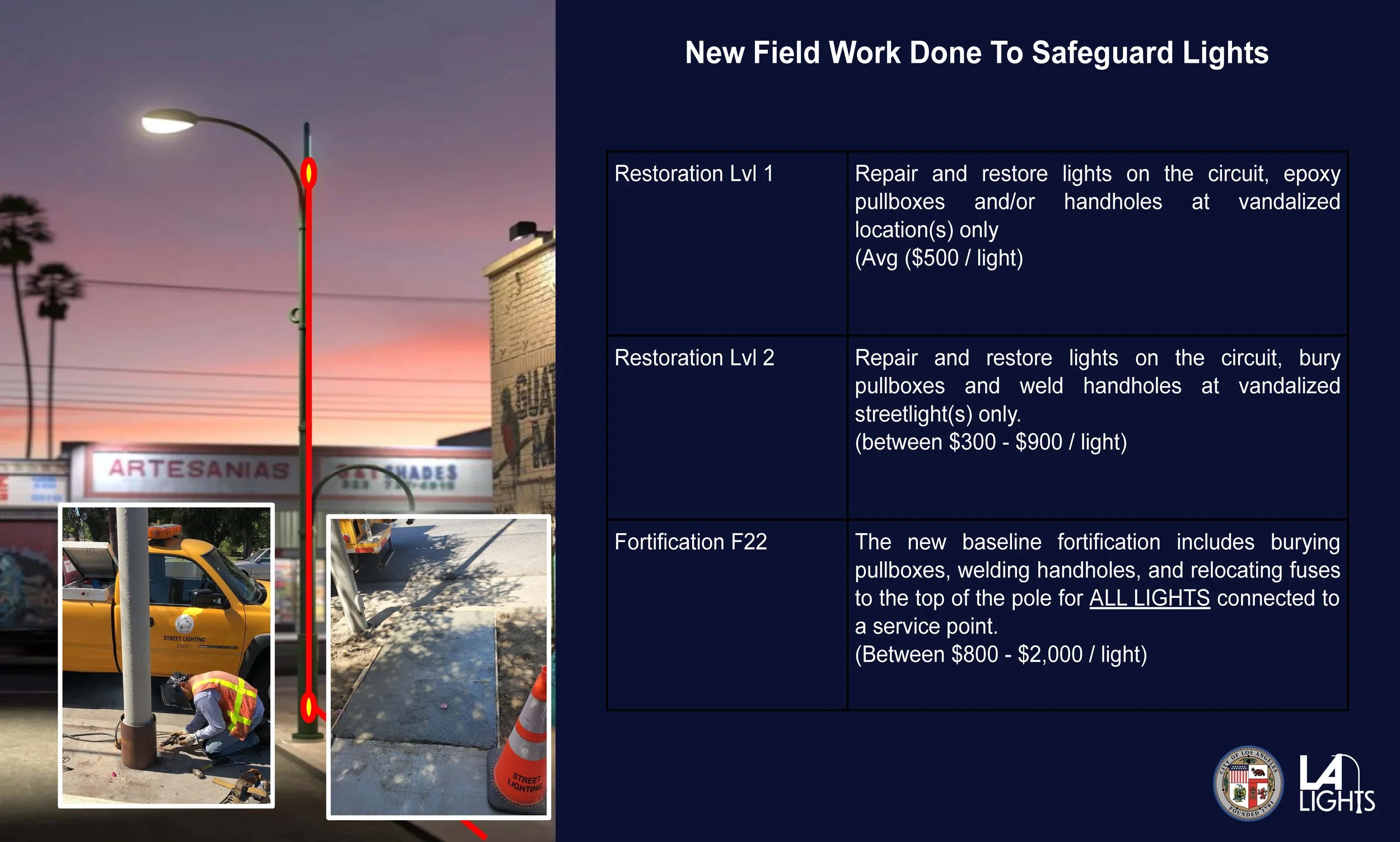
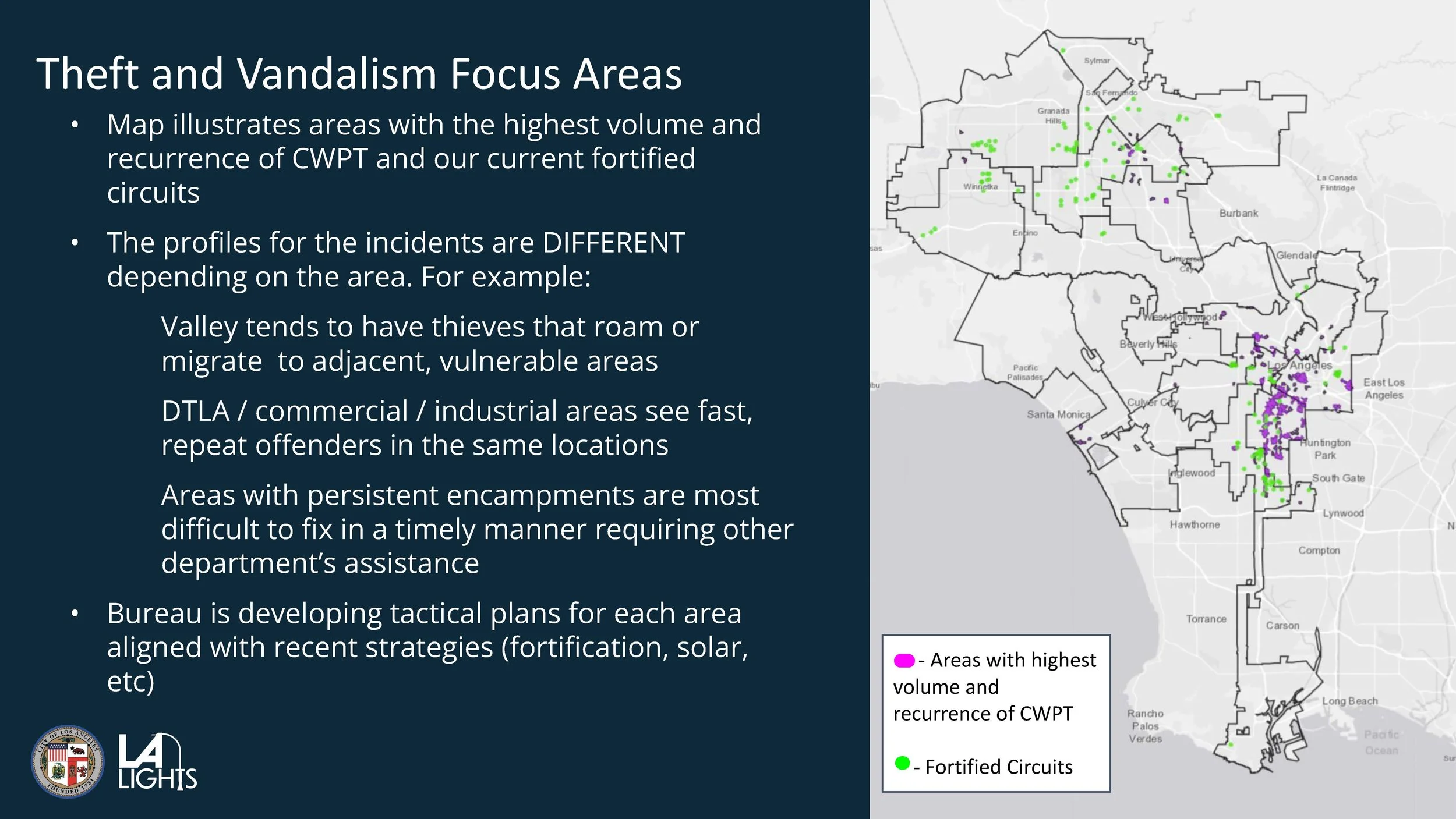
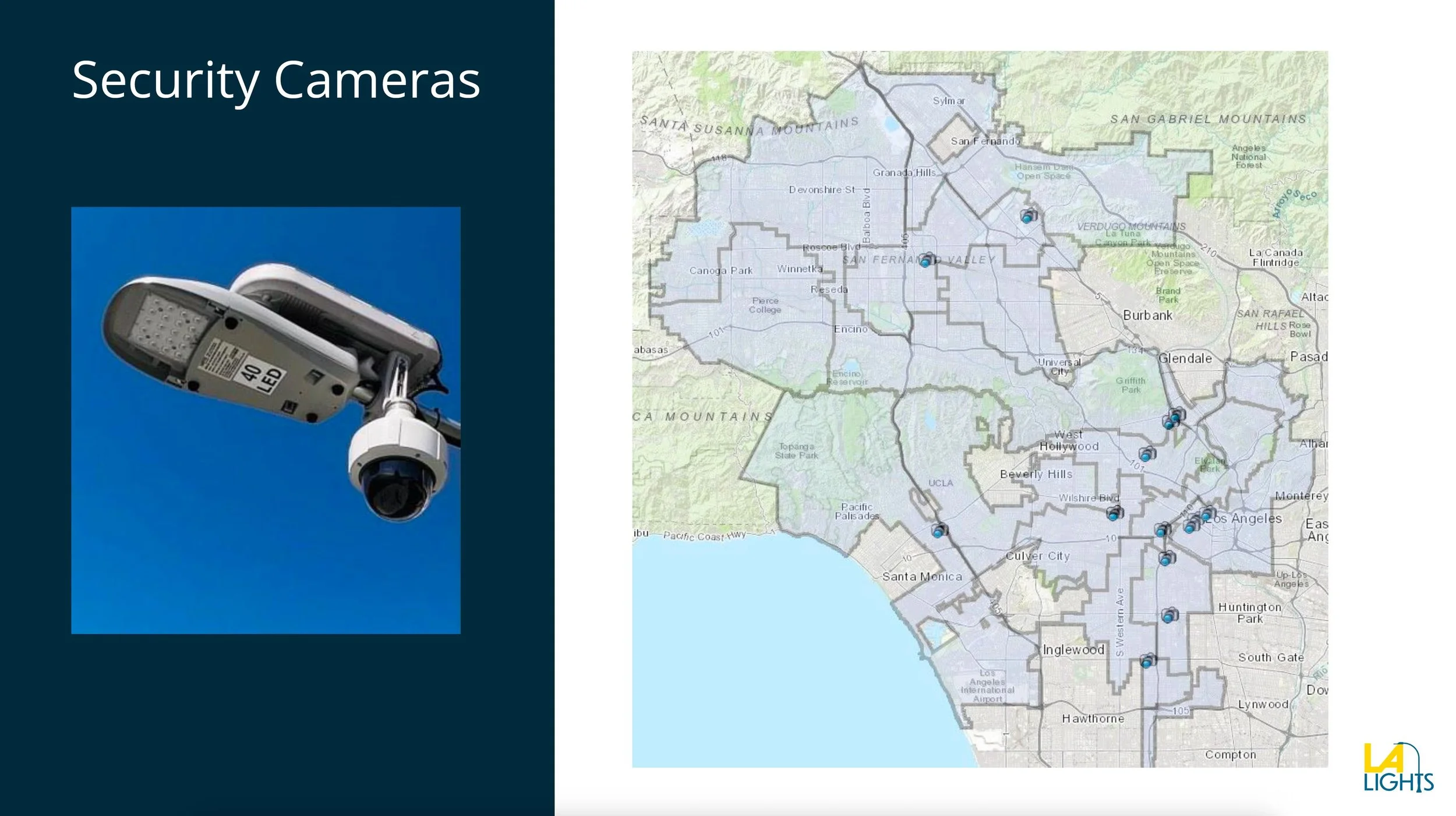
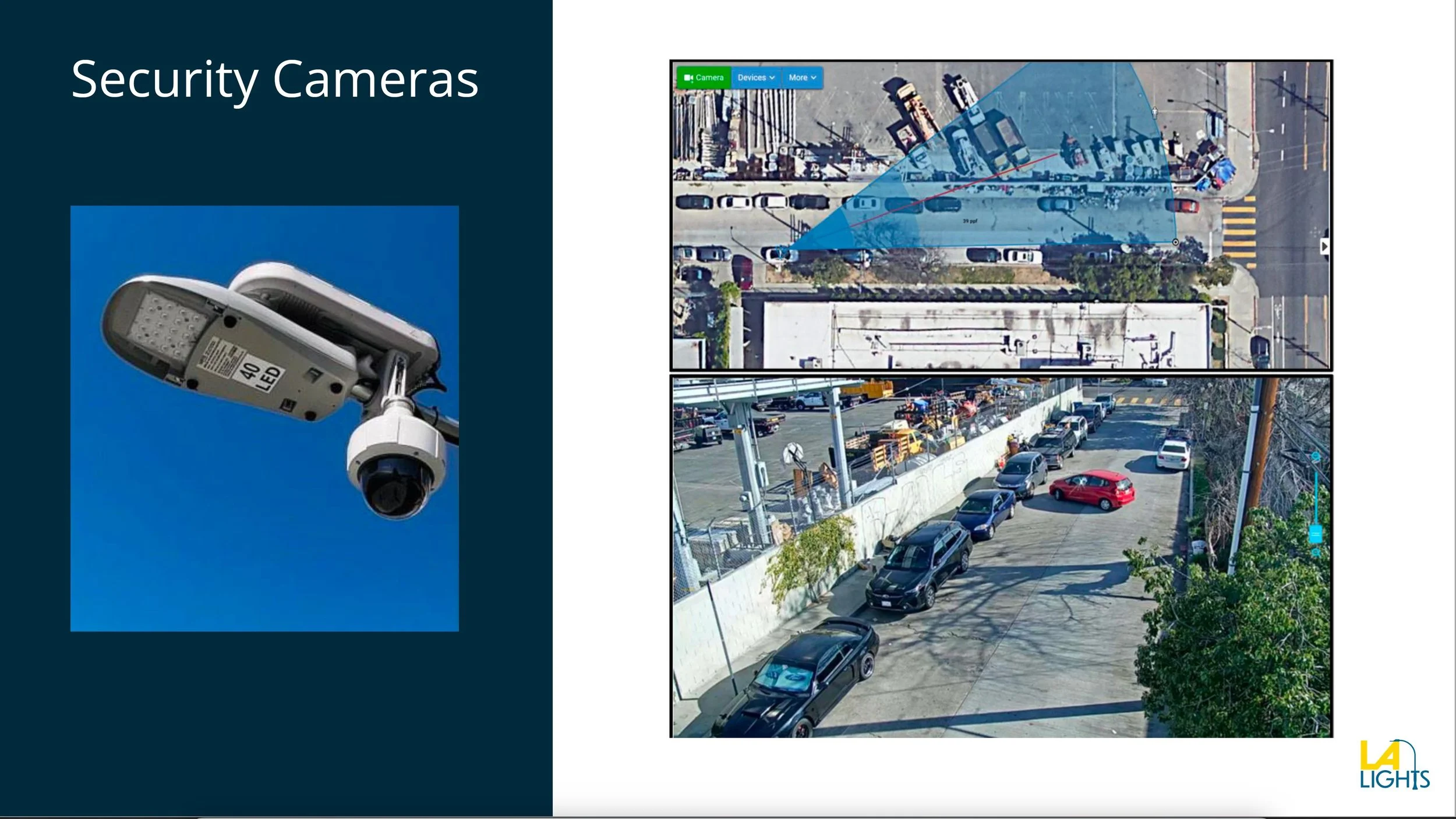
Click on the images below to see a presentation from 2023 from the Los Angeles City Bureau of Street Lighting for details on the street lighting program and what they are working on the help repair, restore and preserve street lights in the City.