The State of Our Streets: Road Conditions in Outpost Estates

Example of an asphalt road in Outpost Estates in poor condition.

Example of a concrete road in Outpost Estates in poor condition.
If you drive through Outpost Estates regularly — and especially if you live here — you already know: our streets are in rough shape. Cracked asphalt, deep potholes, eroded surfaces, and water damage are visible on nearly every block. Some streets have not been resurfaced in more than 20 years.
This is not unique to Outpost Estates. Road conditions across Los Angeles have been declining for years due to decades of deferred maintenance, budget cuts, and a resurfacing backlog that grows faster than the City can address it. But our hillside streets face additional challenges that make the problem worse — steep grades, groundwater, limited drainage, heavy Bowl traffic, and the constant wear of construction vehicles on narrow roads that were never designed for them.
This post explains how the City rates and prioritizes street repairs, where Outpost Estates streets stand, what is happening citywide, and what neighbors can do to advocate for improvement.
🛣️ How the City Rates Street Conditions
The Los Angeles Bureau of Street Services — now called StreetsLA — is responsible for maintaining the City's approximately 23,000 lane miles of streets. That is the largest municipal street system in the nation.
To track conditions, StreetsLA uses an automated survey van equipped with cameras, lasers, and sensors to measure pavement distress across all 69,000+ street segments in the city. Each segment receives a Pavement Condition Index (PCI) score ranging from 0 (failed) to 100 (perfect). The survey takes approximately three years to cover the entire city.
Here is how PCI scores translate to letter grades:
86–100 (A): Good condition. No cracking or oxidation. No action required.
71–85 (B): Satisfactory. Minor cracking or wear. Preventive maintenance recommended.
56–70 (C): Fair. Moderate cracking and wear. Preservation treatment needed.
41–55 (D): Poor. Significant distress. Major rehabilitation required.
26–40 (F): Very poor. Extensive failure. Reconstruction may be needed.
0–25 (F): Failed. Road is beyond normal repair.
You can look up the PCI score for any street in Los Angeles using StreetsLA's interactive map by clicking this link: StreetsLA Pavement Condition Index Map
You can also view the City's five-year resurfacing lookahead map to see which streets are proposed for future resurfacing by clicking this link: StreetsLA Five-Year Resurfacing Lookahead Map

An image from the “StreetsLA Pavement Condition Index Map” showing Outpost Estates streets. Most are in red and signal the road is ‘Very Poor’ or ‘Failing.’
📊 How Outpost Estates Streets Rate
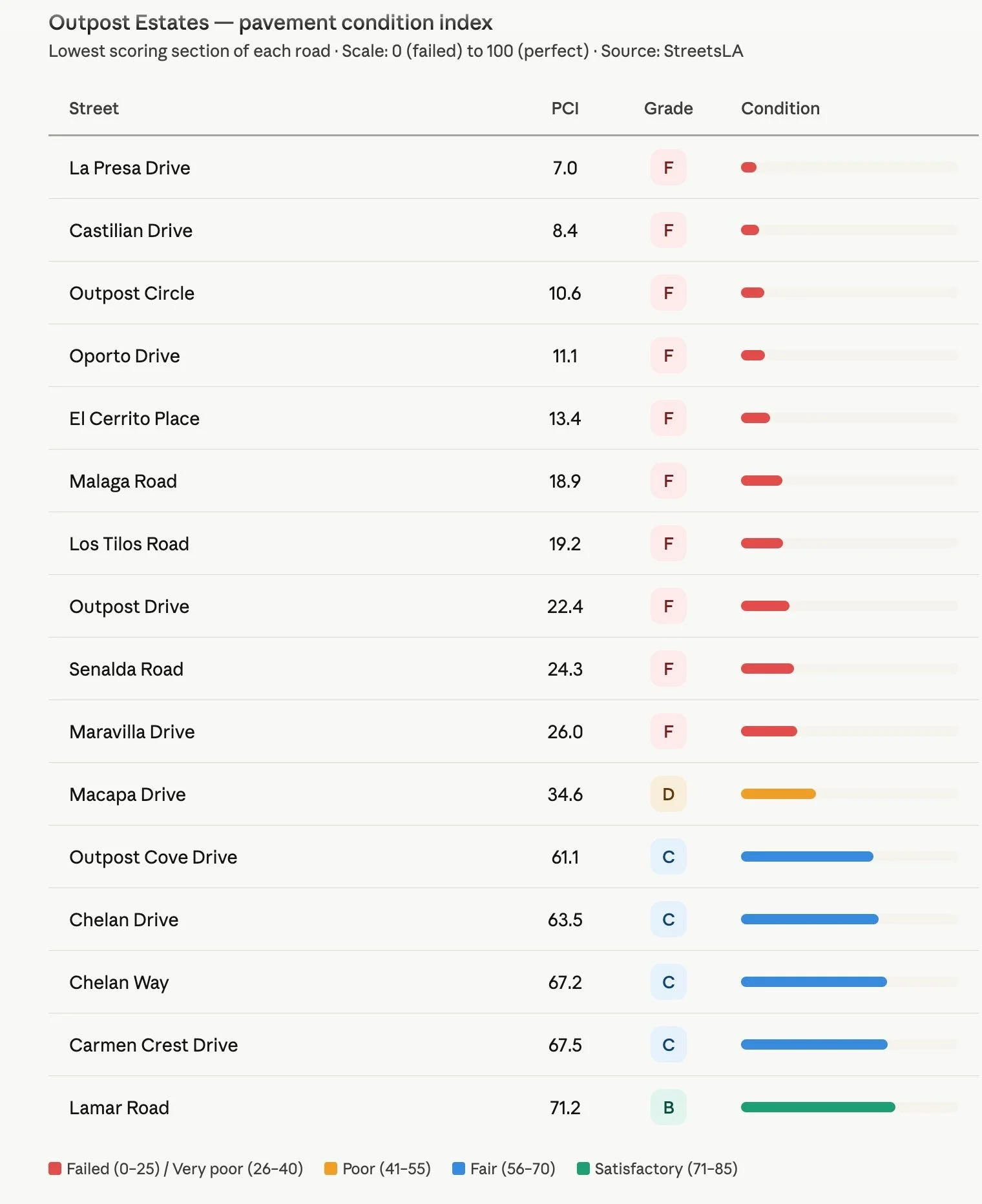
The following table shows how streets in Outpost Estates rate on the Pavement Condition Index. La Presa Drive and Castilian Drive have the worst road conditions in the neighborhood.
Some roads in Outpost Estates are asphalt. Some are concrete. Concrete roads are harder to repair and resurface, but they are significantly more durable — particularly on hillsides with groundwater, which is common throughout our neighborhood.
Outpost Drive was originally paved in concrete. Years ago, when the City redid the underground electrical and pipe infrastructure, the road was resurfaced with asphalt instead. Residents at the time advocated for concrete to be reinstalled — noting that it lasts longer, stays cooler, and holds up better against water — but the City opted for asphalt, citing cost savings. The City also used to apply a slurry seal to hillside asphalt roads every 3 to 5 years as preventive maintenance, but that program has largely fallen off in recent years.
Outpost Drive has not been fully resurfaced since the early 2000s — more than 20 years ago. According to StreetsLA, residential streets are resurfaced on average every 25 to 30 years, but many streets across the city have gone much longer.
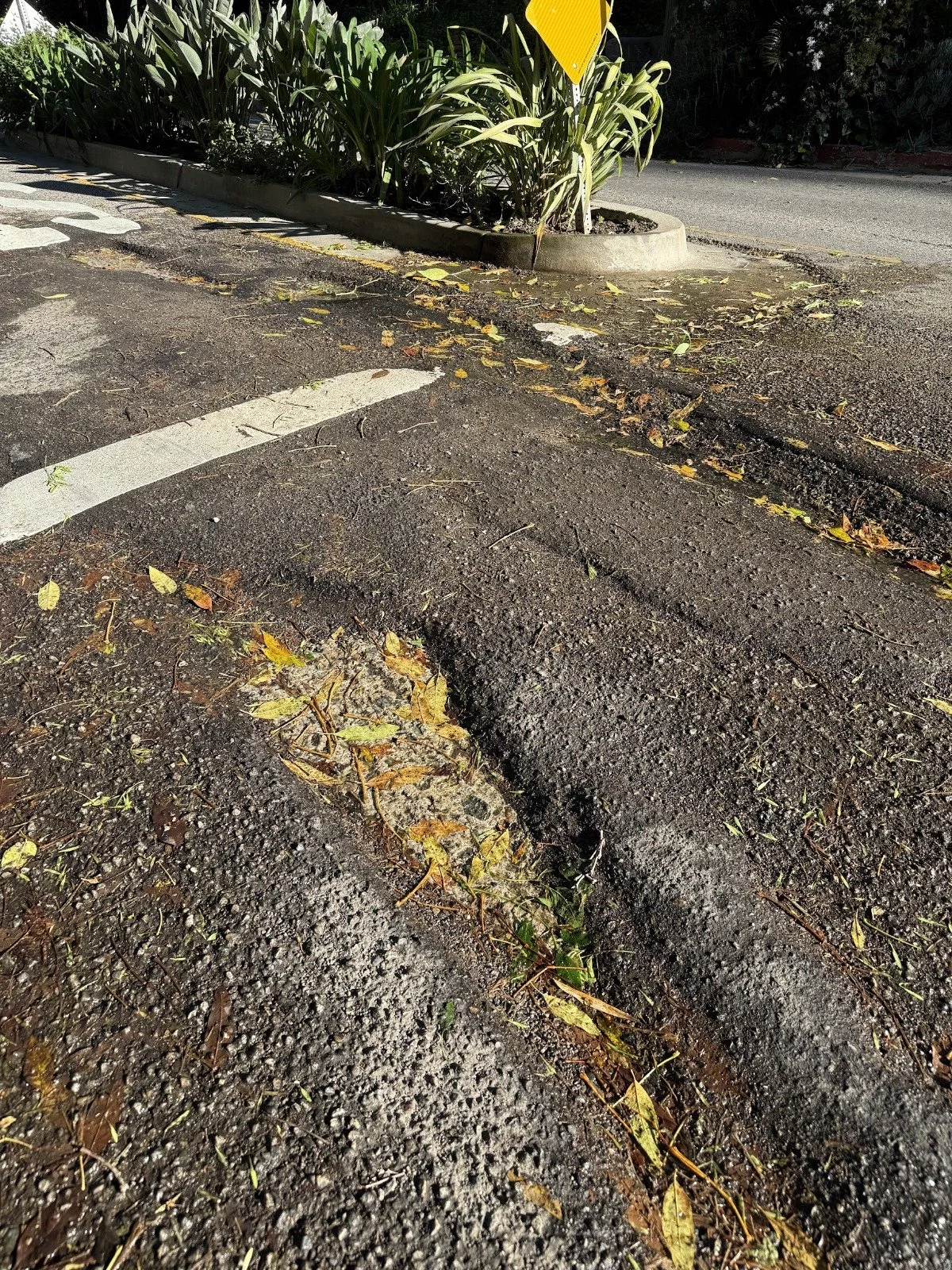
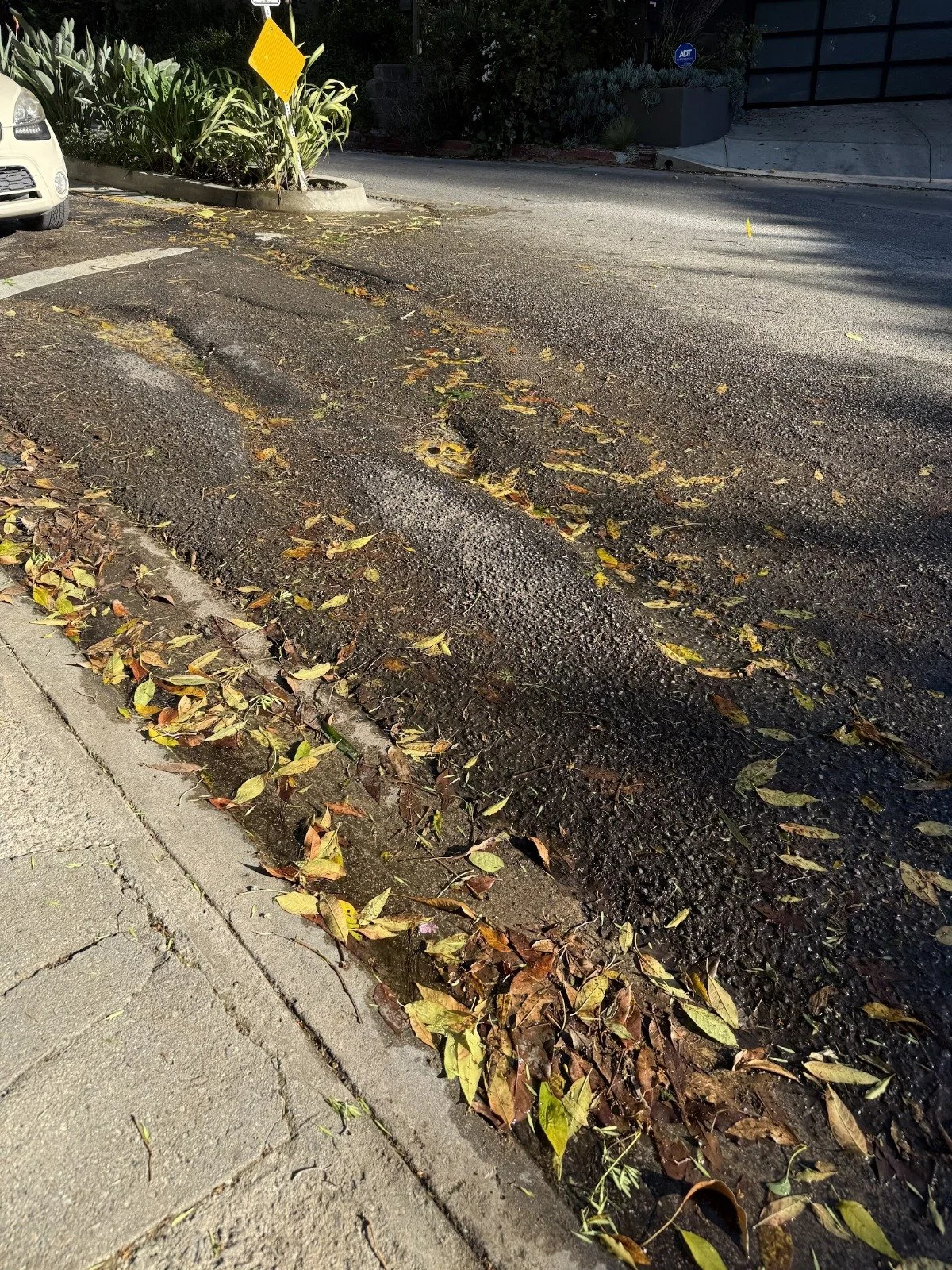
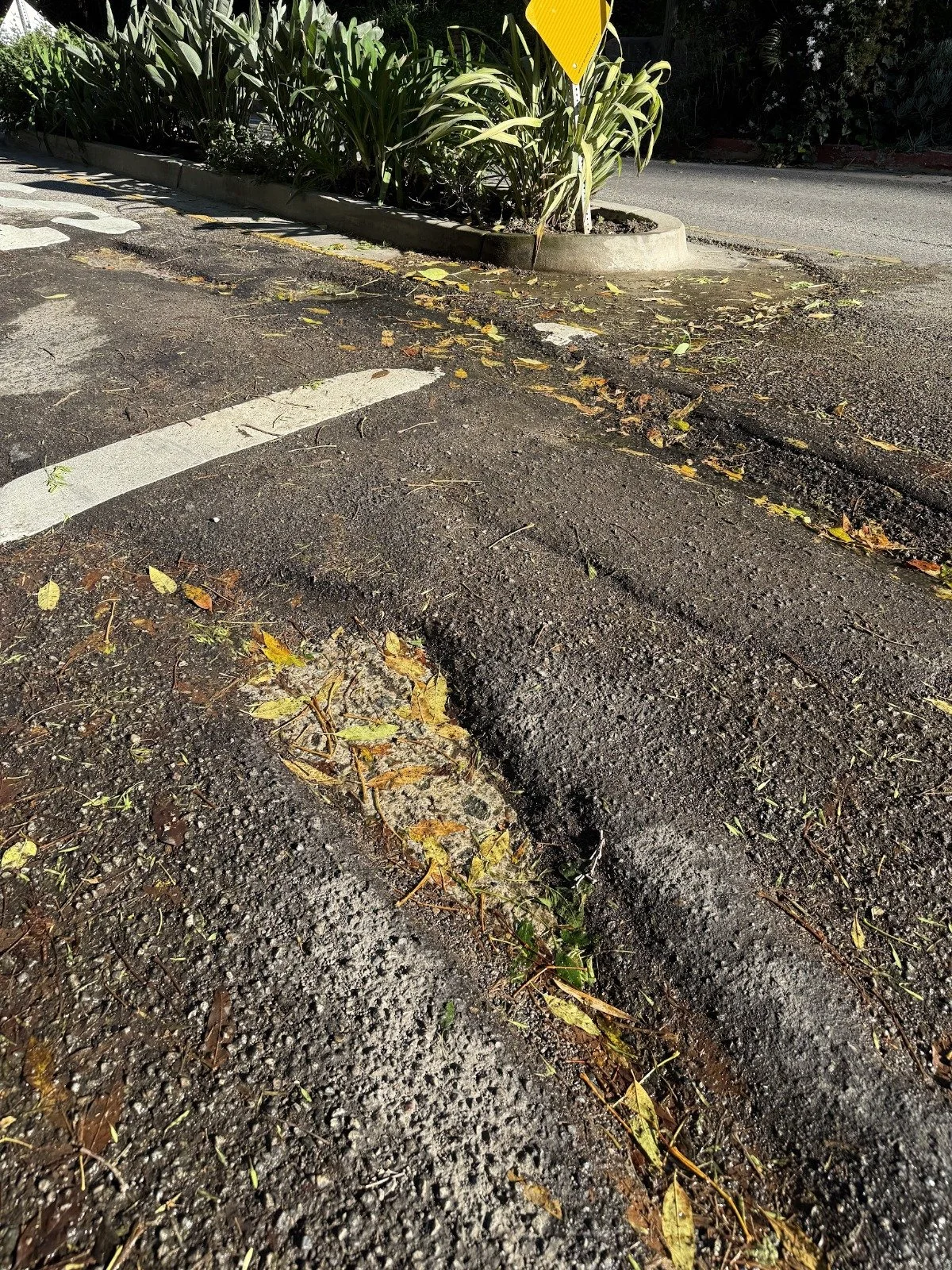
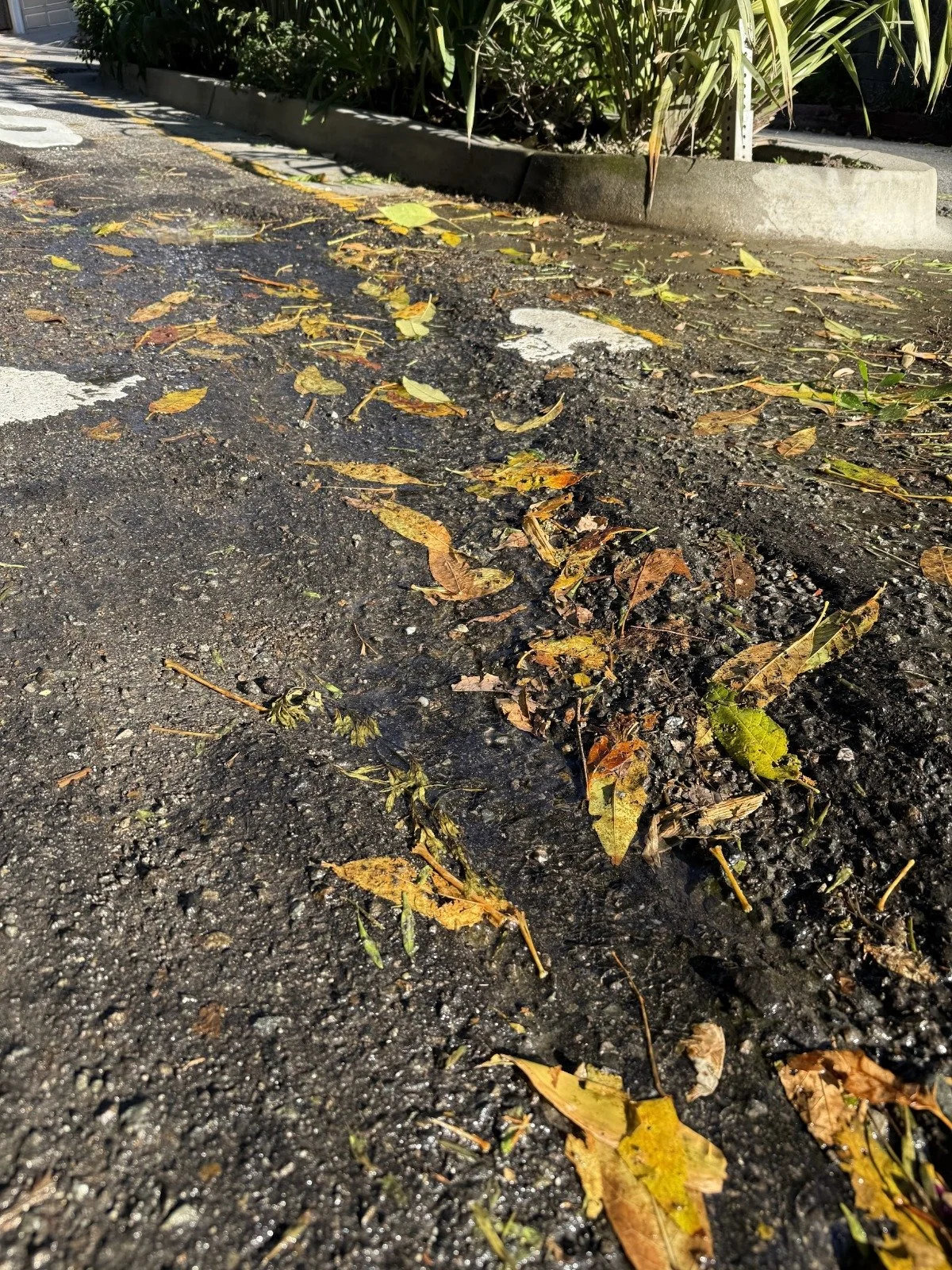
Picture from 2026 showing Outpost Drive potholes near Castilian Drive.
📅 Resurfacing Schedule for Outpost Estates
According to the most recent StreetsLA data:
La Presa Drive has been planned for resurfacing in the 2025–2026 timeframe since it has the worst PCI score in Outpost Estates
Carmen Crest Drive and Outpost Cove Drive are next on the list for 2027–2028 — even though other streets in the neighborhood have worse PCI scores
Outpost Drive does not currently appear on the near-term resurfacing schedule despite not having been repaved in over 20 years
You can check the StreetsLA Five-Year Resurfacing Lookahead Map for the latest planned schedule. Note that planned projects can be deferred if utility companies place holds on the work, or if budget funding is depleted.
🚧 Spotlight: The Outpost Drive & Castilian Drive Intersection
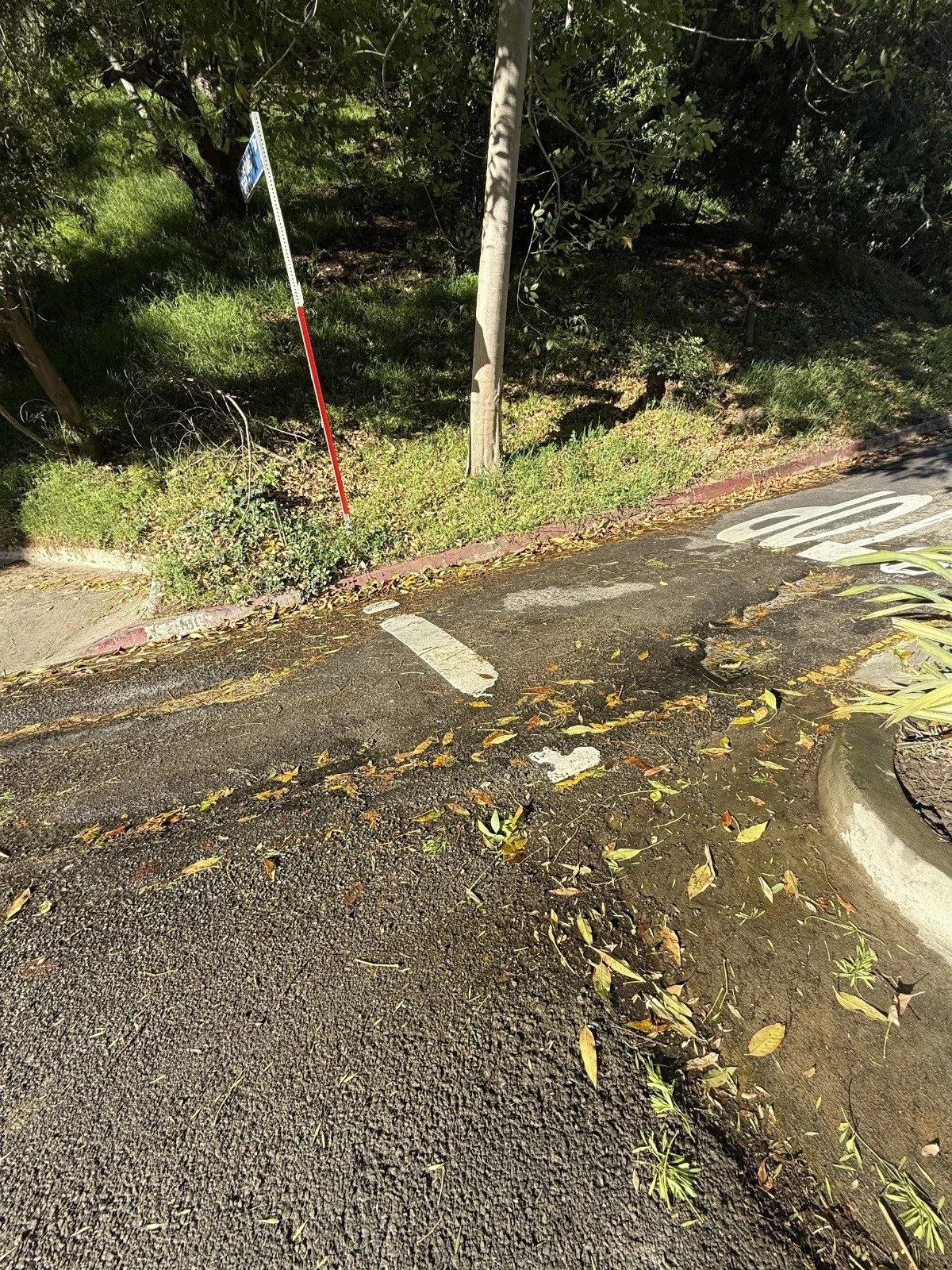
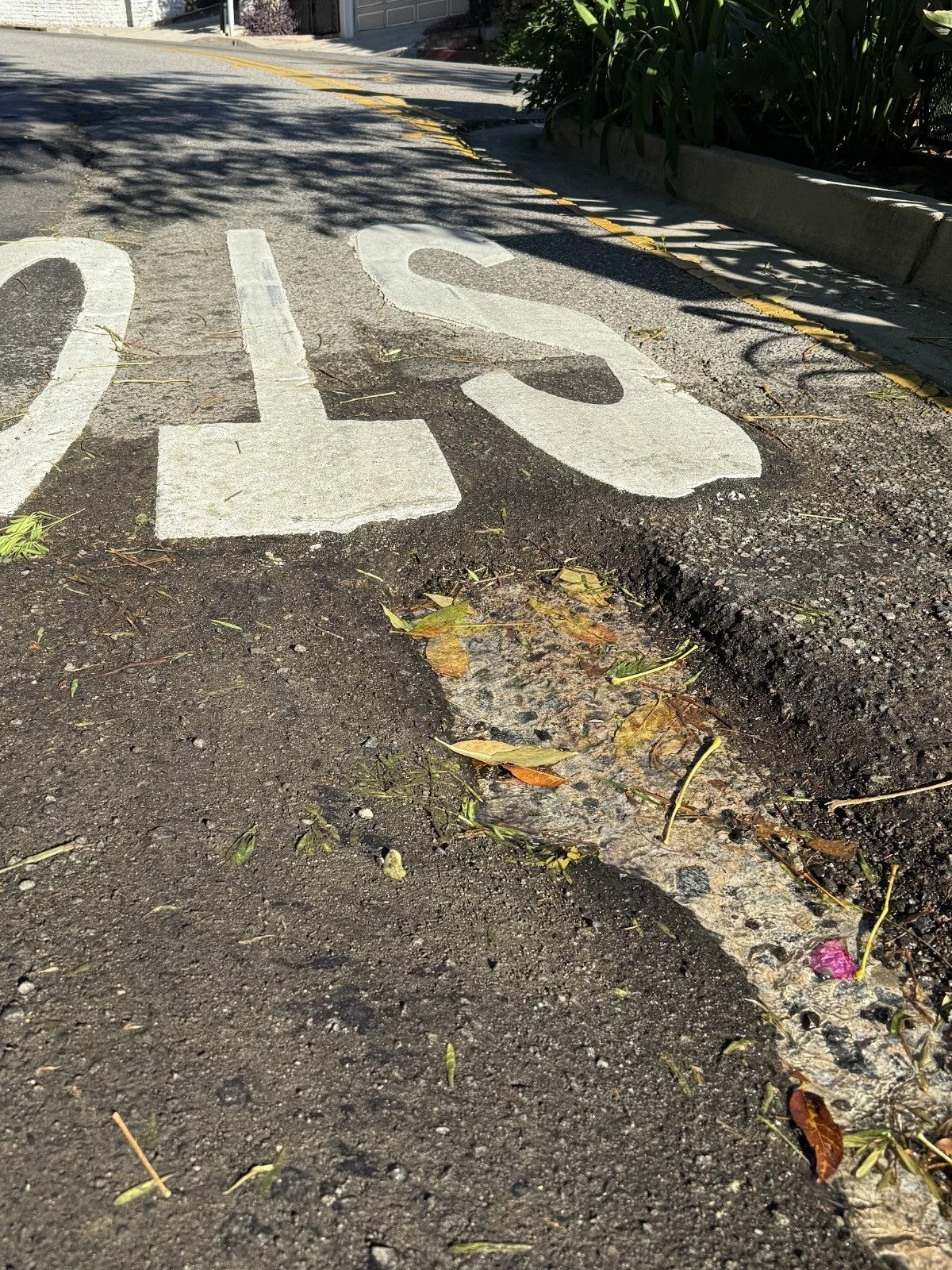
One of the most frequently raised concerns from neighbors is the condition of the intersection at Outpost Drive and Castilian Drive — particularly heading southbound on Outpost Drive. Water is constantly running in the street at this location, eroding the road surface and creating deep potholes that have worsened significantly over the years. Neighbors report that this issue has persisted for 25 to 30 years.
What's causing the water?
After repeated 311 service requests from neighbors, Outpost Neighborhood Association contacted both the Los Angeles Department of Water and Power (LADWP) and Council District 4 to investigate whether the water was from a burst water line or other City infrastructure failure.
LADWP water engineers inspected the area and found no LADWP issue. The water is natural groundwater — an underground spring that is common in the Hollywood Hills.
Council District 4 Field Deputy Bernadette Cronley confirmed:
"Our [LADWP] water engineers have investigated the area surrounding 2510 Outpost Drive and found only groundwater, which is common for the area during the rain. They found no LADWP issue. Unfortunately, this is a common issue in the hills. Our office maintains a list of streets where groundwater and stormwater runoff have caused significant damage, and the intersection of Outpost and Castilian is included on this list."
The water is not from a broken pipe — it is a natural spring beneath the road surface. The constant flow of groundwater accelerates the deterioration of the asphalt, creating a cycle of erosion and potholes that standard repairs cannot keep up with. This intersection is a prime example of why concrete would have been the better long-term choice for our hillside streets.
📉 The Bigger Picture: L.A.'s Street Crisis Is Getting Worse
The challenges in Outpost Estates are playing out across the entire city. Here is what is happening at the citywide level:
Paving output has dropped dramatically. In the latter part of the 2010s, StreetsLA was resurfacing 700 to 850 lane miles per year. That number dropped to approximately 310 lane miles last year, and budget cuts are expected to reduce it further. Less paving means more streets are vulnerable to deterioration, which creates a vicious cycle: more resources go toward emergency pothole patching instead of comprehensive resurfacing.
The City has quietly stopped full resurfacing. Since July 2025, StreetsLA has shifted most of its repaving work from traditional curb-to-curb resurfacing to so-called "Large Asphalt Repair" (LAR) — partial repaving that leaves strips of cracked, failing asphalt alongside new sections. As reported by Streetsblog LA, the shift appears to be motivated in part by a desire to avoid triggering ADA curb ramp requirements and Measure HLA bike/bus lane improvements that are required during full resurfacing.
Pothole reports are surging. In January 2026, pothole reports hit 6,707 in a single month — a 49% increase over the prior month. But StreetsLA has only 12 of its 28 pothole trucks running daily due to chronic staffing shortages.
Overall pavement condition is declining. StreetsLA's own data shows that the percentage of city streets in "good condition" was approximately 60% last year and is projected to drop to 53% by June 2026. With similar budgets and practices anticipated for the following fiscal year, conditions are expected to continue worsening.
Liability costs are significant. Between 2024 and 2025, the City paid out over $5.4 million in claims related to pothole and road damage. In one notable case, a single lawsuit related to a falling streetlight resulted in a $21 million payout. These liability costs drain resources that could otherwise be directed toward preventive maintenance.
📱 What Neighbors Can Do
Report potholes and road damage via MyLA311. Every service ticket matters. Even if you have reported the same potholes before, submitting a new request creates a fresh record and helps demonstrate the ongoing severity of the problem. Use MyLA311 and select Street Repair / Pothole. Include photos if possible.
Contact Council District 4. If you have a moment, send an email to the CD4 contacts below to let them know the road conditions in Outpost Estates are unacceptable:
Mehmet Berker, Transportation, Infrastructure & Public Space Director: mehmet.berker@lacity.org
Bernadette Cronley, CD4 Field Deputy for the Hollywood Hills: bernadette.cronley@lacity.org
Document the damage. Take photos and note the specific location (street address or intersection). The more documentation the City has, the harder it is to ignore.
The more voices the City hears from Outpost Estates, the more likely our streets will move up the priority list. Basic road maintenance should not require decades of neglect and dozens of 311 tickets — but right now, persistent advocacy is the most effective tool we have.
🔗 Helpful Links and Resources
News Sources
