Earthquake Fault Zones Near Outpost Estates: What Neighbors Should Know
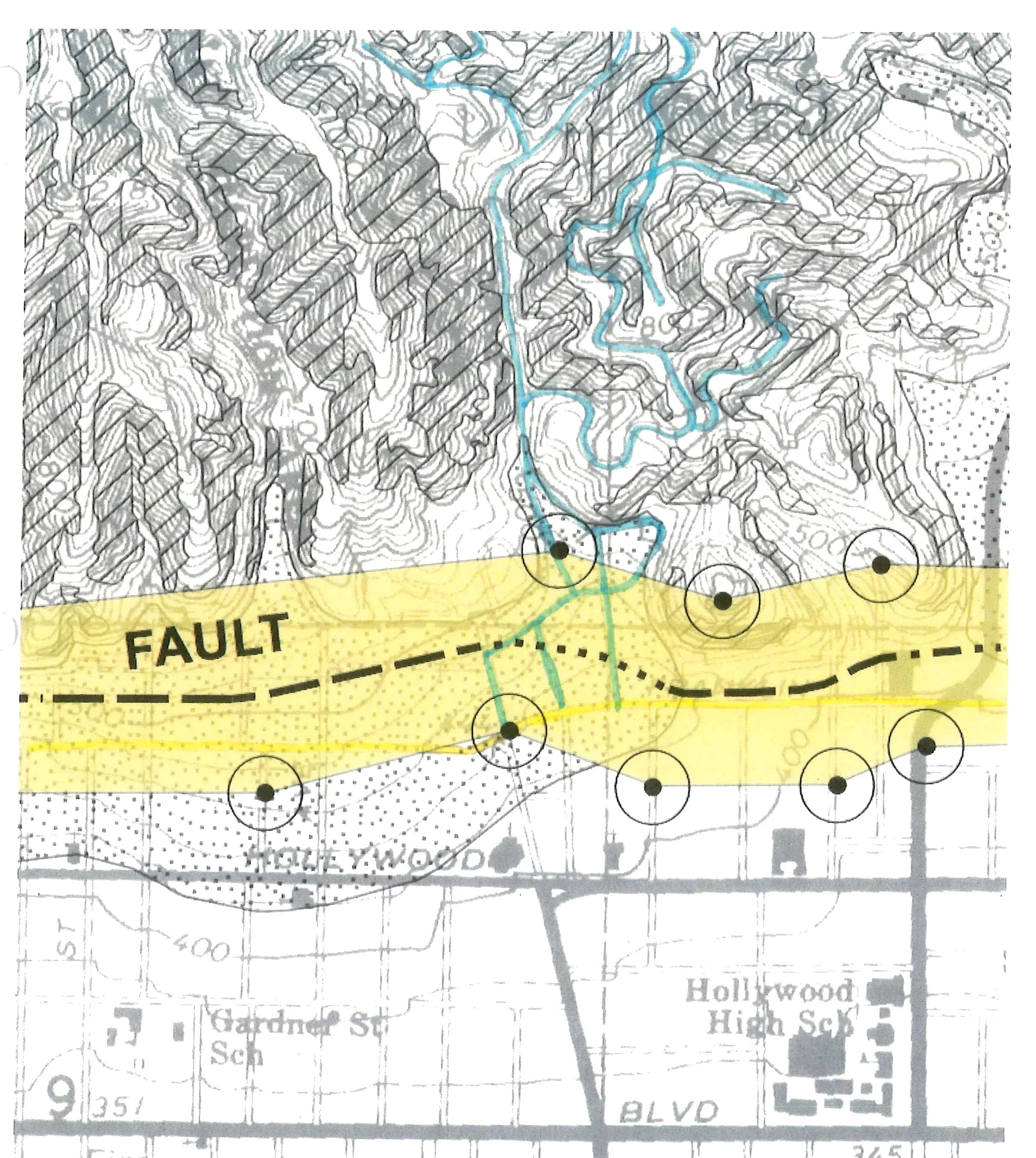
An image from the California Geological Survey's (CGS) preliminary review map (January 2014) of the Hollywood Fault Earthquake Fault Zone. The blue highlighted streets are streets in Outpost Estates. The yellow band marks the Alquist-Priolo Earthquake Fault Zone of Required Investigation running along the base of the hills just south of Outpost Estates. CGS released the official version later in 2014. To check your specific parcel, use the EQ Zapp interactive map linked here.
Living in the Hollywood Hills means incredible views — and also living in an active seismic region. The California Geological Survey (CGS) has mapped official "Earthquake Fault Zones of Required Investigation" running through the Hollywood area, including the Hollywood Fault, which crosses near Franklin Avenue at the base of the Outpost Estates hillside.
This isn't meant to alarm anyone. It's a reminder that preparedness and retrofit work are especially important in hillside neighborhoods with many older homes — and that the State of California currently offers grants of up to $13,000 to help homeowners strengthen their homes.
🗺️ The Hollywood Fault and What the State Maps Mean
The Hollywood Fault runs roughly east-west along the base of the Santa Monica Mountains, passing just south of Outpost Estates near Franklin Avenue and Hollywood Boulevard. After years of study, the California Geological Survey (CGS) officially designated the Hollywood Fault as an Alquist-Priolo Earthquake Fault Zone in 2014, following the release of preliminary review maps in January 2014.
CGS publishes two related types of maps:
Earthquake Fault Zones (under the Alquist-Priolo Act): regulatory zones around mapped active fault traces where surface fault rupture is a concern. Within these zones, most new construction and certain major remodels must include a geologic investigation to confirm a building won't sit directly on the fault.
Seismic Hazard Zones (under the Seismic Hazards Mapping Act): areas mapped for liquefaction and earthquake-induced landslides — both highly relevant to hillside neighborhoods like ours.
An "active fault" under the Alquist-Priolo Act is one that has ruptured within roughly the last 11,000 years! Importantly, these maps are used for planning, construction, and real estate disclosure requirements — they are not earthquake predictions.
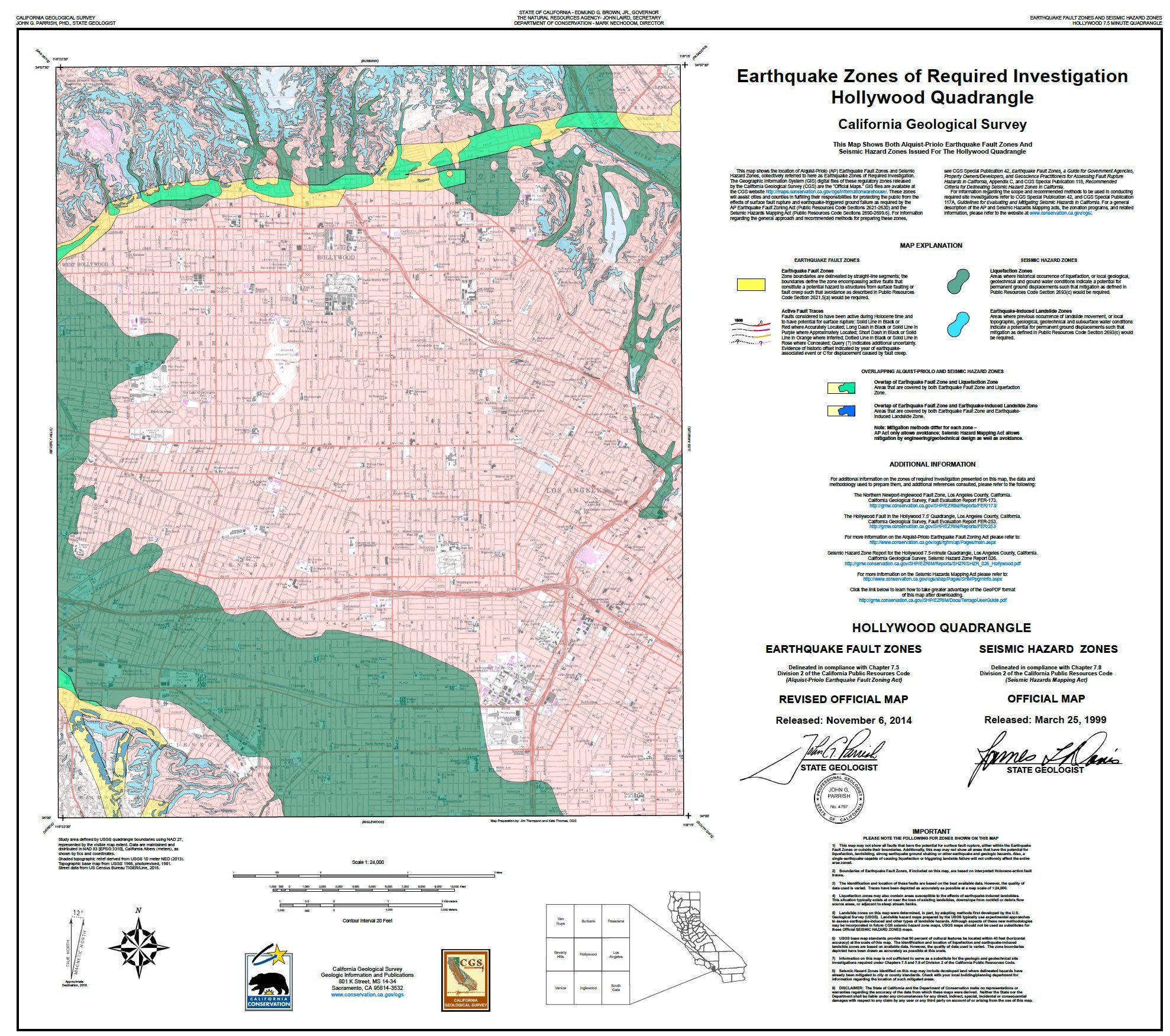
Click here to download the full PDF of the map of the Alquist-Priolo Earthquake Fault Zones and Seismic Hazard Zones in Hollywood.
📍 Why This Matters for Outpost Estates
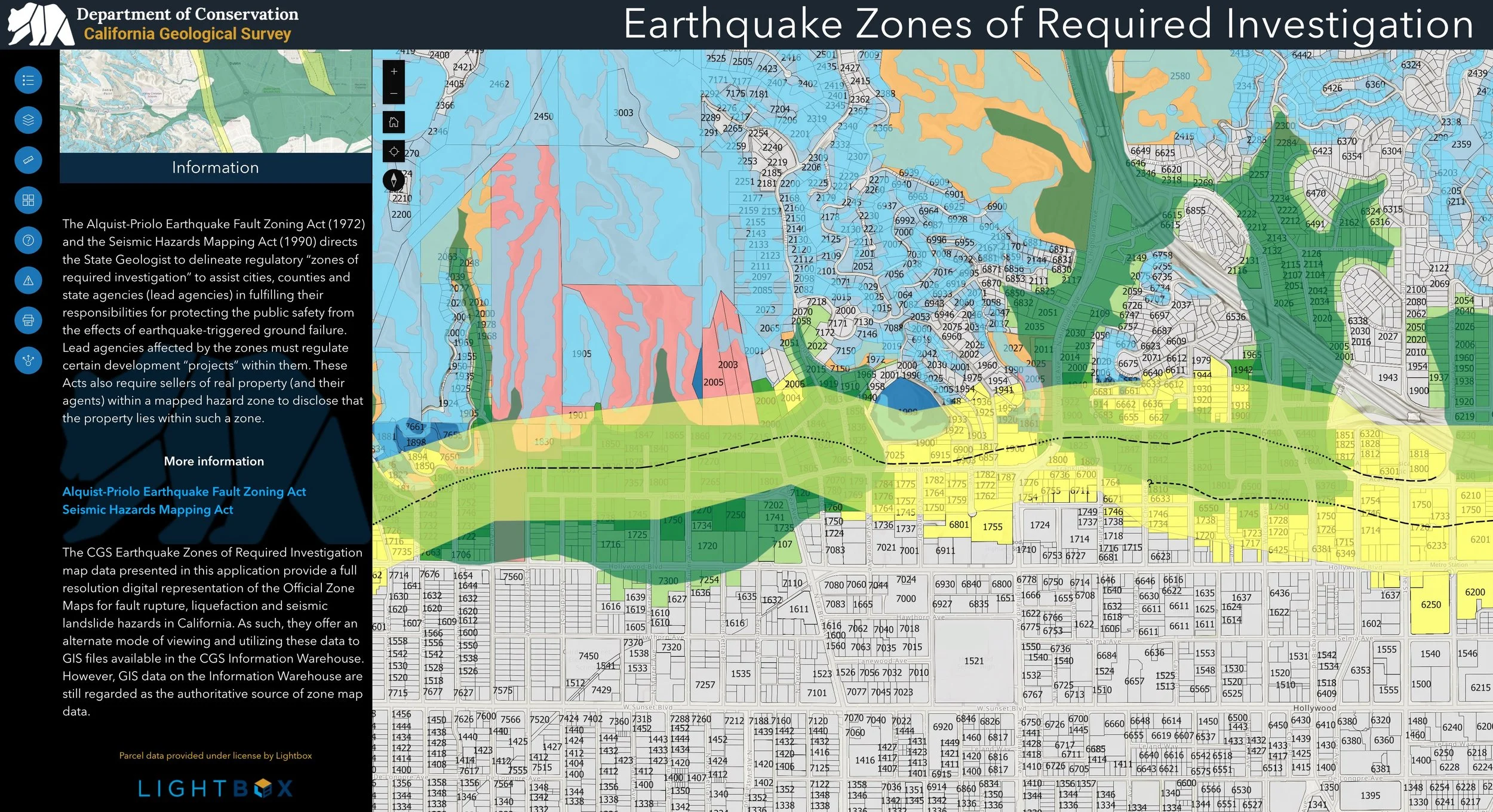
Image of the interactive map that can be zoomed in to see individual parcels of land and where they sit relative to the Hollywood Fault and liquefaction and landslide zones. Click here to see the interactive map: https://maps.conservation.ca.gov/cgs/informationwarehouse/eqzapp/
Outpost Estates includes many homes built before modern seismic standards. In hillside communities, risks can be higher due to steep slopes and retaining walls, older raised foundations and cripple walls, homes with living space built over a garage ("soft-story" construction), and narrow streets where access and post-event emergency response can be challenging.
Even if a home isn't directly inside a mapped fault zone, strong shaking can affect the entire area. And under California's Natural Hazards Disclosure Act, if a property sits within an Alquist-Priolo Earthquake Fault Zone, that fact must be disclosed to buyers during a sale — so understanding your property's status matters for property values and transactions, too.
🔩 State Retrofit Grants: Up to $13,000 to Strengthen Your Home
The California Residential Mitigation Program (CRMP) — a partnership between the California Earthquake Authority (CEA) and the California Governor's Office of Emergency Services (Cal OES) — offers two grant programs that many Outpost Estates homes may qualify for:
Earthquake Brace + Bolt (EBB): Grants of up to $3,000 to bolt an older wood-frame house to its foundation and brace the crawl-space cripple walls. Typical retrofits cost between $3,000 and $7,000, so the grant covers a substantial share.
Earthquake Soft-Story (ESS): Grants of up to $13,000 for homes with living space over a garage (a "soft-story" condition common in hillside homes), strengthening the garage walls to prevent collapse.
Recent program expansions worth knowing:
Supplemental grants up to $7,000 are available to income-eligible households (annual income of $89,040 or less) and can cover up to 100% of retrofit costs.
Landlords and non-owner-occupied homes are now eligible for the first time, as of 2025.
More than 300 new ZIP codes were added in 2025, bringing the total to over 1,100 eligible ZIP codes statewide — so even if your home didn't qualify before, it's worth checking again.
General eligibility for the standard programs: wood-framed houses built before 1980, with a raised foundation (Brace + Bolt) or living space over a garage (Soft-Story). Registration windows are limited and typically open in late summer/early fall, with selection by random drawing. Check your ZIP code eligibility and register at EarthquakeBraceBolt.com.
🏠 Earthquake Insurance: Worth a Second Look
Most standard homeowners policies do not cover earthquake damage — you typically need a separate earthquake policy. Completing a certified Brace + Bolt retrofit can also qualify you for discounts on California Earthquake Authority (CEA) insurance premiums. Helpful resources include the California Earthquake Authority homeowners overview and the California Department of Insurance earthquake insurance guide.
✅ What Neighbors Can Do Now
🧰 Check your retrofit eligibility at EarthquakeBraceBolt.com and apply when the registration window opens — both Brace + Bolt (up to $3,000) and Soft-Story (up to $13,000).
🔎 Look up your property on the California Earthquake Hazards Zone Application (EQ Zapp), CGS's interactive parcel-level map, to see whether your home is within a mapped fault or seismic hazard zone.
🧾 Review your insurance and understand what is and isn't covered — most homeowners policies exclude earthquake damage.
📚 Use the official maps as a starting point for understanding local geology, especially when planning renovations or major work.
🎒 Build a basic emergency kit and family plan, and consider registering for the annual Great California ShakeOut drill each October.
Bottom Line
Outpost Estates sits in one of the most seismically active regions in the country, near the officially-zoned Hollywood Fault. While we can't predict earthquakes, we can prepare for them — and the State of California currently offers grants of up to $13,000 to help homeowners do exactly that. Check your eligibility, review your insurance, and look up your parcel on EQ Zapp. A little preparation now protects both your family and your most valuable asset. Questions or want to share a retrofit contractor recommendation with neighbors? Email us at info@outpostestates.com.
📄 Official Maps and Sources
California Earthquake Hazards Zone Application (EQ Zapp) — check your parcel
CGS Official Earthquake Zones of Required Investigation — Hollywood Quadrangle (City-hosted PDF)
CGS: Alquist-Priolo Earthquake Fault Zones (program overview)
California Earthquake Authority — homeowners insurance overview
California Department of Insurance — earthquake insurance guide
