When the Hillside Comes Down: What to Do About Dirt on Our Sidewalks and Streets
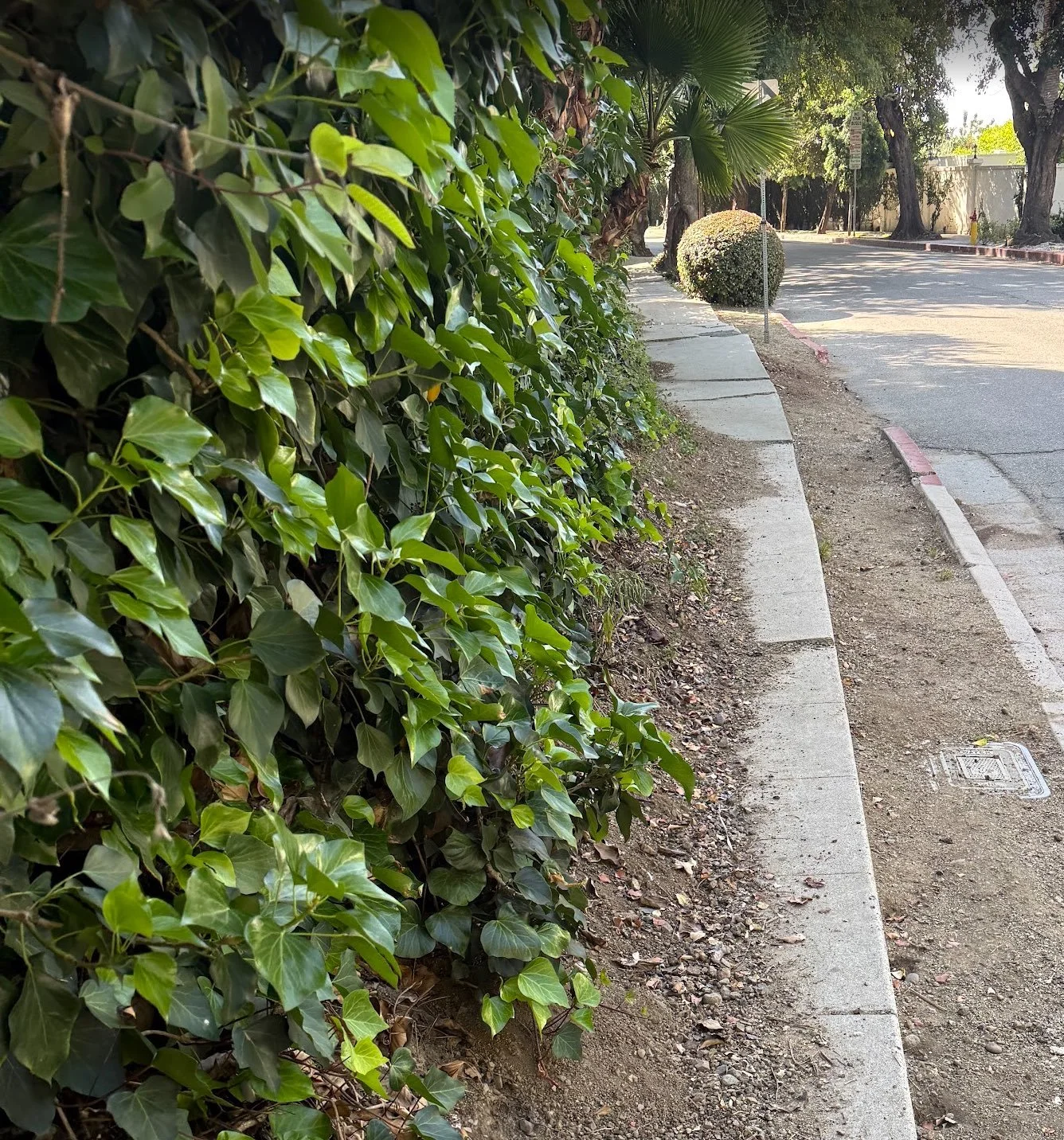
In lower Outpost, a slope failure has buried the sidewalk and cracked the curb, pushing pedestrians out into a narrow street.
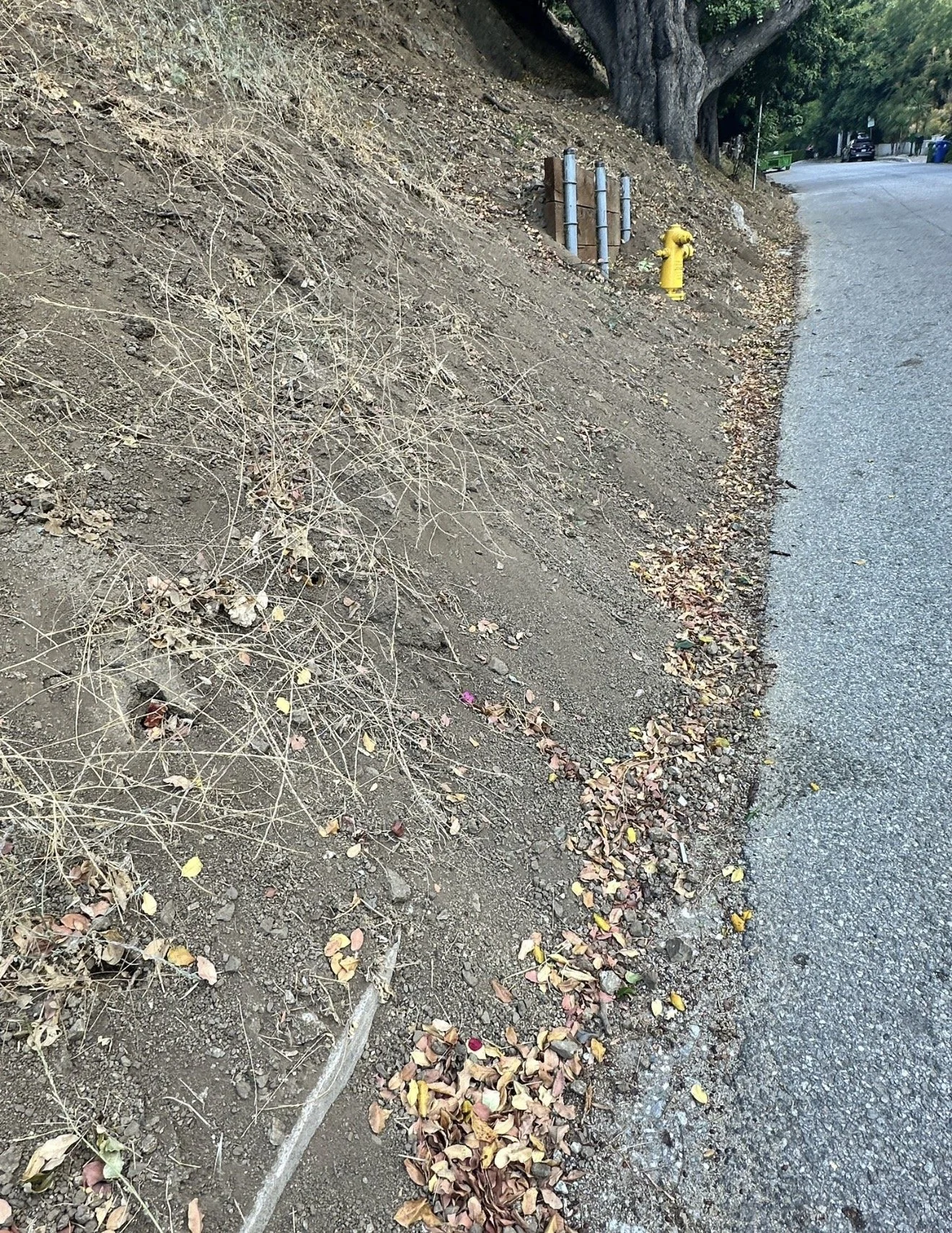
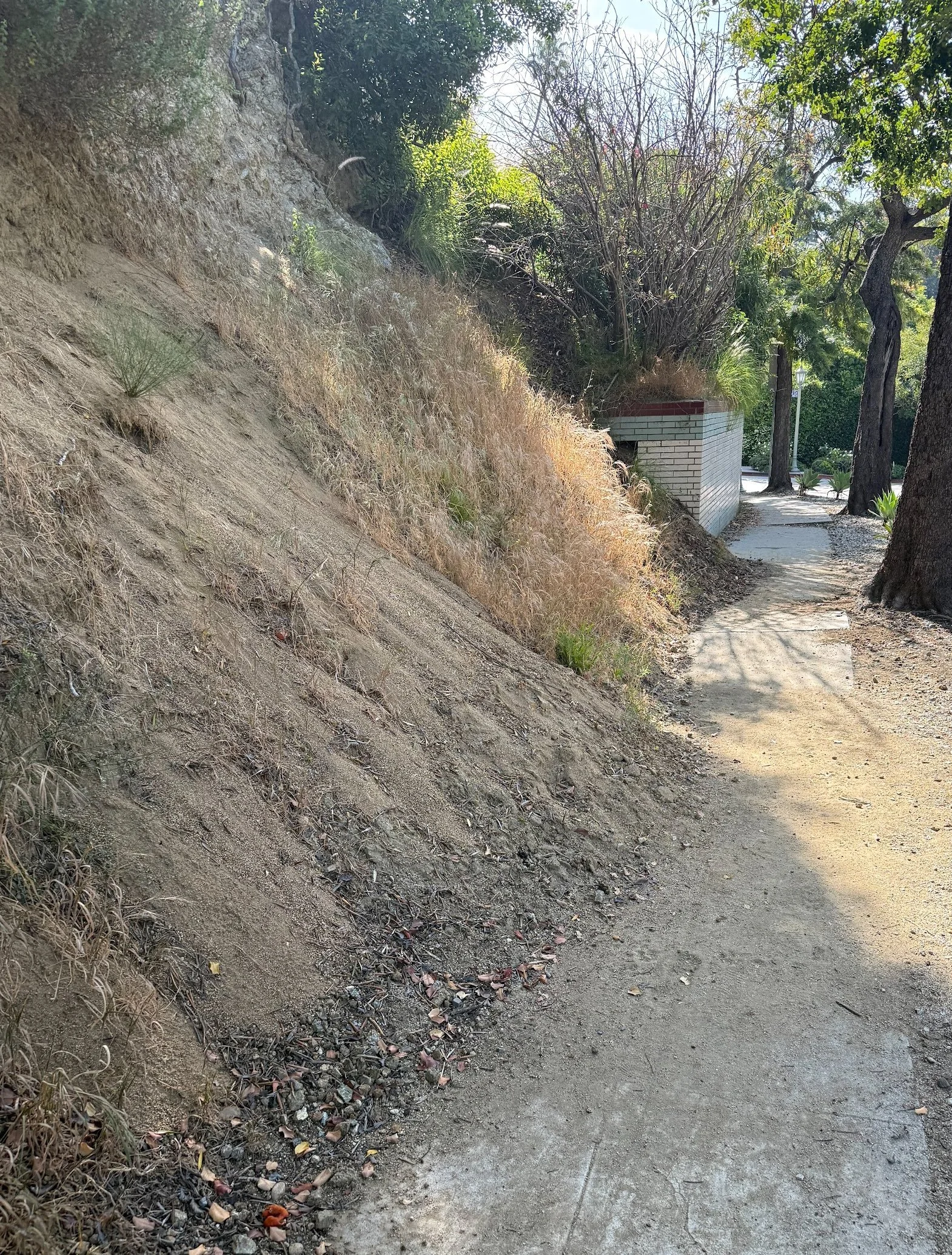
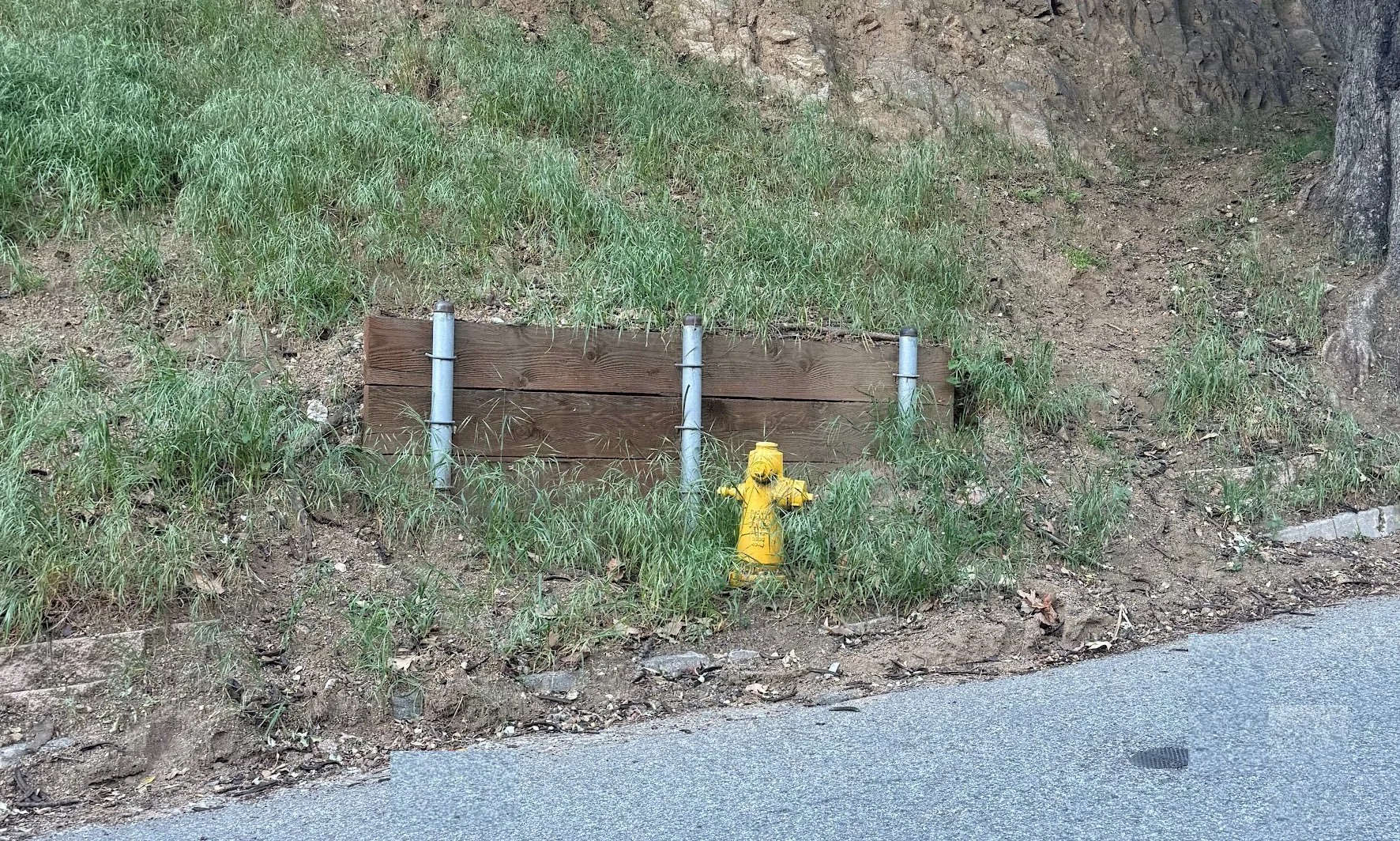
In upper Outpost, where there are no sidewalks, the slope slides directly into the street. A simple wood retaining board, or small bricks installed along the curb can hold back much of the hillside.
Outpost Estates is built into the hills, and that's a big part of what makes it beautiful. It also means many of our lots back up to, or sit directly on top of, steep slopes — and when a hillside isn't maintained, or when a parcel sits vacant with an owner who's hard to reach, dirt, rock, and debris slide down onto our sidewalks and into our streets. Lately Outpost Neighborhood Association (ONA) has been getting a steady stream of reports about exactly this. It's both a nuisance and a real safety hazard, so here's a guide to what's happening and what you can do about it.
The problem looks different in Lower vs. Upper Outpost
In lower Outpost, where some of our streets have sidewalks, fallen dirt buries the sidewalk and covers — or breaks — the curb. Our streets are already narrow, so when the walkway disappears under a pile of soil, pedestrians have no choice but to walk in the road alongside traffic.
In upper Outpost, most streets have no sidewalks at all, and they're narrow and winding. There, the dirt slides straight into the roadway. When that debris includes small rocks or even boulders, cars have trouble driving over or around it and can lose traction — a genuine hazard for drivers, cyclists, and anyone on foot.
Rain makes everything worse
A dry slope sheds a little dirt. A wet one lets go. After a storm, loose soil washes down and spreads across the pavement, sometimes traveling well beyond the property it came from — all the way down to cross streets and into intersections, where it can flow into and clog storm drains. The first big rain of the season is usually when the worst slides happen and when we get the most reports.
Unlike flatter parts of the city, our hillside streets are not on a routine street-sweeping schedule. That means this material doesn't get swept up automatically — it sits and accumulates until someone reports it or clears it. The Bureau of Street Services (BSS) has told our Council office it won't commit to a set sweeping schedule in Outpost Estates, but it will respond to specific slides as we report them through the rainy season. In other words: nothing happens unless we flag it.
What you can do:
There are really three tracks, and the right one depends on whether you're dealing with cleanup, your own property, or a neighbor's unmaintained slope. Read more below about each of the three tracks.
1. Keep your own hillside maintained — the cheapest, easiest fix
The single most effective thing any hillside homeowner can do is simple, routine maintenance:
Have your gardener clear fallen dirt off the sidewalk, curb, and street on a weekly or monthly basis and put it in your green bin. A few minutes of upkeep prevents the big pile-ups that become a neighborhood problem.
Set a row of low interlocking pavers (the kind sold at any hardware store) along the curb edge to catch soil before it spills into the street. They're inexpensive, easy to install, and easy to sweep behind.
When more has come down than a gardener can handle, you can bring in a small crew and a dump bed. Rough costs:
Dump bed / dirt bed rental: about $750, which typically includes delivery and haul-off.
Labor: about $300 per person for an 8-hour day for someone to shovel the dirt into the dump bed/dirt bed rental.
As an example, a two-person crew for one day plus a dump bed runs roughly $1,350 and can clear a significant slide and re-set a tidy curb edge. There are referral reccomendations for gardeners and hillside crews at the Outpost Estates Referral list located here.
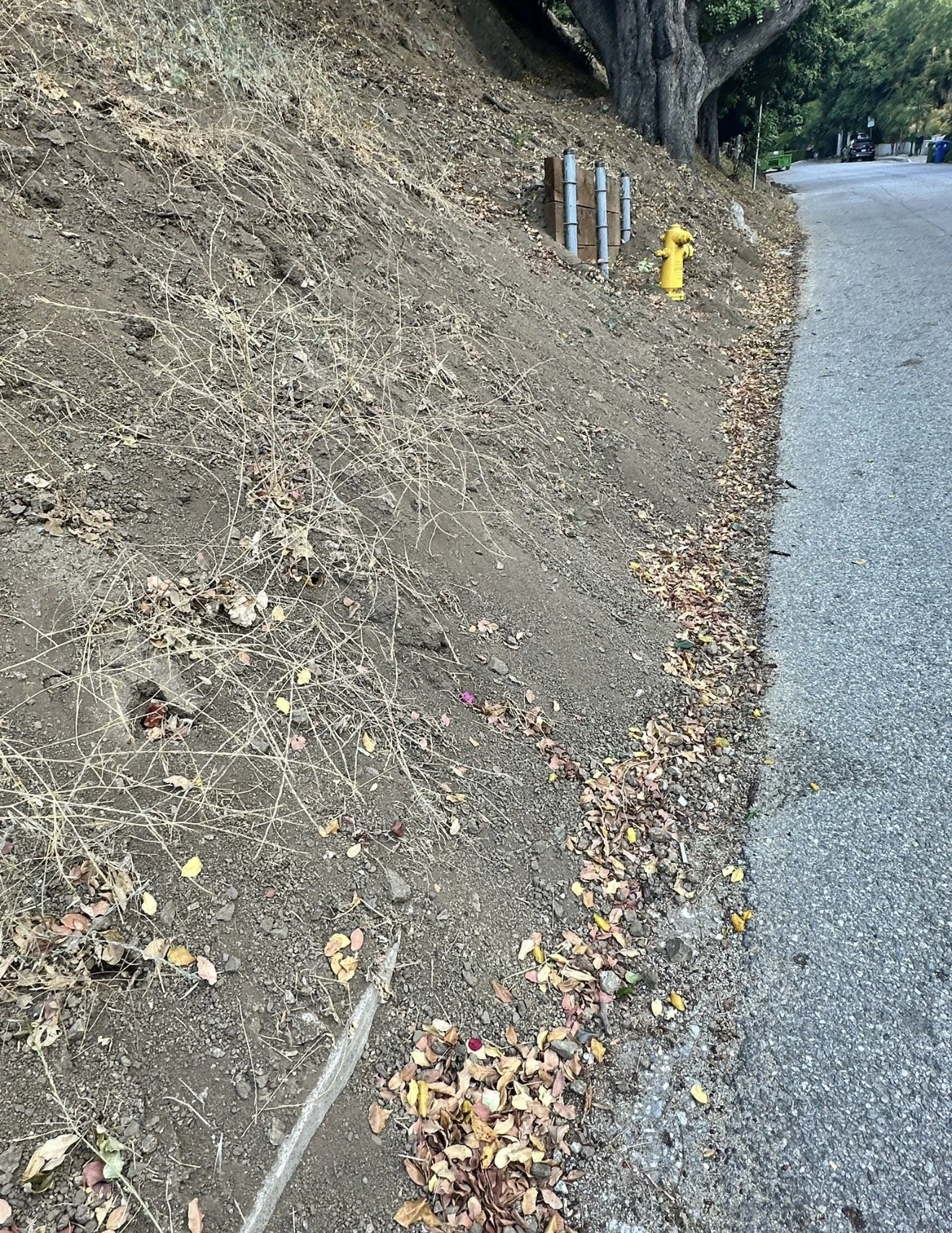
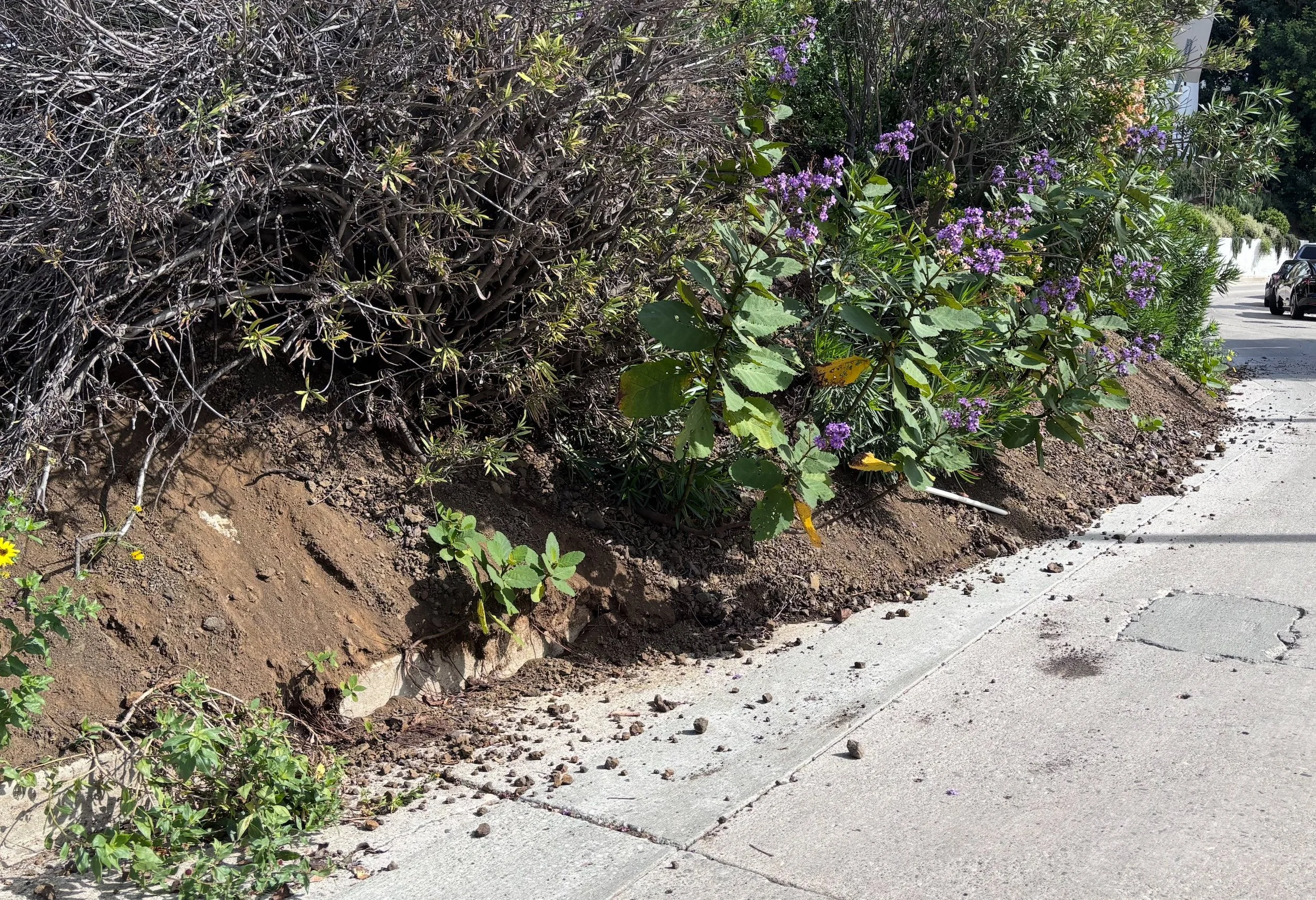
BEFORE: Example of Outpost Estates hillside fallen over curb and into street.
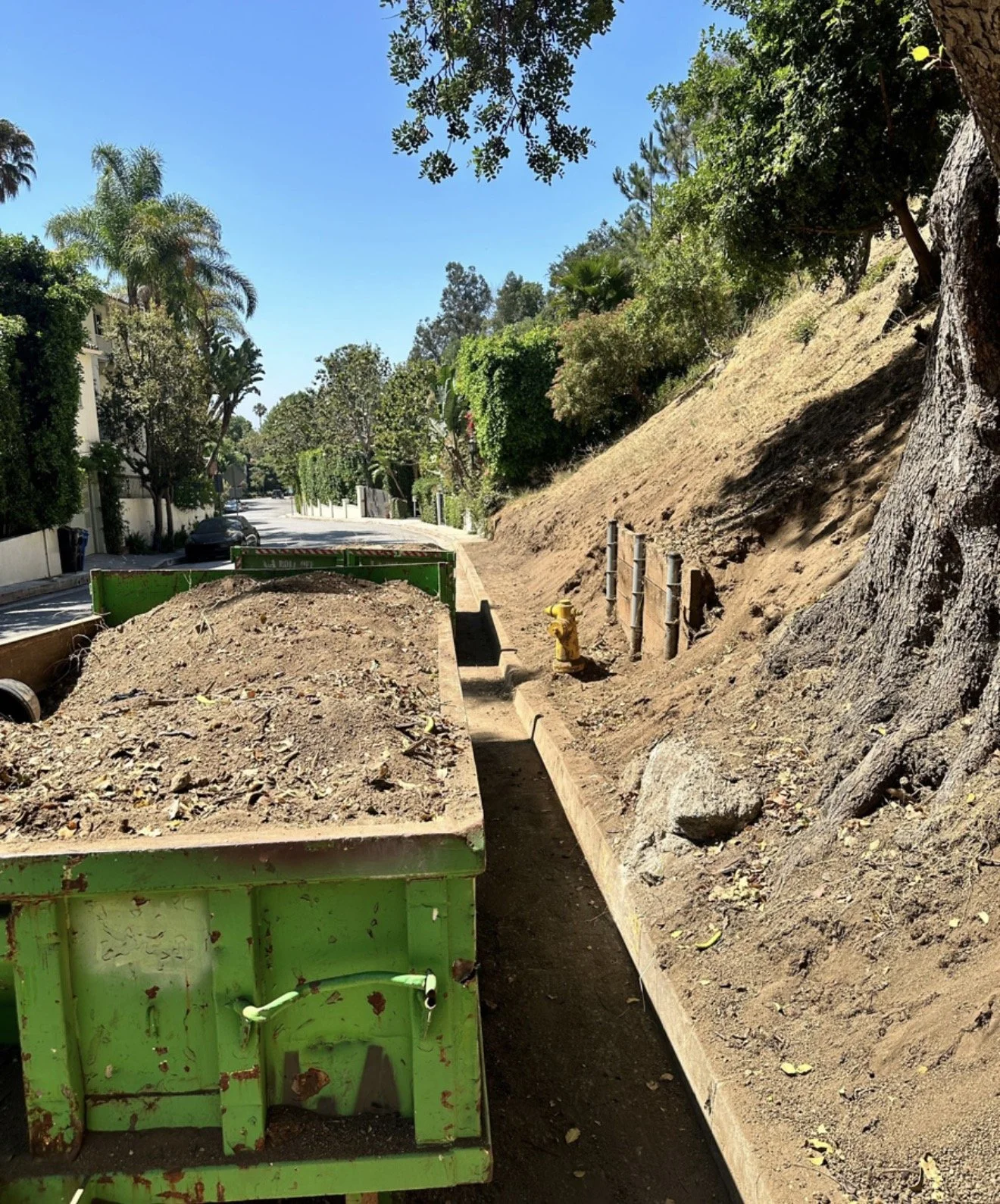
DURING: Example of a dirt bed rented and crew hired to remove the fallen dirt from Outpost Drive.
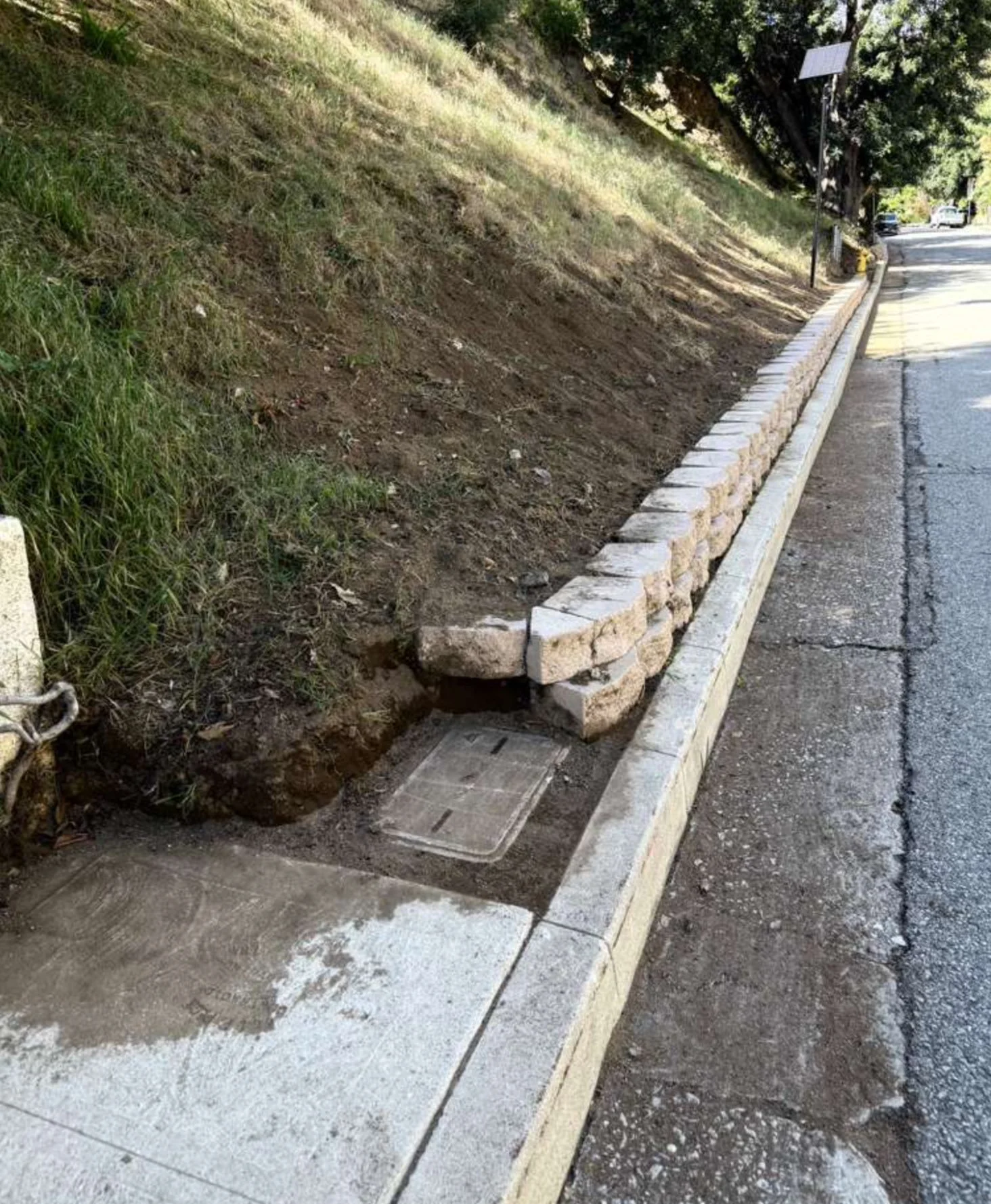
AFTER: Example of Outpost Drive after the clean up with some bricks installed at the curb to help keep the hillside from falling into the street.
2. Report dirt that's already blocking the sidewalk or street — cleanup

When soil is covering the walkway or sitting in the roadway right now, the fastest path to a cleanup is a 311 request:
File a MyLA311 request — through the app, online, or by phone — and select the "Land/Mud Slide" category. This routes the request to the Bureau of Street Services (BSS), which can dispatch a scraper truck.
Save your Service Request (SR) number. You'll get one when you submit.
Send that SR number to our Council District 4 field deputy. Ensure our Council District 4 (CD4) field deputy knows about the issue so they can help follow up with BSS if the location isn't cleared within a couple of weeks. After a major storm, expect it to take longer — crews are responding to many locations across the hills at once.
3. Press for a permanent fix when a property owner won't maintain their slope — enforcement
If the same slope fails again and again because the responsible owner won't act, there are enforcement tools. They're slower and the outcome isn't guaranteed, but they're worth pursuing for chronic problem spots — and they have worked in our neighborhood before.
For an unsecured or failing slope, or for grading and hillside work done without a permit, file a complaint with the Los Angeles Department of Building and Safety (LADBS). This is a code-enforcement track aimed at the property owner, and it's separate from a 311 cleanup request. If the online form doesn't offer an "unstable hillside" option, file it under "miscellaneous."
For dirt obstructing the public right of way, the Bureau of Street Services (BSS) Investigation and Enforcement Division (IED) can inspect the site and cite the responsible owner.
Expect a process, not an instant fix. Enforcement typically escalates in steps: a Notice of Violation with compliance instructions and a scheduled re-inspection, then escalating administrative citations, and — if the owner stays non-compliant — a referral to the City Attorney. This can take months, so report early and keep your photos and records.
Loop in ONA and CD4. Persistent, documented reporting on problem slopes in Outpost has already produced citations and a City Attorney referral. Steady follow-up is what moves these cases.
The honest reality is that cleanup (311) and your own maintenance are the fast relief; enforcement is the long game. Doing both at once is usually the right call.
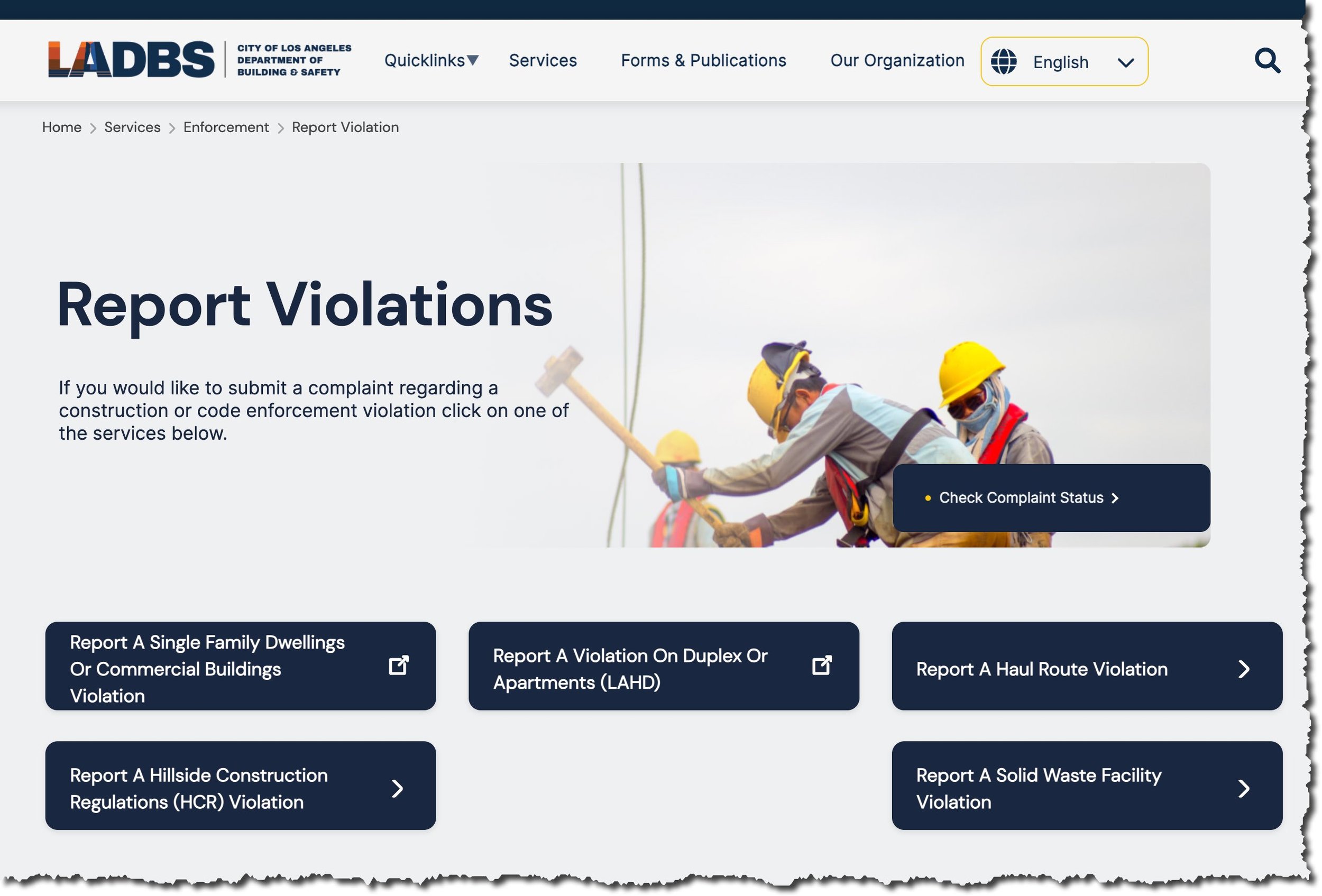
The website of the City of Los Angeles Department of Building & Safety (LADBS) to file a complaint about unstable hillsides is located here: https://dbs.lacity.gov/services/code-enforcement-complaints-and-compliance/report-violation
A note on vacant and absentee-owned properties
Some of our worst recurring spots are vacant lots or homes whose owners are hard to reach. ONA has, in the past, offered to help broker low-cost solutions — a small retaining wall, some landscaping — with cooperative owners, which is often faster and friendlier than a citation. If you know who owns a problem slope, please tell Outpost Neighborhood Association. A neighbor-to-neighbor conversation or a letter from ONA sometimes accomplishes more than the formal process.
Just like we did with the streetlight outages, ONA would like to put together an inventory — photos and locations — of the hillsides that repeatedly slide onto our sidewalks and streets. A good list helps us make a stronger, organized case to the City rather than reporting one spot at a time. If you'd like to help walk the neighborhood and document these locations, email info@outpostestates.com.
Quick reference
Dirt on the sidewalk or street right now → MyLA311, choose "Land/Mud Slide," save the Service Request number, and escalate with Council District 4.
Your own slope → routine gardener cleanup into green bins; a row of low interlocking pavers along the curb; for a big slide, a dump bed (about $750) plus a crew (about $300 per person per day).
A neighbor's slope that keeps failing → a Building and Safety complaint (unpermitted grading or unsecured slope); the Bureau of Street Services Investigation and Enforcement Division for right-of-way obstruction; and loop in ONA and CD4 to help keep the case moving.
Questions, photos, or a problem spot to report? Reach Outpost Neighborhood Association at info@outpostestates.com. The more we document and report together, the faster the City responds.
